Garden Heights’ post-riot devastation
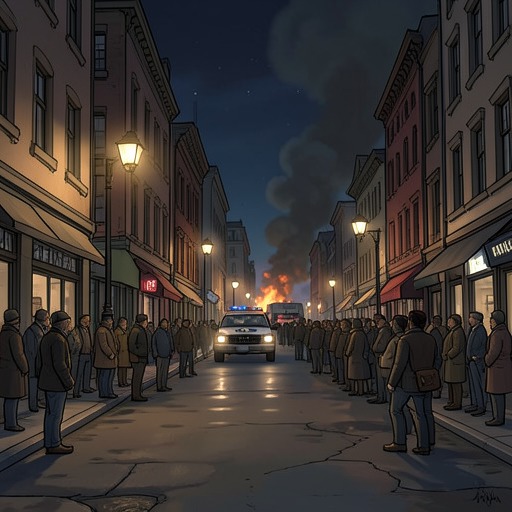
On the Come UpGarden Heights’ post-riot devastation is both a visible landscape of burned and boarded businesses and a continuing condition of insecurity. After an unarmed teenager was killed by a police officer and a grand jury declined to charge the officer, weeks of riots and protests left businesses damaged or destroyed. The aftermath persists in ordinary movement through the neighborhood, in the loss of places residents depended on, and in the fear that violence may come from both street conflict and the police.
Causes and the changed neighborhood
The unrest followed the killing of an unarmed boy a few streets from Brianna Jackson’s grandparents’ home. The grand jury’s refusal to charge the officer was followed by weeks of protests and riots. Brianna’s account distinguishes damage deliberately caused by rioters from businesses caught up in what she describes as the surrounding conflict; either way, half the businesses in the Garden were lost or damaged. The destruction is not presented as a simple return to normal once the demonstrations end: it reshapes what residents can use and where they can go.
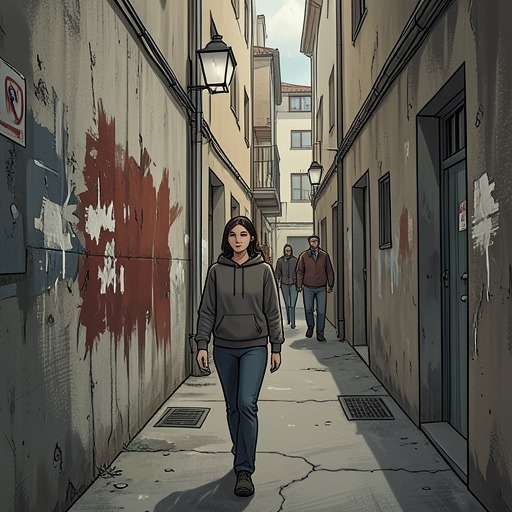
Club Envy, previously a regular Thursday-night destination, was among the casualties. Jimmy’s becomes a substitute gathering place, where the Ring’s Thursday battles are followed by an outdoor party. Police cars pass the parking lot repeatedly. The patrols are nominally presented as friendly neighborhood attention, but Brianna experiences their presence as surveillance directed at Black residents. The new normal therefore carries an unresolved contradiction: visible policing is framed as reassurance while deepening the sense of being watched.
Ruins and everyday consequences
The damage is especially concrete on Clover Street, once one of Garden Heights’ busiest roads. Brianna sees charred rubble and boarded buildings there. The Mega Dollar Store was among the first businesses hit; Cellular Express was looted and then burned, and Shop ’n Save burned down to its frame. With Shop ’n Save gone, residents have to travel to a Walmart at the edge of the neighborhood or use a small store in the west to buy groceries. The ruined street changes not just the appearance of the Garden but the practical geography of daily life.
The losses also compound the Jackson family’s financial hardship. The church daycare was damaged during the riots, and its insurance did not cover the repairs. The church adjusted its budget to pay for the work and let Jayda Jackson go. The family was already short on money: they lacked gas, had received an eviction notice the previous month, and relied on sandwiches until Jayda’s next payday after she used most of her check for rent. The neighborhood’s destruction thus reaches the household through lost employment and already precarious access to food and housing.
Fear, memory, and mistrust
Brianna connects the altered neighborhood to a changed sense of personal safety. Before the riots, she says, her fears centered on the Garden Disciples and the Crowns; now she also fears the police. Jayda compares the killing to a stranger entering a home, taking a child, and blaming the family for its dysfunction while outsiders judge the family’s grief. The comparison gives the political aftermath an intimate scale: public violence enters the home and leaves those closest to it to bear both loss and scrutiny.
That fear recurs in Brianna’s body and behavior. A memory of Jayda leaving her children with their grandparents while struggling with drug addiction becomes a nightmare, and Brianna describes the separation as an experience of losing someone still alive. After the police killing, seeing an officer makes her heart race because she understands that chance alone separated her from the boy who died. At Midtown, the guards’ restraint of Brianna leaves a lasting association with a particular spot; on returning to school, she struggles to breathe as she passes it, even though the metal detector does not sound and she is allowed through. The aftermath’s insecurity is therefore not confined to the damaged streets: it follows residents into school and remains active in memory.
Conflict and public response
The neighborhood’s insecurity also shapes how characters interpret and answer new threats. After Brianna is threatened at gunpoint and Law’s chain is taken, Aunt Pooh treats the incident as part of a wider conflict and declares that it is war. Jayda rejects the retaliatory logic, insisting that Brianna’s safety matters more than the chain; she points out that Aunt Pooh is in jail yet still planning the same kind of street activity that helped put her there. The destruction of the neighborhood forms the background to this escalation, but the story also shows how attempts to answer violence can produce further danger for the family and community.
At Midtown, students and parents make insecurity a public issue rather than leaving it as private fear. Shana Kincaid tells the superintendent that Black and Latinx students faced more pat-downs, locker checks, and secondary screenings from Officer Long and Officer Tate, and says that bringing armed police officers to school has made students fear for their lives. Jayda links the Friday uprising to what happened to her daughter and criticizes the school for returning the officers to work after they assaulted Brianna. The public testimony connects the neighborhood’s post-riot atmosphere to institutional decisions: safety is at stake both in the Garden’s streets and in the school meant to serve its young people.