Jay is fired by Christ Temple
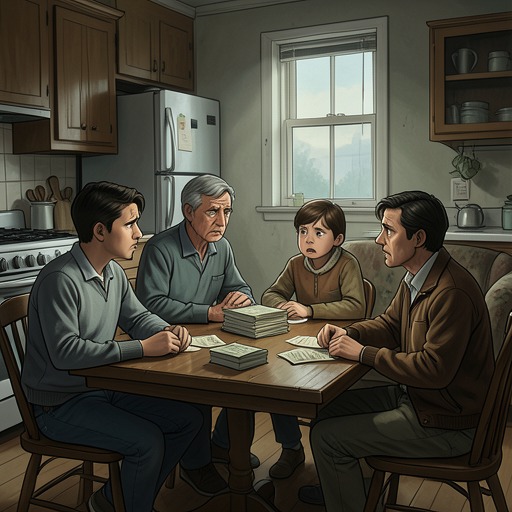
On the Come UpJay is fired by Christ Temple after riot damage to the church daycare leaves the congregation facing repair costs its insurance will not cover. The decision turns a community crisis into an immediate loss for the Jackson family: Jay’s job had helped her maintain the home and care for Brianna and Trey, and losing it sharpens the pressure of their already precarious finances. The news reaches Brianna not as a detached update but as confirmation that the household has fewer options precisely when it can least afford to lose them.
The News and Its Cause
The firing becomes known through a phone call from the church. Brianna and Jay are together when an unfamiliar number appears on Brianna’s phone at five thirty. Jay recognizes the moment as the expected call and smiles, while Brianna’s hands shake as she answers. The brief exchange makes the employment news feel consequential before its details are clear: the household has been waiting for a call, and Jay understands what it is likely to bring.
Later, Brianna learns what happened. She tells Jay that Ms. Clark called the church and said Jay no longer worked there; Jay initially tries to stop the conversation, then admits that she has lost the job. The cause is specific and institutional rather than a failing on Jay’s part: riots damaged Christ Temple’s daycare, the insurance company will not pay for those damages, and the pastor and elders board adjust the budget to cover repairs by letting Jay go. The repair budget preserves the church’s ability to address the damage, but its cost falls on a worker whose income supports a family already struggling to stay afloat.
Household Consequences
The loss of employment gives concrete force to Jay’s warning that the family has no other options, especially at that moment. Brianna already knows they have run out of gas and received an eviction notice the previous month. Jay used most of her paycheck to cover rent, leaving the family to eat sandwiches until the next payday. In that context, the firing is not simply a change in work status: it threatens the fragile arrangement by which rent is paid and food is stretched between checks.
Jay calls the situation temporary, but the conversation exposes how little reassurance that word can offer. Brianna repeats the question when Jay first avoids answering, and Jay eventually confirms the loss. The admission punctures her effort to present things as manageable. Brianna understands that the family has been struggling even while Jay tries to make everything seem all right; the job loss brings that concealed strain into the open, without suggesting an immediate replacement income or an easy solution.
Earlier Separation and Recovery
The firing also reverberates against Brianna’s childhood memories of losing Jay in a different way. In a nightmare that is a memory, Brianna recalls that Jay left her and Trey with their grandparents because she could not take care of them and manage her drug habit at the same time. Brianna remembers seeing Jay in a park months later, so altered by addiction that she stopped calling her Mom and began calling her Jay. The name became a habit that proved difficult to break, even after their relationship changed.
Jay returned after three years and a stint in rehabilitation, but recovery did not immediately restore full-time family life. A judge allowed her to see Brianna and Trey on alternate weekends and some holidays. She regained full-time care five years before the present events, after she had found work and rented the home where the family lived. Employment is therefore connected to more than household income: in Brianna’s account, Jay’s job and home mark the conditions that enabled her to have the children back full-time. The firing threatens material stability now, while recalling how much was rebuilt after the earlier separation.
Narrative Significance
The event links public unrest to private precarity through a clear chain of consequences: riot damage closes the church’s financial room for maneuver, the daycare repairs consume the budget, and Jay loses the work that helped sustain her household. The damage is collective, but the cost is borne in an intimate register—an eviction notice, an empty gas tank, and meals reduced to sandwiches. The contrast between the church’s repair needs and the family’s immediate needs keeps the firing from reading as an isolated employment setback.
For Brianna, the news also belongs to a longer history in which the security of family life has depended on conditions that can be disrupted. Jay’s earlier addiction took her away from her children; rehabilitation, work, and housing made their reunion possible. Now a job lost because of riot damage unsettles the stability associated with that return. The episode does not erase Jay’s recovery or establish that she will lose the children again. Instead, it shows how fragile the material supports around a hard-won family reunion remain, and how quickly a public crisis can reopen the feeling that the household has no safe margin.