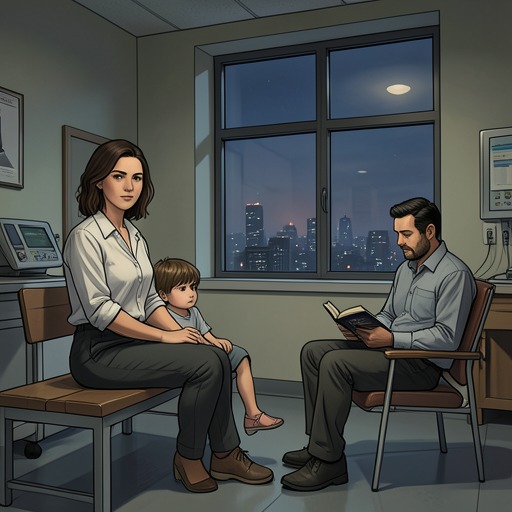
Jay overcomes addiction and regains custody of her children
On the Come UpJay’s recovery from drug addiction and eventual return to full-time custody of Brianna and Trey are a long, uneven process shaped by both practical change and lasting emotional injury. She comes back after three years and rehabilitation, but regaining her children’s daily lives takes years more; for Brianna, the old separation remains present in recurring nightmares even after the family is reunited.
Separation and the return
Jay leaves Brianna and Trey with their grandparents when her addiction makes it impossible to care for them while also sustaining her drug habit. Brianna recalls this abandonment as a childhood loss so profound that she learned to think of death as something that could take the living along with it. The memory frames the separation not as a brief disruption but as a rupture in the child’s sense of safety.
A few months later, Brianna sees Jay in a park. Her mother looks so unlike the mother Brianna remembers that Brianna begins calling her Jay instead. The name marks a refusal—or inability—to recognize their former relationship as intact. Brianna later admits that the habit was hard to break and remains difficult even after they have lived together again. The family’s return to one another therefore does not immediately restore the language or intimacy of the earlier bond.
Jay returns after three years and a stay in rehabilitation. Sobriety does not instantly bring the children home full-time: a judge limits her to visits every other weekend and on some holidays. Only after she gets a job and begins renting the place where the family can live does she regain full-time custody, five years before Brianna recounts the memory. Recovery and reunification are connected to concrete stability—employment and a home—as well as to the end of active addiction.
Custody, trust, and material care
Jay describes the custody process from the position of a parent who has made mistakes but is trying to rebuild trust. While speaking with Pat, whose mother is keeping Pat from seeing their children, Jay encourages patience and continued efforts to gain trust. She recognizes the frustration from her own experience: after rehab, her in-laws subjected her to court cases and supervised visits. The recollection makes clear that sobriety alone did not persuade the family or the court that she could resume caring for her children without oversight.
Jay remembers resenting the presence of a stranger supervising visits with the children she had carried and given birth to. Her anger arises from the contrast between her intimate connection to them and the institutional or family judgment that continued to restrict her access. Yet her account also shows that she understands trust as something that had to be regained over time. She says that people held her mistakes against her and that it can still feel that way, particularly as she searches for work.
The material pressures around her recovery persist beyond the custody dispute. At home, the family sometimes has barely enough food, yet Jay finds a way to feed her children and other people too. Brianna is unsure whether to admire or resent this generosity, and recognizes that both reactions can coexist. Jay’s care is thus shown as resourceful and expansive, but not detached from the strain of scarcity.
A bond that remains marked by separation
Five years after returning to full-time life with Jay, Brianna still dreams that her mother has left. The nightmares arrive unexpectedly, indicating that the emotional consequences of the separation outlast the formal custody arrangement and Jay’s sobriety. Brianna conceals them because she fears that telling Jay would make her feel guilty, and then make Brianna feel guilty for causing that guilt. The silence is an effort to protect her mother, but it also leaves Brianna carrying the memory alone.
The narration presents the separation’s persistence through the difference between what has changed and what has not. Jay has completed rehabilitation, found work, secured a home, and regained custody; Brianna and Trey are no longer living apart from her. But Brianna’s dreams keep the earlier abandonment active in the present. Her response does not negate Jay’s recovery or the family’s reunion; it shows that restored care and unresolved hurt can occupy the same relationship.
Significance
Jay’s recovery is defined by more than becoming sober. It requires rebuilding the conditions under which she can care for her children, enduring restricted visitation, and facing the judgment of people whose trust she needs. Her later conversation with Pat gives that history a second function: Jay turns a painful experience into practical empathy, urging another parent to keep working toward reconciliation while acknowledging how frustrating the process can be.
For Brianna, the event has a different lasting measure. She remembers the abandonment as a formative loss, and even years of living together do not prevent the recurring fear of being left again. The contrast between Jay’s hard-won return and Brianna’s continuing nightmares makes reunification meaningful without presenting it as a complete repair: the family is together, but the past remains part of how Brianna experiences that bond.