Jimmy’s Ring parking lot confrontation
On the Come UpThe Jimmy’s Ring parking lot confrontation is the moment when a challenge to Brianna’s song becomes a public dispute over who gets to define her: a Crown reads her lyrics through gang allegiance, the venue’s bouncers treat the resulting clash as a reason to remove her, and the gathered crowd turns her ejection into a performance of “On the Come Up.” Brianna leaves with the audience behind her, but not with the conflict resolved; the confrontation also deepens a rift with Aunt Pooh and gives Supreme a fresh example of how public assumptions can be used in the music business.
Causes and Background
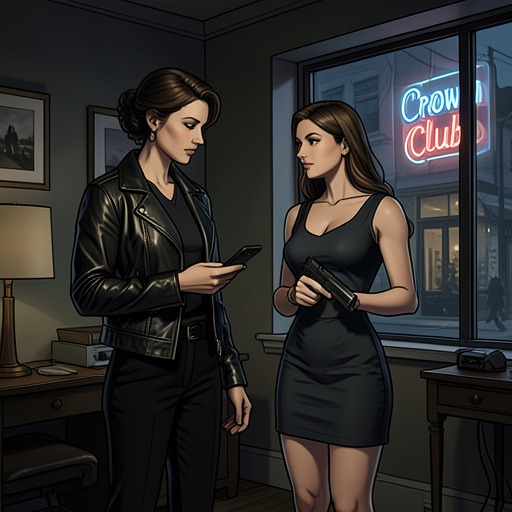
The scene begins outside the boxing gym, where a line for entry stretches to the sidewalk. Brianna, Aunt Pooh, and Scrap head straight for the doors, as they usually do. A man tells them to go to the back. When they turn, his silver teeth and gray baseball jersey, along with the gray worn by the men around him, identify the group as Crowns.
The exchange changes when the instigator notices the chain Brianna wears from her father. He recognizes her as Lawless’s daughter, then links her to the song’s line about not needing gray to be a queen. Brianna’s lyric had not been framed as a claim to a set, but the Crown says it made the group feel disrespected and warns that she could end up like her father. Her identity, her father’s memory, and the song’s public reach converge in a confrontation she had not sought simply by arriving to battle.
Confrontation and Ejection
Aunt Pooh answers the Crown’s challenge by defending Brianna’s right to mean what she wants and by pointing out that she claims no gang. When he threatens Brianna, Aunt Pooh moves toward him; the Crown moves toward her in turn. Brianna freezes as the confrontation escalates. The bouncers Frank and Reggie intervene, separating the parties and stopping the argument from continuing inside.
The intervention does not let Brianna keep her place in the event. Frank tells her that she and her crew must leave if they bring gang conflict onto the property. Brianna protests that she did nothing, but Reggie applies the rule to the whole group and orders them off. Her planned battle is therefore cancelled along with her entry, even though she did not initiate the exchange with the Crown. The episode draws a sharp line between the venue’s stated rule against gang conflict and Brianna’s experience of being made responsible for what happened around her.
The Parking-Lot Performance
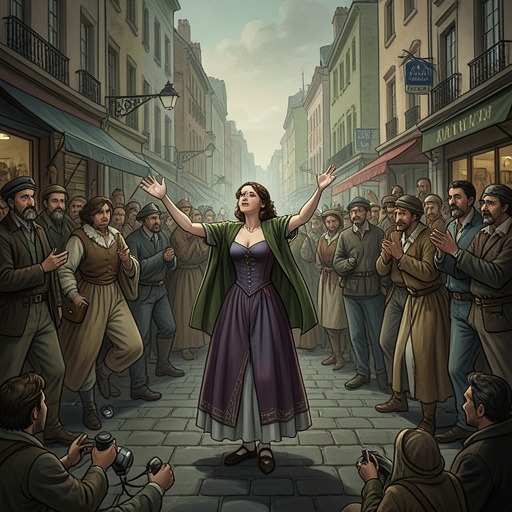
Outside, Brianna objects to being expelled for actions she did not take. Her anger turns outward when she curses the rules; the crowd murmurs in apparent agreement. As the noise rises, someone plays “On the Come Up” from a car. Brianna answers with the song, and the crowd supplies lines of the hook with her. What began as her removal from a scheduled battle becomes a spontaneous performance in the parking lot, with the audience moving and shouting along.
The impromptu singalong reverses the immediate meaning of the ejection. The bouncers have barred Brianna from the venue, but they cannot prevent the surrounding crowd from recognizing and joining her song. Brianna receives support from every direction, and the scene briefly lets her claim a public identity on her own terms: not as the threat the Crown alleges, but as the performer whose words the audience already knows. The crowd’s participation also shows how far the song has traveled beyond its original release.
Fallout and Public Framing
The moment brings an immediate cost at home. Aunt Pooh blames Brianna’s song for their inability to return to the venue, while Brianna counters that she did not tell Aunt Pooh to get into it with the Crowns. Their argument turns the question of responsibility inward: the song helped provoke the Crown’s response, but the confrontation was not simply Brianna’s doing, and her ejection followed the bouncers’ decision to treat the group together.
Supreme later interprets the event as a media opportunity, noting that phones in the parking lot were pointed at them and anticipating a reductive headline about a “Ghetto Rapper” having a “Ghetto Encounter.” He acknowledges that Brianna was speaking up, but advises her to play whatever role others expect and use that expectation to their advantage. His advice gives the scene a second consequence: the confrontation is not only a conflict at a venue but also an image that can be detached from its circumstances and made useful to the music business.
That tension returns in Brianna’s Hot 105 interview, where Hype treats lyrics about weapons and cops as evidence to scrutinize and calls them excessive. Brianna objects to the way the news made her the villain without asking why students had protested, and challenges the gendered difference in how her father’s teenage rap and her own are received. The parking-lot confrontation thus becomes part of the larger dispute over whether listeners will hear Brianna’s words as art and testimony or mistake them for a complete account of who she is.
Narrative Significance
The event links three audiences with competing power over Brianna’s identity: the Crown interprets her lyric as a provocation against his crew, the bouncers enforce a rule by removing her and her companions, and the crowd turns her song into a collective declaration. The same public performance that wins Brianna immediate recognition can also be recast as proof of the stereotype Supreme warns her about. Its outcome is deliberately mixed: her voice gathers a crowd, but neither that response nor the performance itself dissolves the conflict with the Crowns or the disagreement with Aunt Pooh.
Later, Brianna’s own freestyle makes explicit the artistic position foreshadowed by the scene. She refuses to be a puppet or a clone, distinguishes speaking about what she sees from claiming that it defines her, and insists that her status as a queen does not attack another set. The parking-lot singalong is therefore an early public test of the distinction she will defend more fully: a song can describe violence and social conditions without making its author the embodiment of the assumptions audiences attach to it.