News links “On the Come Up” to school violence
On the Come UpThe news report linking “On the Come Up” to violence at Midtown School of the Arts marks a turning point in how Brianna’s song is heard: a track she wrote becomes, through selective footage and commentary, apparent evidence that she incited a school riot. The broadcast moves from a rally to a claim of violent influence, then from the television screen into Brianna’s home, where Jay recognizes her daughter’s voice and demands that she stop rapping. The episode establishes a recurring conflict between Brianna’s own account of her work and the public story imposed upon it.
The Rally Reframed as a Violent Story
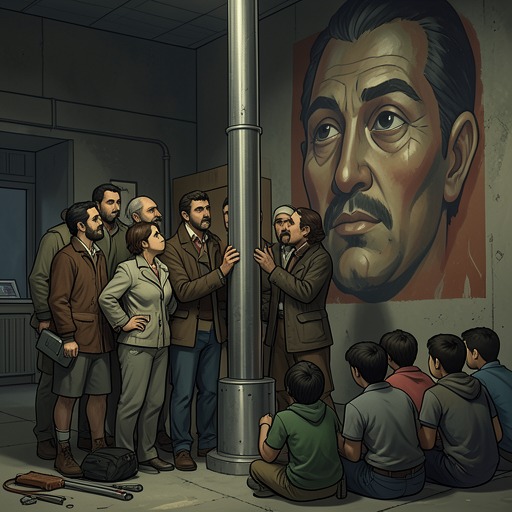
The afternoon report identifies its top story as a student rally at Midtown School of the Arts that turned violent. Its account first mentions student concerns about recent security measures, but then quickly pivots to violence. Footage shows students chanting, punches being thrown, and security guards Long and Tate disappearing from view. An eyewitness says students had been standing outside trying to understand what was happening before people began chanting a song.
That sequence gives the broadcast the elements for a simple causal story: a rally turns into a melee, students sing, and a song appears to explain the violence. But the report does not establish that Brianna’s lyrics caused the students’ actions. Instead, the structure and commentary invite viewers to treat the song as an influence. The distinction matters because the report’s brief acknowledgment of student concerns about security measures is overtaken by its emphasis on violent images and lyrics.
Editing the Song into Evidence
A second cellphone video shows Brianna’s classmates reciting a line from “On the Come Up.” The reporter identifies the song as Bri’s, displays her Dat Cloud page, and describes the track as violent, with attacks against law enforcement and popularity among young listeners. The broadcast then plays clipped excerpts of Brianna’s voice, with curse words bleeped and lyrics about being strapped, pulling triggers, and responding to police. The song is heard in fragments rather than as a whole, while the report presents those fragments alongside footage of the rally and the students’ chants.
The framing culminates in the reporter’s suggestion that the lyrics seemed to encourage students to take matters violently into their own hands. That formulation turns an interpretation into the segment’s apparent explanation. The report notes that several students were arrested and that the security guards were hospitalized, though expected to recover; it also says students were sent home while school officials considered what to do next. It gives no comparable space to the reason the rally began or to the students’ experience of the security measures that prompted it.
The Broadcast Enters the Jackson Home
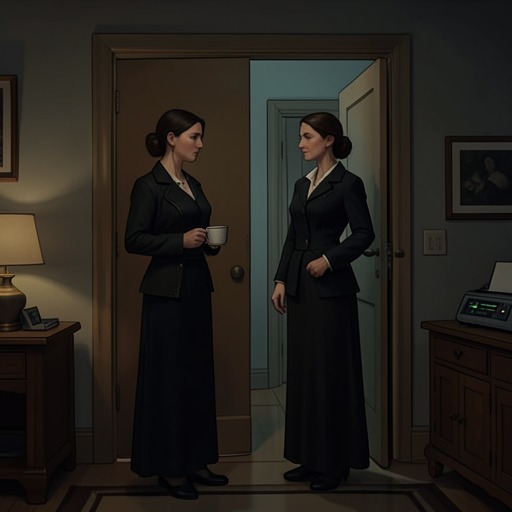
Brianna watches the report with Jay, who has been preparing a sandwich and asks her daughter to turn up the television. When the broadcast identifies “On the Come Up,” Jay’s loaf of bread falls from her hands. She looks at the screen and asks whether the rapper is Brianna. Brianna cannot immediately answer; after Jay turns the television off and asks again, Brianna admits that it is her song.
Jay responds to what the report has shown: she asks what Brianna was thinking and challenges the contrast between lyrics about carrying weapons and the reality of her sixteen-year-old daughter. Brianna objects that the broadcast did not play the whole song and says it is not about attacking law enforcement, but Jay answers that the excerpts were enough to frighten her. The argument is not only about a reporter’s interpretation. Jay hears a public image that could expose Brianna to danger, while Brianna hears her mother mistaking a lyric for a literal declaration of intent.
Jay tells Brianna that Black families do not have the luxury of being assumed to be joking. She then says she does not want Brianna rapping anymore, connecting the danger she fears to Brianna’s father, Law: Jay believes his gangsta-rap image contributed to the circumstances that ended in his death. She orders Brianna to focus on school and leave rap alone. Brianna answers respectfully, though the exchange leaves her feeling that Jay does not understand either her or the song. Thus the broadcast’s framing has an immediate consequence inside the family: it turns a public controversy into a prohibition on Brianna’s artistic life.
The Song’s Meaning Remains Contested
Later, during an interview with Hype, Brianna is asked about a petition to remove “On the Come Up” from Dat Cloud and claims that the song is anti-police and helped lead to a school riot. Brianna responds angrily and argues that the news and the petition’s author made her the villain without asking why students had protested. Hype counters that some lyrics sound excessive and interprets them as implying that Brianna would kill police officers. Brianna rejects that reading and points to the gendered double standard in the reaction: Hype had not been surprised when her father rapped about similar material at sixteen, but Brianna’s age and gender change how the same subject is received.
The conflict extends beyond broadcast journalism. After Brianna’s performance is praised, the conversation returns to the petition and the claim that her song led to a school riot. Supreme advises her that people will impose roles on her and that she should learn to use their expectations rather than mistake them for herself. His advice emerges from his own experience in the music business, but it also carries a warning: public images can be useful as a business strategy and damaging when others treat them as the truth.
That danger becomes especially clear when Supreme urges Brianna to record a song written by Dee-Nice. Brianna objects that accepting a ghostwritten song would make her inauthentic, particularly after Hype had mocked her by suggesting she already had a ghostwriter. Supreme argues that the music business is about making money and says he once encouraged Law to rap about street life and associate with the Garden Disciples to appear authentic. Law, he admits, took the role seriously. He urges Brianna to play a role without becoming it, making explicit the distinction the news report erases: performed lyrics are not automatically a complete account of the performer’s self.
Brianna’s Answer in Her Own Words
At a later performance, Brianna refuses to be reduced to a source of amusement, a mascot, or a performer who repeats words written by someone else. Her lyrics insist that she is a daughter, sister, hope, and mirror, and reject being treated as a puppet, a clone, a thug, or a sellout. She also connects the controversy to the material conditions of Garden Heights, describing children who are hungry and hearts made hard, while criticizing a system that profits when stereotyped images are taken as the truth about the people who perform them.
The performance does not make the earlier reports disappear; it answers their method of interpretation. Where the broadcast selects fragments and places them beside violence, Brianna speaks about what she sees without claiming that every image in a song is a literal account of herself. Her refusal is both artistic and public: she will not be silenced, but neither will she accept the role that others have written for her. The news report’s importance lies in setting that struggle in motion and showing how a song can be made to stand in for an entire student protest, a young artist, and a community.