Friendship bracelet
One Thousand and One NightsThe Friendship bracelet is the handmade gift through which Zaen finally reaches Della—not as a suitor trying to win a prize, but as the friend who has treasured their life together. Its horsehair strands and carved initials turn shared memories into a personal token, and its reception changes the meaning of Zaen’s thousand proposals: Della can accept his love when his gesture shows that he understands who she is and trusts her to love him in return.
Design and Shared History
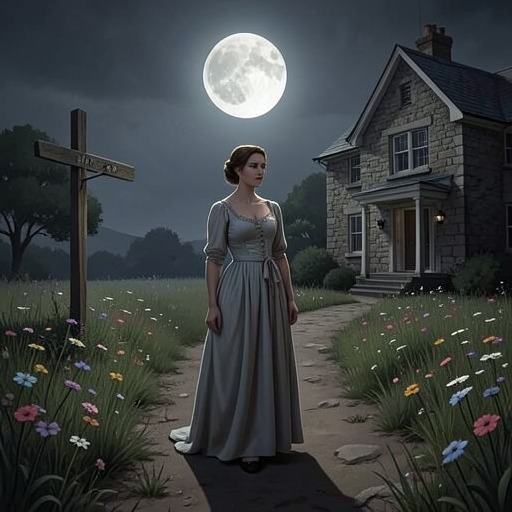
Zaen gives the bracelet during a private meeting beside a stone fountain. He has asked Della for an audience; after telling her that he will leave her alone if she does not love him, he draws the gift from his tattered trouser pocket and presses it into her hand. The modest object carries a carefully specified history. White horsehair recalls the pony Della received when they met; red recalls the stallion that threw her and the moment Zaen caught her, which brought forth her first smile at him. Black comes from the mare he gave her, chosen, he explains, for a regal exterior and a beautiful, sweet spirit like Della’s.
The bracelet also bears one bead for each of them, with their initials carved into it. Zaen says that carving them took many evenings. He had spent years searching for a gift worthy of Della, but concluded that no amount of gold or jewels could express what she meant to him or the precious moments of their daily rides. The bracelet’s value lies instead in its particularity: its materials refer to incidents between these two people, and its paired beads make their relationship part of the design.
The Gift and Della’s Recognition
The gift answers a problem that Zaen’s familiar courtship language has failed to solve. Della has received a love letter and marriage proposal from him every week since she was six and he was seven, and she has rejected his proposals repeatedly. She calls them nonsense and describes herself as no more than a friendly acquaintance to him. Yet the frequency of his attentions has not persuaded her that he sees the person beneath the romantic performance. She explains that his poetry and pretty words did not convince her of enduring love; she had not seen him do anything that she knew in her heart to be such proof.
The bracelet changes that reading. Della’s smile grows as she looks at it, and a tear runs down her cheek. She tells Zaen that what she wanted was someone who would trust her with everything he did not have, and believe she could love him back with all her heart. Others take her for someone who cares only for gold and jewelry; his willingness to offer a handmade token rather than pretend to wealth addresses the person she fears they do not see. Zaen says he has always known her better than that, but the bracelet gives his claim a concrete form.
Della makes the distinction explicit: after a thousand proposals, Zaen had still not shown her that he understood how she saw herself. She did not want to be a prize won through valiant effort or a trophy that proved his greatness; she wanted to be treasured. The bracelet represents the kind of person she wants to be to the man she marries. Her response is not simply gratitude for a thoughtful keepsake: she recognizes the gift as evidence of a relationship grounded in friendship and mutual regard.
From Courtship to Commitment
The bracelet gives Della a reason to reconsider a courtship she had kept at a distance. She admits that she had treated Zaen’s poetry as insincere and hardened her heart, because she would not entrust it to a man who did not love the real her. Their daily encounters had given her pleasure, but she would not let that pleasure become romance without such assurance. Zaen, in turn, understands that his repeated proposals had not answered her need to feel known. The gift makes what his words could not: it ties his declaration to their shared past and to Della’s own understanding of herself.
When Della asks whether he proposed a thousand times, Zaen insists that he did. She laughs that she thought he was not counting, then observes that romance is not the same as love. He calls the breakthrough his thousand-and-first try: a bargain not because the bracelet purchases her affection, but because it finally allows his devotion to be understood. He drops to one knee and asks Della to be his friend for life and marry him. She agrees without gold or jewels, on the condition that he remain first and forever her dearest friend. The bracelet’s significance is completed in that answer: the object given as a sign of friendship becomes part of the understanding on which their engagement rests.
Contrast and Significance
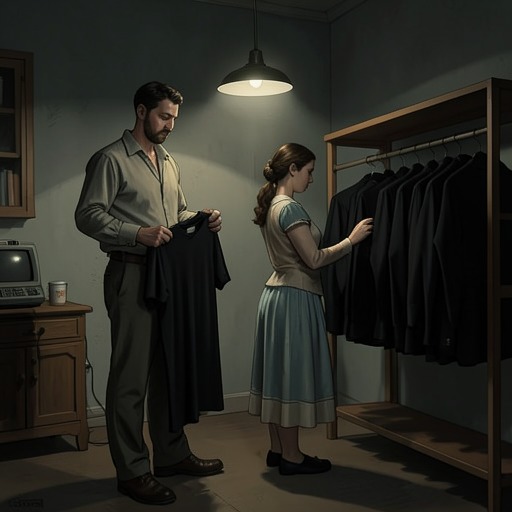
The story sets the bracelet against the display of wealth and the accumulation of romantic appeals. Zaen’s quarters contain hundreds of preserved love letters, each arranged among scroll compartments with flowers tucked inside; the letters demonstrate his persistence, but not the understanding Della requires. His weekly proposals began when both were children, and their sheer number could not substitute for a sign that he saw beyond the image of a spoiled heiress. The bracelet does not erase that history; it gives the history a more truthful expression by recalling concrete moments and the companionship within them.
That contrast also clarifies why a humble, handmade object succeeds where lavishness would not. Zaen says he would have given Della gold and diamonds if he had them, but Della says that is not what she wanted. The gift’s force comes from the care invested in its strands, beads, and initials, and from the memories they make visible. In a plot where desire and inheritance are entangled with treasure, the bracelet offers another measure of value: it cannot compel Della, settle a claim, or replace her choice. It can show that Zaen is willing to entrust her with what he has and meet her as a friend. Her acceptance turns that recognition into a freely chosen promise of marriage.