Rumpelstiltskin’s escape from the lamp
One Thousand and One NightsRumpelstiltskin’s escape from the lamp turns Della’s father’s past bargain into an immediate danger to Della, setting the deadline and the mystery that Tad and Claire must solve. Its cause is a theft the family initially treats as insignificant; its consequence is that Rumpelstiltskin can enforce his claim on Della when she turns twenty-one.
The bargain and the lamp
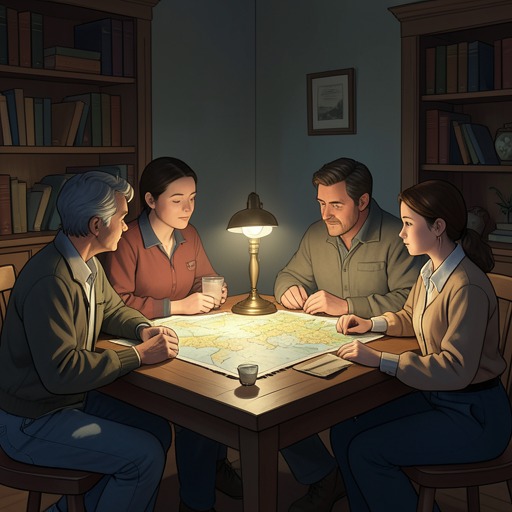
Della’s father explains that he had made three wishes, with the third intended to put the jinn back into the lamp. The escape therefore follows a prior attempt to contain Rumpelstiltskin, not a first encounter: the wish had returned him to confinement, but the lamp remained vulnerable. The family had considered it safe because it was a ratty old object guarded with the rest of their fortune by a rug.
The lamp’s disappearance goes unnoticed until the jinn appears to Della’s father and declares that he will soon have Della. Her father admits that he should have told the family sooner, but he was afraid; he hires Zaen only after the threat becomes undeniable. Zaen’s familiarity with the street makes him a plausible investigator, while his indifference to the treasure—he accepts only a few pieces to pay informants—helps Della’s father trust him.
How the escape is reconstructed
The book reveals the release through later explanations and clues rather than a directly narrated escape scene. Della’s father imagines that whoever stole the lamp also let Rumpelstiltskin out, probably by accident. The account leaves the thief unidentified at this point, but establishes the crucial link between the missing object and the jinn’s freedom.
A separate glimpse of Zaen and Della’s father entering a hidden treasure chamber shows the family’s precautions: they light candles, speak the password “Open sesame,” and descend beneath a rug that lifts to uncover a staircase. The passage connects the lamp’s disappearance to the protected store of wealth without showing the theft itself. The jinn’s release is thus presented as both a breach of physical security and the result of the family’s misplaced confidence in the rug’s protection.
The claim on Della
Rumpelstiltskin’s freedom makes the old bargain newly consequential. Della’s father recalls that the jinn had demanded his firstborn child, refused any substitute bargain, and later asserted a claim on Della. The father says he made his third wish to return the jinn to the lamp, but afterward learned that the jinn still meant to take Della. The lamp had delayed the danger rather than resolved it.
The claim is tied to a precise deadline and visible proof. Rumpelstiltskin possesses Della’s maternal grandmother’s necklace and paternal grandfather’s ring as evidence of his claim; when Della turns twenty-one, her father says, she will belong fully to the jinn, and her inheritance will pass to him. Her identity is already beginning to fade under the jinn’s hold. With only one day left, the escape’s consequence is no longer abstract: the family must find the jinn and a way to return him to the lamp before Della loses both her memory and control of her inheritance.
Fairy-tale clues and recognition
Tad’s investigation links the case to the story of a miller’s daughter tricked by a creature who spins straw into gold. Library research identifies jinns, or genies, as beings described as half fairy and half something else, mischievous and unpredictable, capable of helping or harming. The tale resembles Della’s father’s experience, although Tad finds no lamp in that version. The parallel gives the investigators a pattern, but not yet a complete explanation.
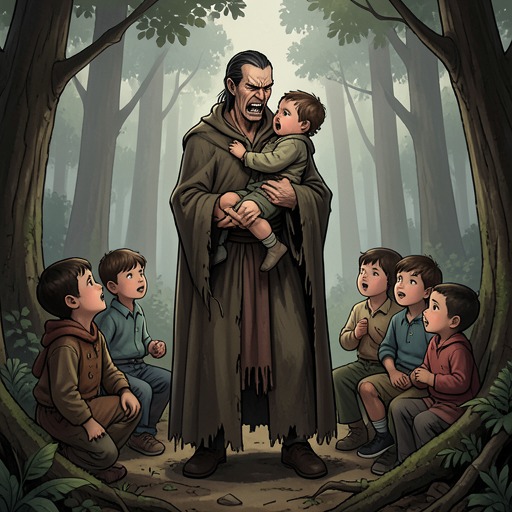
The pattern becomes concrete when Tad and Claire encounter a merchant asking a young man to guess his name in exchange for gold jewelry. Tad recognizes the demand as the one made by the jinn in the miller’s-daughter story, though he cannot initially recall the name. Later, Tante Iezavel identifies the spinning wheel Tad bought as unique and recognizes its owner. Rumpelstiltskin cries out for the wheel, and Paribanou rebukes him for offering the humans what he has spun on it while claiming it is gold, although they cannot tell the difference. These discoveries connect the escaped jinn not only to the name-guessing tale but also to the spinning-wheel story: several familiar fairy-tale motifs converge around the same dangerous figure.
Consequences and significance
The escape changes the lamp from a supposedly secure container into the missing object at the center of a race against Della’s twenty-first birthday. It also turns the family’s wealth into part of the threat: the hidden treasure was protected by the rug, yet the lamp kept with that fortune disappears, and Rumpelstiltskin’s claim could transfer Della’s inheritance to him. The danger grows out of the very bargain that had seemed to secure prosperity.
As a mystery event, the release is reconstructed from testimony, a guarded chamber, a related folktale, and objects tied to Rumpelstiltskin’s methods. The escape is not merely a magical reversal; it is the hinge between an old story about wishes and a present investigation with a fixed deadline. Its consequences—Della’s weakening memory, the threatened inheritance, and the need to recover the lamp—make the past bargain an active force in the plot.