Sev
One Thousand and One NightsSev is a talking bird who serves Lady Love, but his present role follows a far different life: he was once Sevde, a sorcerer who called himself Yavaar and was also known as Jafaar. His confession reveals that Shub-Haramb was his seat of power, that his bid for the throne involved a plan to marry a princess by any means, and that Lady Love’s intervention and the princess’s choice of another man brought his sorcery and misdeeds to an end. The history makes Sev both a servant of the order he once opposed and a figure with unfinished ties to the city where his former power flourished.
Identity and Former Life
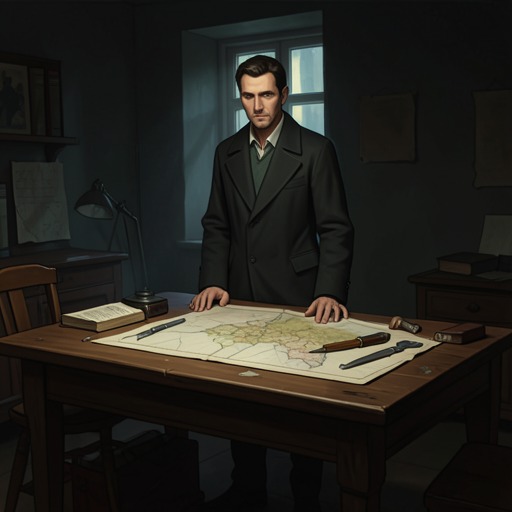
Sev’s present identity is first glimpsed through the contrast between his bird form and the unexpectedly deep voice with which he joins Tad and Claire’s conversation. When the two speculate about a man’s identity, Sev interrupts to say that he was a sorcerer—at least, once. He then gives them the name behind the bird: his true name is Sevde, derived from an ancient eastern word for love. He rejected what he regarded as an impoverished heritage and pursued power and wealth, taking the name Yavaar; tales about him sometimes use the variant Jafaar.
His story links identity to self-invention. Yavaar is the name attached to his ambition and sorcerous reputation, while Sevde preserves the name he says was truly his. He does not present that earlier life as a harmless disguise: he admits that he sought power through disreputable means, imagined himself invincible, and was prepared to challenge the monarchy. The grand public identity and the compromised means behind it therefore belong to the same history.
Ambition and Downfall in Shub-Haramb
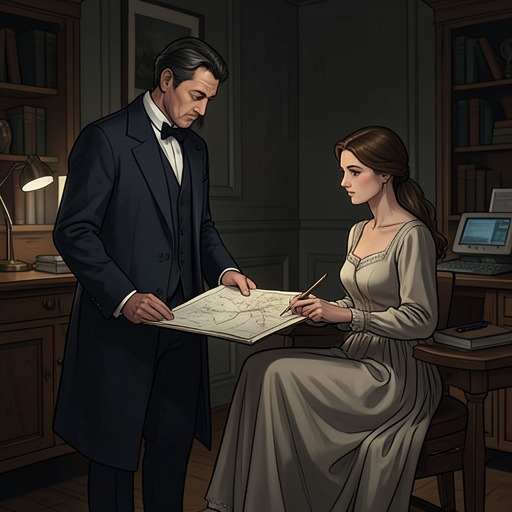
Shub-Haramb was the center of Sev’s former authority. Once he had gained power and wealth, he planned to marry a princess to legitimize his claim to the throne. He says that he was willing to accomplish this by any means necessary and acknowledges a number of dastardly deeds, though he does not recount them in detail. Instead, he tells Tad and Claire that they could ask around Shub-Haramb if they wanted the particulars, leaving the scale of those acts present but unspecified.
The intended marriage and political claim both fail. Lady Love intervenes, and the princess chooses a pauper over Sev. That rejection, together with the consequences of his actions, leads to decades of imprisonment. Sev describes that confinement as the period that made him reconsider what real power was; the authority he had pursued was not, he came to think, what he had believed it to be. Love undoes his sorcery and misdeeds, overturning the premise on which his pursuit of wealth, rule, and a royal marriage had rested.
Service to Lady Love and Return to the Case
After his imprisonment, Sev offers to discard what he calls his robes of shame and serve Lady Love. She accepts, marking a turn from a sorcerer who sought to seize royal power to a bird acting in her service. His past is not merely a tale he tells for effect: when a later case is set in Shub-Haramb, he says it brings back memories of how bad he once was. It is also the first case there since he entered Lady Love’s service, and he admits that he is not welcome in the city.
Claire suggests that Sev’s bird form might keep him from being recognized, but he cautions that some people could still identify him. More decisively, he has been instructed not to get involved. His old connection to Shub-Haramb thus creates a conflict between the case’s setting and his own history, but the evidence does not show him breaking that restriction. The danger is not simply that the city remembers the sorcerer: Sev’s assignment places a boundary on what he may do there.
Relationships and Narrative Role
Sev’s account places Lady Love at both the decisive turning point of his former career and the center of his present allegiance. She intervenes in the plot against the monarchy and accepts his later offer of service. The princess, by choosing a pauper instead, frustrates Sev’s attempt to use marriage to validate his political claim. These relationships expose the difference between the power he once tried to secure through coercion and the love that, in his telling, dismantled his sorcery and changed the course of his life.
His manner of disclosure adds another contrast. Sev first presents his history with a dry flourish, suggesting that Tad and Claire’s guesses about him may have been more fascinating than the truth. But his revelation is not trivial: it explains his former names, his past crimes, his allegiance to Lady Love, and his discomfort at returning to Shub-Haramb. In the case scene, a seemingly self-contained bird becomes a witness to the story’s earlier political and magical history. His past gives the present investigation a personal shadow, while his refusal to presume that a changed appearance makes him safe underscores that a past identity can remain consequential even after a transformation.