
The Making of Orientalism
OrientalismThis thread traces how a European idea of the Orient becomes an organized body of knowledge joined to imperial power.
increasing Bearing strength in each event
 decreasing
Bearing strength in each eventdecreasingAn Imagined Division
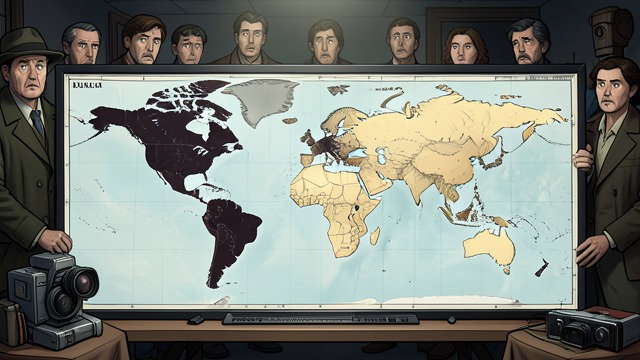
An Imagined Division
Naming Difference
European writing places The Orient opposite The Occident, making geography carry cultural and moral meanings.
A Durable Frame
The distinction becomes a recurring structure for interpreting unfamiliar peoples, not a neutral map of the world.
Future Consequences
Later scholarship inherits this frame and gives it the authority of learned knowledge.
The Napoleonic Model
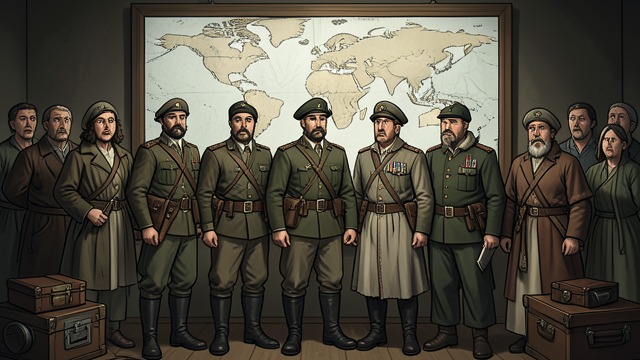
The Napoleonic Model
Conquest and Study
Napoleon Bonaparte brings scholars and military power together during Napoleon’s expedition to Egypt.
Egypt as an Archive
The expedition records Egypt in a vast European project of description and classification.
A Repeatable Method
The undertaking makes conquest appear to produce knowledge, while knowledge helps make further intervention imaginable.
Discipline and Authority

Discipline and Authority
A Scholarly Field
European institutions collect texts, train specialists, and establish recognized methods for studying the Orient.
Knowledge Gains Force
The field does more than describe its subject: it limits which claims about the Orient sound authoritative.
Institutional Continuity
Schools, societies, and publications allow those assumptions to travel beyond individual scholars.
Empire Made Administrative
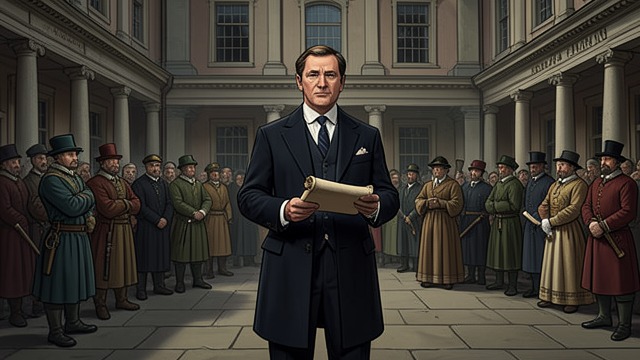
Empire Made Administrative
Expert Rule
Officials translate inherited descriptions into practical assumptions about governing subject populations.
Authority in Public
Arthur James Balfour and Evelyn Baring, 1st Earl of Cromer present British rule in Egypt as justified by British knowledge.
Circular Confirmation
Occupation is treated as proof that Egyptians need foreign government, completing a loop between asserted expertise and power.
The American Inheritance

The American Inheritance
A New Center
After World War II, United States institutions assume a larger role in studying and shaping policy toward the Middle East.
New Professional Language
Area studies and social science replace some older philological forms without automatically abandoning Orientalist assumptions.
Said’s Intervention
Edward Said presents the tradition as a modern structure of power and representation rather than a neutral archive.
From classical antiquity
1798–1801
Early to mid-nineteenth century
Late nineteenth to early twentieth century
After World War II through the 1970s
