
Said’s Position Between Worlds
OrientalismThis thread traces how Edward Said’s personal and scholarly position informs his critique without making it a defense of a fixed cultural identity.
increasing Bearing strength in each event
 decreasing
Bearing strength in each eventdecreasingA Childhood in Colonies

A Childhood in Colonies
Palestine and Egypt
Edward Said grows up in settings shaped by British colonial power and Western education.
A Divided Formation
His schooling is Western, while an early awareness of being an Oriental remains significant.
A Personal Question
The contrast becomes a source of inquiry into how cultural identities are formed.
A Humanist’s Training

A Humanist’s Training
Literary Scholarship
Said builds his academic life in comparative literature and the humanities.
Intellectual Tools
Historical reading and criticism enable him to study culture alongside institutions and power.
A Deliberate Method
His work joins personal investment to scholarly analysis rather than claiming detachment from history.
Writing Orientalism

Writing Orientalism
Research and Composition
Said writes the book during a period of concentrated research and drafting.
Experience as an Inventory
He describes the project as an effort to understand how Western culture shaped the Oriental subject.
A Critical, Not Nativist, Aim
The book challenges domination without claiming to recover a pure or unchanging Orient.
A Public and Political Role

A Public and Political Role
Palestinian Advocacy
Said supports Palestinian self-determination while acknowledging Jewish history and suffering.
A Call for Coexistence
He argues that political equality must aim at a humane shared future.
Resistance to Simplification
His position refuses both denial of Palestinian life and a simple reversal of collective hostility.
Crossing Rather Than Reversing
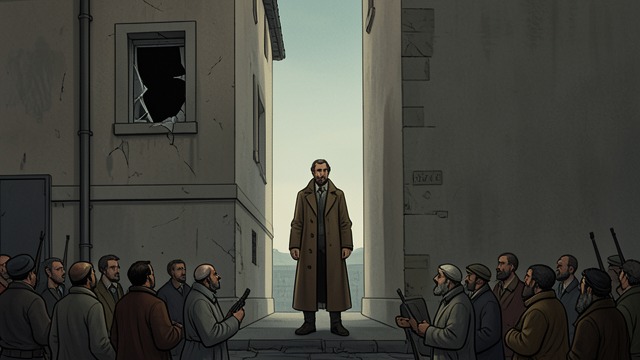
Crossing Rather Than Reversing
Reception Reconsidered
Said addresses readings of his book as anti-Western or as a defense of Islam.
Identities Remain Contested
He insists that neither East nor West is a stable essence beyond historical interpretation.
An Intellectual Responsibility
The scholar should cross inherited barriers without reproducing their coercive divisions.
During Said’s early life
Before the book’s composition
1975–1977
After 1967 and during the book’s reception
In the 1994 afterword
