
The Crisis of Fixed Types
OrientalismThis thread traces the conflict between Orientalist claims of timeless cultural types and evidence of historical change.
increasing Bearing strength in each event
 decreasing
Bearing strength in each eventdecreasingTypes Take Shape

Types Take Shape
Classification Expands
European thinkers classify human groups by language, geography, race, and temperament.
A System of Difference
These categories organize large amounts of diverse material into manageable forms.
The Cost of Order
The resulting simplicity can hide histories and individual variation.
Scientific Hierarchies

Scientific Hierarchies
New Authority
Philology and other disciplines lend scientific prestige to broad claims about peoples.
Classification Becomes Destiny
Language and origin are treated as clues to fixed mental and cultural capacities.
Political Stakes
Such claims can support unequal rule by making hierarchy seem natural.
People Challenge the Type
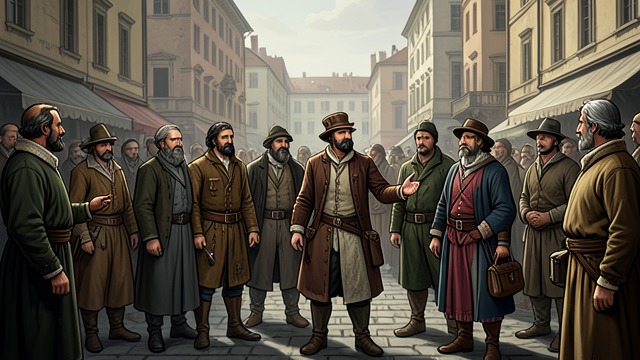
People Challenge the Type
Political Movement
Anticolonial movements demonstrate changing goals and political capacities.
A Strained Framework
The static Oriental type cannot readily account for agency, conflict, or social development.
Evasion and Adaptation
Experts may explain change away or translate it into newer technical categories.
Manifest Change, Latent Stability

Manifest Change, Latent Stability
New Stated Views
Specific accounts of language, society, and history change across scholars and periods.
Old Underlying Assumptions
The Orient can still be imagined as separate, backward, and in need of Western attention.
Said’s Distinction
The contrast between latent and manifest Orientalism explains continuity beneath visible change.
Historical Complexity Restored

Historical Complexity Restored
Against Essence
Said rejects the idea that a religion or region supplies a complete explanation for its inhabitants.
Context and Difference
Political, economic, and social histories must remain visible beside cultural categories.
A More Open Inquiry
Critical method can make the representation of change more accountable.
Eighteenth century
Nineteenth century
Early twentieth century
From the 1870s through the mid-twentieth century
In the book’s final argument
