
Revolution and Expert Interpretation
OrientalismThis thread traces the conflict between political upheaval in the Middle East and experts’ efforts to explain or contain it through fixed cultural categories.
increasing Bearing strength in each event
 decreasing
Bearing strength in each eventdecreasingA Vocabulary of Stability

A Vocabulary of Stability
Cultural Systems
Scholars describe Islam as a coherent structure that can explain many parts of social life.
History Subordinated
Political change may be treated as secondary to the supposed permanence of religious culture.
A Future Tension
This framework makes later movements difficult to recognize on their own terms.
Modern Political Upheaval

Modern Political Upheaval
New Political Claims
Nationalism and other movements challenge colonial and inherited political arrangements.
A Changing Region
The Middle East becomes a site of intense political activity and competing visions of the future.
Interpretive Pressure
Established accounts face the problem of explaining change without revising their basic categories.
Revolution as Pathology

Revolution as Pathology
A Case-Study Frame
P. J. Vatikiotis presents revolution using a vocabulary of illness, irrationality, and disruption.
Political Conflict Reduced
The framing makes radical politics appear less like a historical response than a disorder of the population.
Said’s Objection
He identifies the way evaluative language steers readers before evidence is considered.
The Camel and Revolution

The Camel and Revolution
Etymology as Argument
Bernard Lewis connects the Arabic word for revolution to the image of a camel rising.
Political Meaning Diminished
Said argues that this move makes modern revolutionary commitment seem trivial and transient.
Scholarship Under Dispute
The conflict concerns how expertise can frame political language in ways that diminish its speakers.
The Category Meets Reality
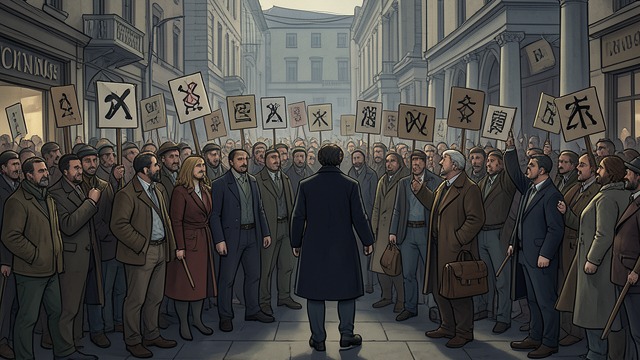
The Category Meets Reality
Unanticipated Agency
Political movements expose limits in claims that Arabs are incapable of organized action.
A System Protects Itself
When the expected pattern fails, Orientalist descriptions can label the evidence an exception or a new danger.
The Need for Revision
Historical explanation must remain open to what people actually do and say.
Interwar period
Mid-twentieth century
Early 1970s
In Bernard Lewis’s early 1970s essay
In Said’s concluding critique
