
From Division to Overlapping Cultures
OrientalismThis thread traces how Said challenges the image of sealed civilizations and develops an alternative centered on interaction and historical mixture.
increasing Bearing strength in each event
 decreasing
Bearing strength in each eventdecreasingGeography Made Meaningful
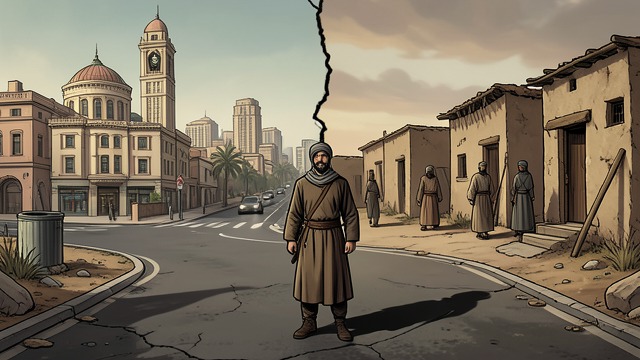
Geography Made Meaningful
More Than a Map
Said argues that East and West are not simply natural, self-evident divisions.
Imaginative Boundaries
People assign identities and values to places through history and representation.
Political Consequences
A mental boundary can help organize real relations of power.
The Boundary Reproduced

The Boundary Reproduced
Recurrent Opposition
Literature, scholarship, and policy repeatedly set the West against the Orient.
Difference Made Absolute
The boundary can turn diverse societies into a single opposing category.
Authority Reinforced
The stronger party gains a stable contrast through which to define itself.
Empires Connect the Regions
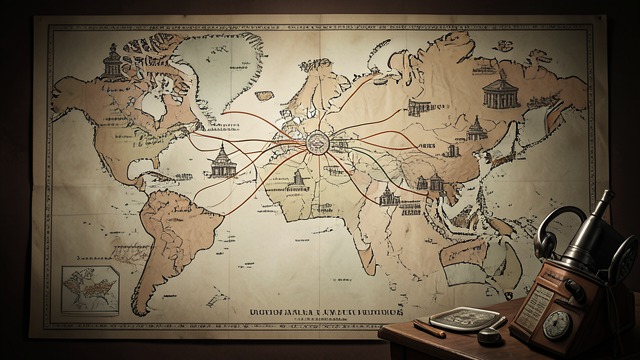
Empires Connect the Regions
Material Contact
Trade, occupation, scholarship, migration, and administration connect societies across the supposed divide.
Unequal Interdependence
The connection is real but structured by unequal access to power and representation.
A Complicated History
The book replaces isolated civilizations with histories shaped by contact and domination.
The Binary Rejected
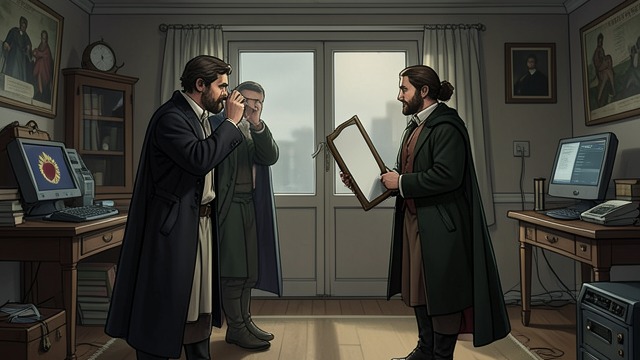
The Binary Rejected
No Pure East or West
Said rejects the claim that either side possesses an unchanging cultural essence.
Not a Reversal
He warns that replacing Orientalism with its opposite merely preserves the same structure.
A Different Question
The focus shifts to how distinctions are made, used, and contested.
Cultures in Conversation
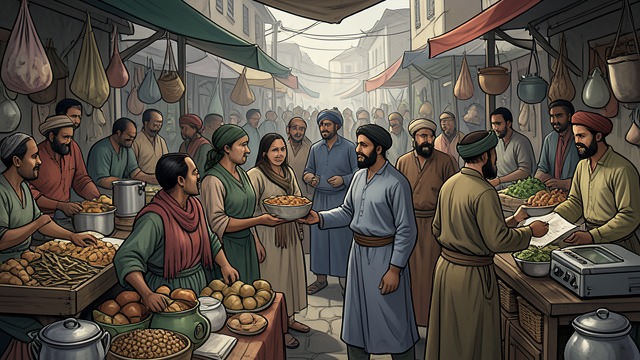
Cultures in Conversation
Overlap and Borrowing
Said emphasizes that cultures interact, borrow from one another, and remain internally diverse.
Against Civilizational Isolation
He rejects descriptions of civilizations as sealed compartments destined for conflict.
A Shared Future
Patient interpretation makes coexistence more imaginable than a manufactured clash.
From the opening of the book
Across the book’s historical examples
Nineteenth and twentieth centuries
In the book’s final chapter
In the 1994 afterword
