
From Research to Rule
OrientalismThis thread traces how academic knowledge about the Orient moves into administration, imperial planning, and policy.
increasing Bearing strength in each event
 decreasing
Bearing strength in each eventdecreasingThe Archive Accumulates

The Archive Accumulates
Gathering Materials
Texts, translations, travel accounts, and linguistic research build a growing body of European knowledge.
Scholarly Selection
Specialists arrange fragments into systems that claim to represent whole peoples and cultures.
Power in Organization
The archive’s order makes the subject appear more stable and manageable than lived reality.
The Expeditionary Laboratory
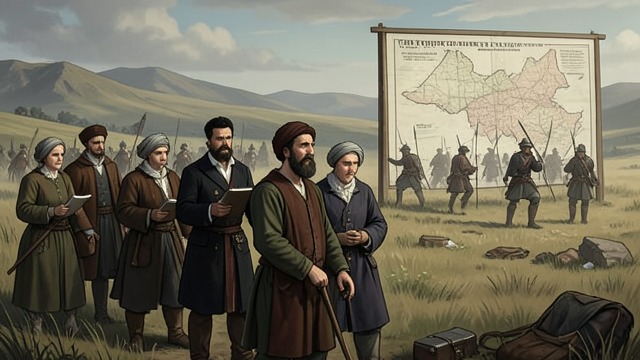
The Expeditionary Laboratory
Scholars Accompany Soldiers
Napoleon Bonaparte organizes an invasion with scholars assigned to examine Egypt.
Description as Possession
The resulting record presents the country as an object that can be surveyed and interpreted by Europeans.
A Colonial Precedent
The expedition joins intellectual production to a political project of occupation.
Experts Serve Administration

Experts Serve Administration
Practical Scholarship
Language training and specialist knowledge serve diplomatic and administrative needs as well as academic study.
Authority Travels
Scholarly descriptions become reference points for officials who do not encounter local societies on equal terms.
An Institutional Pipeline
Education, publication, and government work reinforce one another.
Governing Egypt

Governing Egypt
Occupation and Expertise
Britain’s presence in Egypt gives administrators an immediate stake in descriptions of Egyptian society.
A Political Argument
Arthur James Balfour and Evelyn Baring, 1st Earl of Cromer treat foreign rule as beneficial and necessary.
Self-Confirming Authority
Their premise discounts Egyptian demands for self-government, then uses imperial control as evidence for the premise.
Policy Expertise Recast
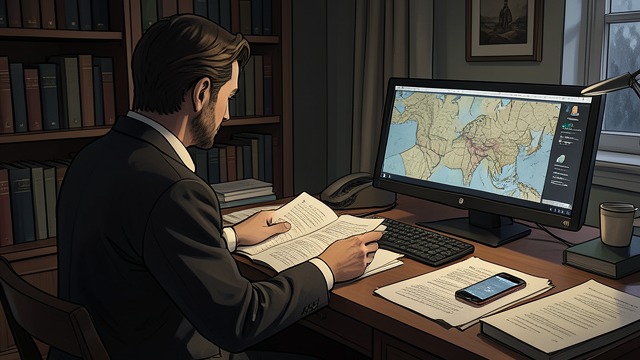
Policy Expertise Recast
A New Professional Role
The American area specialist increasingly advises government and business about the Middle East.
Persistent Assumptions
Said argues that changed methods and terminology can preserve older habits of generalization.
Public Consequences
Expert claims circulate in media and policy settings, where they can shape how populations and conflicts are understood.
From the eighteenth century
1798–1801
Early to mid-nineteenth century
1882 to the early twentieth century
Postwar decades through the 1970s
