
From Imperial Rivalry to American Primacy
OrientalismThis thread follows the changing powers that claim knowledge of the Orient and use it to shape political relationships.
increasing Bearing strength in each event
 decreasing
Bearing strength in each eventdecreasingBritain and France Advance
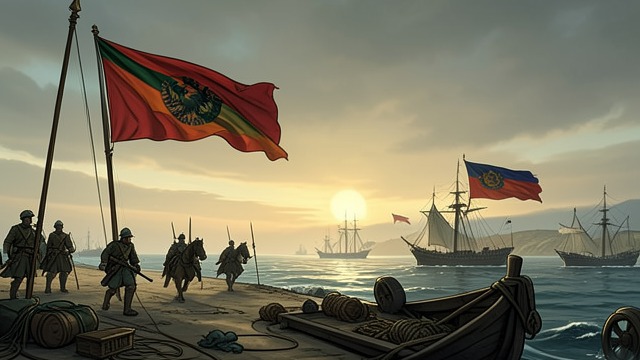
Britain and France Advance
Competing Interests
European powers expand commerce, scholarship, and political influence across eastern territories.
A Shared Vocabulary
Rival empires develop overlapping descriptions of the Orient and its peoples.
Unequal Encounter
Their competition takes place within a broader relationship of Western power over the regions being described.
Napoleonic Ambition
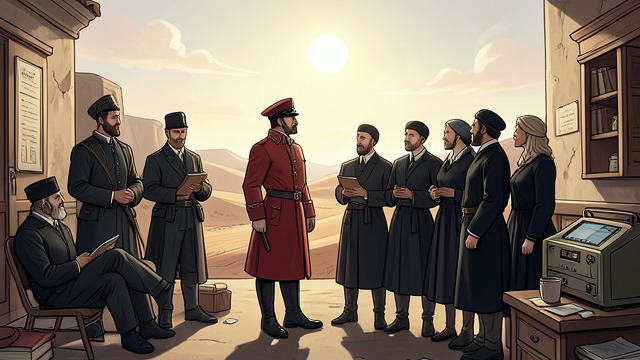
Napoleonic Ambition
Egypt as a Strategic Project
Napoleon Bonaparte sees Egypt as a way to challenge Britain and advance his own imperial ambitions.
Scholarship in the Campaign
The expedition carries a research establishment alongside the army.
A Model for Later Projects
Its combination of strategic planning and authoritative description helps define modern Orientalist practice.
Britain Establishes Rule
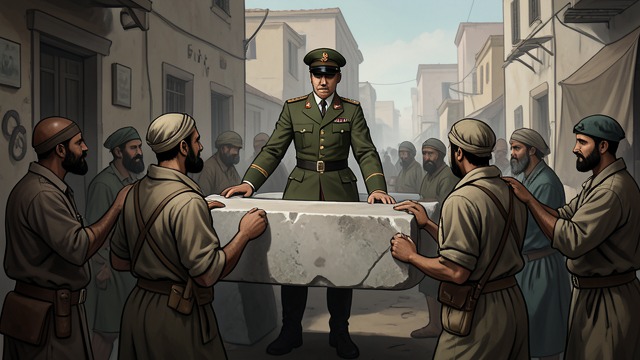
Britain Establishes Rule
Occupation
Britain’s occupation of Egypt turns long-standing scholarly interest into direct administrative involvement.
Imperial Confidence
Arthur James Balfour and Evelyn Baring, 1st Earl of Cromer defend British supervision as a service to Egypt and Europe.
French Displacement
The British presence sharpens French awareness of its limited political position in the region.
Partition and Mandates
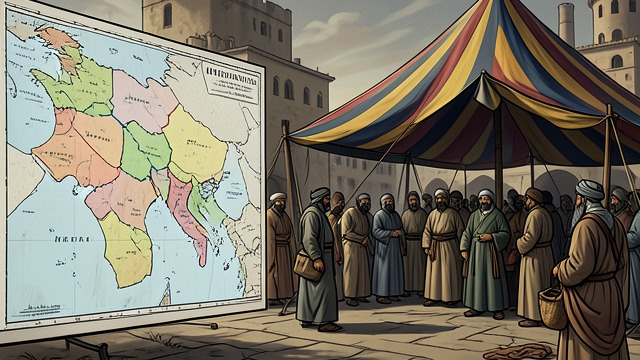
Partition and Mandates
Ottoman Decline
Britain and France plan spheres of influence over Ottoman territories.
Expert Participation
Regional knowledge informs imperial planning even as local populations press claims of their own.
A Contested Settlement
The project of dividing territory collides with national self-determination and emerging political movements.
American Primacy
American Primacy
A Transfer of Influence
The United States succeeds Britain and France as the dominant Western power in the region.
Institutions and Policy
Research centers, government programs, and policy expertise connect Middle East study to American strategic interests.
A Continuing Inheritance
Said argues that the imperial framework changes its institutional form without disappearing.
Seventeenth through eighteenth centuries
1798–1801
From 1882
World War I and its aftermath
After World War II through the 1970s
