
Anderson’s Movement from Skepticism to Dread
OzymandiasThis thread follows Anderson from dismissing Gerhardt’s fear to recognizing the danger in the military’s acquisition of ancient knowledge.
increasing Bearing strength in each event
 decreasing
Bearing strength in each eventdecreasingA Skeptical Companion
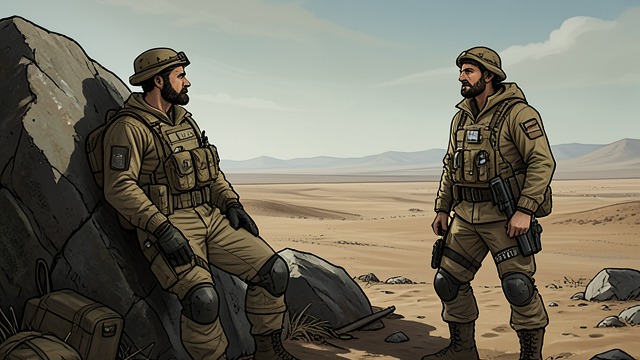
A Skeptical Companion
Gerhardt’s suspicion
Gerhardt worries that Colonel Mattern may abandon the archaeologists, but Anderson rejects the idea as paranoia.
Trust in procedure
Anderson believes the military commander may be dismissive without being deliberately treacherous.
Empty-Handed Researcher
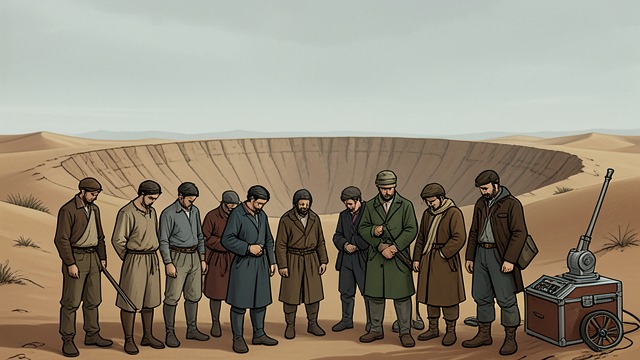
Empty-Handed Researcher
The evidence disappoints
Anderson’s team finds foundations but no objects, remains, or other tangible traces of daily life.
Confidence weakens
He understands why the military considers the planet useless, though the failure makes any discovery more valuable.
The Poet’s Landscape

The Poet’s Landscape
A remembered line
Anderson quotes Shelley while crossing the seemingly endless sand, connecting the barren terrain with a poem about vanished power.
A mood of loss
The allusion gives emotional form to the ruins’ silence before Ozymandias makes the poem newly literal.
Witness to a Discovery
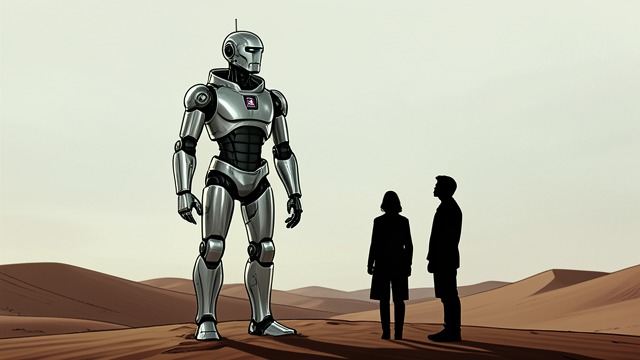
Witness to a Discovery
An ancient voice
Anderson sees the robot speak and realizes that humanity is hearing a language never born on Earth.
A sudden possibility
The find transforms his exhausted field day into an encounter with a living archive of another civilization.
Fear for the Future
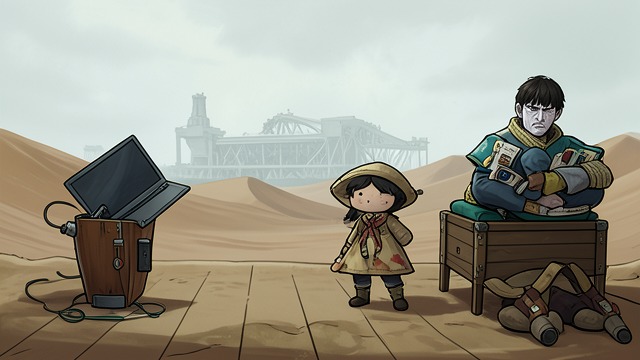
Fear for the Future
Knowledge becomes danger
Anderson imagines scientists on Earth learning from the weapons preserved in Ozymandias.
Moral reckoning
He leaves the discovery’s triumph behind emotionally, fearing that the new knowledge could reproduce the destruction it records.
During the first drive into the desert
After a day of excavation
During the return drive at sunset
At Leopold’s location after dark
As the expedition prepares to leave
