
The Ruins and the Robot
OzymandiasThis thread develops the contrast between monuments that have vanished and a single durable guide that survives to narrate their history.
increasing Bearing strength in each event
 decreasing
Bearing strength in each eventdecreasingFoundations Without Objects
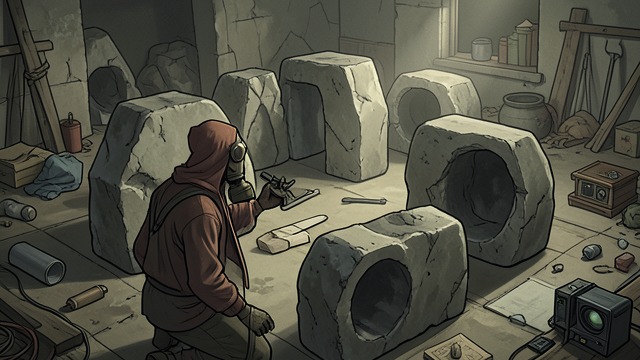
Foundations Without Objects
A partial record
The researchers find building foundations but no everyday artifacts with which to reconstruct the people who built them.
Limits of archaeology
The surviving structures show that a civilization existed, while leaving much of its culture inaccessible.
A Monumental City Remembered
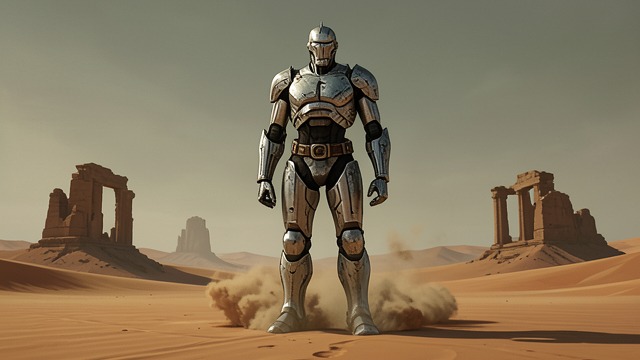
A Monumental City Remembered
Scale recovered through memory
Ozymandias describes a vast city and structures that no longer stand around it.
Description outlasts stone
The robot’s testimony restores a sense of urban grandeur unavailable from the eroded remains alone.
The Guide Outlasts the City
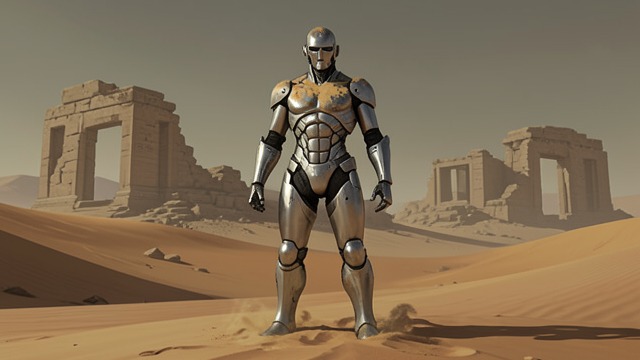
The Guide Outlasts the City
An intended permanence
The Thaiquens built Ozymandias to serve as an enduring guide, confident that their monuments would remain meaningful.
Irony of survival
The cities disappear, while the guide survives to address visitors who can no longer see what it describes.
A Library in One Mind
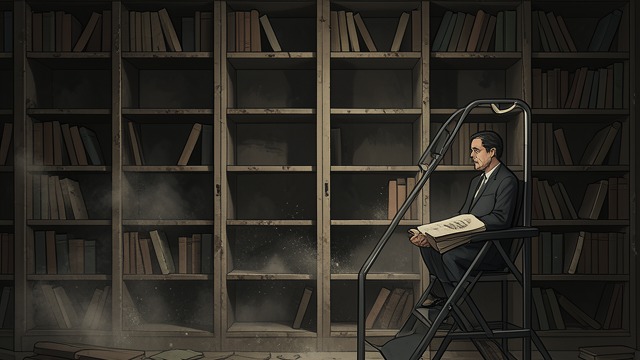
A Library in One Mind
Lost texts retained
Ozymandias says it remembers the contents of a library whose physical volumes no longer exist.
Memory as preservation
The machine preserves a cultural record through stored recollection, even as the material institutions of the society vanish.
The Last Witness
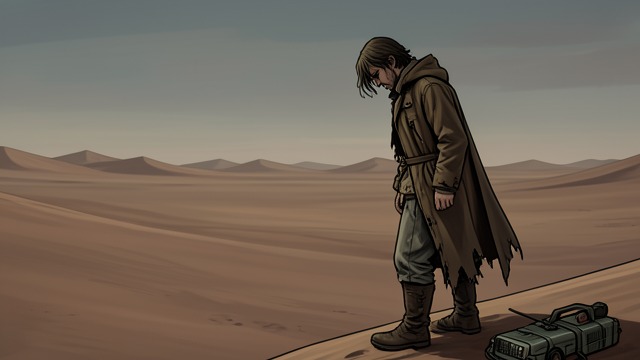
The Last Witness
A vanished world’s survivor
Ozymandias remains the only encountered witness to the civilization whose cities lie beneath sand.
Survival does not restore a people
Its memory can describe the past, but cannot bring the lost society back to life.
During the archaeologists’ first excavations
During Ozymandias’s account of Durab
After the researchers understand Ozymandias
During the guided historical narration
As the scientists leave the desert
