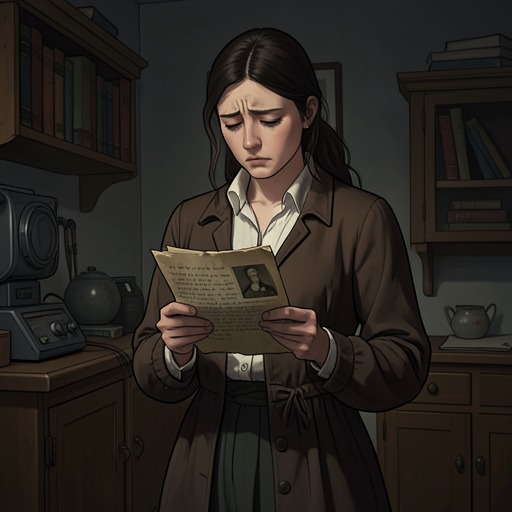
M. Taillefer
Père GoriotM. Taillefer is Victorine Taillefer’s wealthy banker father, a man who withholds both acknowledgment and inheritance from his daughter even when she comes to him with her dead mother’s final letter. His refusal makes a family visit into a yearly ritual of humiliation and gives concrete form to the novel’s contrast between financial power and filial tenderness: Victorine continues to love and forgive the father who will not call her his daughter.
Identity and Family Position
M. Taillefer is a millionaire banker and the father of Victorine and an unnamed son. He has determined that his daughter should receive only six hundred francs a year, and has taken steps to disinherit her by converting his real estate into personal property so that he can leave it undivided to his son. The arrangement makes his rejection more than an emotional slight: it is built into the disposition of his wealth and the future of his family.
His position is especially stark beside Victorine’s circumstances. Her mother died broken-hearted in the care of Mme. Couture, who then took the orphan into her household. Mme. Couture has only her jointure and widow’s pension, and cannot assure Victorine lasting protection. M. Taillefer’s money gives him power over his daughter’s prospects, but he uses that power to keep her dependent and excluded rather than to provide for her.
The Annual Appeal
Victorine tries once each year to see her father and deliver her mother’s message of forgiveness. Until the visit recounted by Mme. Couture, these attempts have met a closed door. On the day of the latest appeal, Victorine and Mme. Couture first go to pray at Saint-Etienne du Mont. Mme. Couture reports that Victorine is trembling; prayer offers her comfort, but does not alter the unequal terms of the encounter awaiting her.
M. Taillefer eventually grants them a personal interview, apparently to make clear that their visits should stop. He does not ask Victorine to sit down, leaving her standing while he tells Mme. Couture that they should spare themselves further trouble. He says the young woman is injuring her cause by importuning him, although she comes only once a year, and argues that because Victorine’s mother had nothing when he married her, Victorine should expect nothing from him. His cool manner and calculated words turn a daughter’s plea into an offense for which he holds her responsible.
The Letter and the Rejection
Victorine throws herself at her father’s feet and explains that she persists in visiting for her mother’s sake. She promises to obey him without complaint and asks him to read the dead woman’s farewell letter. Mme. Couture describes Victorine’s plea as beautifully expressed and says that it moved her to tears. The letter is not simply a request for money: it carries the mother’s final appeal and the forgiveness Victorine has undertaken to convey.
M. Taillefer cuts his nails while Victorine speaks. He takes the letter, which Mme. Couture says has been soaked with the mother’s tears, and flings it onto the chimney-piece, replying that it is all right. He then holds out his hands as if to raise Victorine, but withdraws them when she covers them with kisses. The gestures briefly approach the contact and acknowledgment she seeks, only to end in renewed refusal. Mme. Couture observes that he and Victorine look remarkably alike, making his denial of their relationship more visible rather than less.
The Son and the Moral Contrast
M. Taillefer’s son enters during the meeting and takes no notice of his sister. Father and son leave together, bowing to Mme. Couture and pleading urgent business. The son’s silence extends the exclusion beyond the father’s individual conduct: Victorine has no help from the brother who is to receive the estate. He has not visited her for four years and has sent her no assistance.
Victorine, however, does not answer rejection with accusation. She continues to pray that God will open her father’s eyes and soften her brother’s heart, and no blame enters those prayers. Mme. Couture and Mme. Vauquer condemn the banker’s conduct, while Victorine’s affection persists even when pain draws a cry from her. The difference between their responses defines the emotional and ethical force of the episode: M. Taillefer makes wealth a barrier to kinship, while his daughter preserves an attachment that his actions give her ample reason to abandon.
Narrative Significance
M. Taillefer is characterized through the consequences of his choices and the details of the reported interview rather than through an account of his private thoughts. The scene offers no evidence that he changes his position or reads the letter with sympathy. Instead, the annual appeal ends as before, and Victorine returns from it with red eyes. His treatment of her establishes the material stakes behind her dependence on Mme. Couture and makes the prospect of inheritance inseparable from the question of whether her family will recognize her at all.
The episode also places M. Taillefer’s financial reasoning against the terms of Victorine’s appeal. He invokes the mother’s lack of property to justify withholding support; Victorine invokes her mother’s memory and forgiveness as reasons to keep coming. In that contrast, the father’s carefully arranged estate signifies more than a transfer of assets: it records the durable exclusion of a daughter whose resemblance to him cannot secure the acknowledgment that his wealth could have made tangible.