
The Uses of Women's Knowledge
Partners in CrimeThis flow traces how Tuppence's embodied, social, and wartime knowledge challenges assumptions that formal or masculine expertise is the only route to detection.
increasing Bearing strength in each event
 decreasing
Bearing strength in each eventdecreasingKnowing the Household
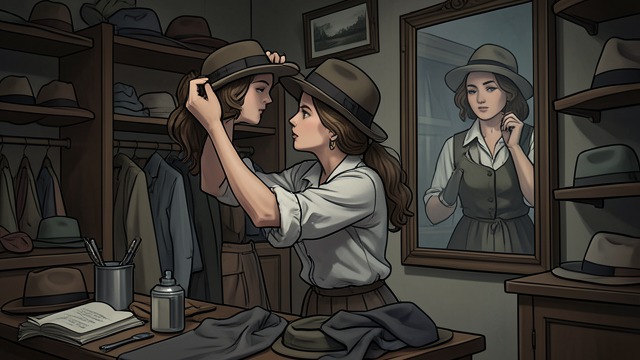
Knowing the Household
Domestic Experience as Evidence
Tuppence understands how a hat shop works, how a woman may behave, and how household routines create opportunities. These details allow her to see what formal questioning misses.
Expertise Without a Title
Her knowledge is not presented as a credential but as lived experience. The agency's cases repeatedly make that experience decisive.
Reading Romance

Reading Romance
Emotional Motive
Tuppence recognizes that Lawrence's missing-person story is really a confession of devotion. Her understanding of shyness and courtship allows her to identify what the client cannot say.
Intervention with Consequences
She helps Janet create a situation in which Lawrence must act. Her emotional intelligence can solve a problem, but it also means making choices in other people's lives.
Fashion Against Assumption
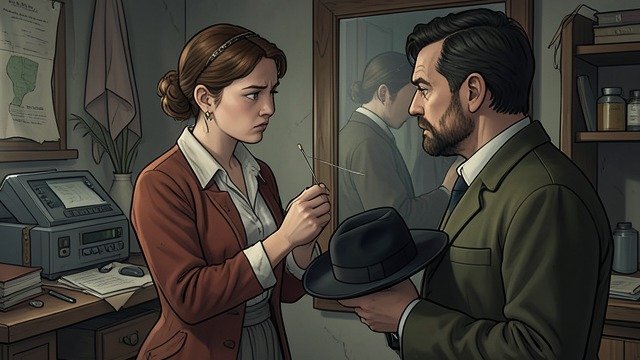
Fashion Against Assumption
The Hat Pin Question
Tuppence disputes the idea that a hat pin automatically points to a woman. She knows that modern hairstyles and hats have made the object uncommon.
A Changed Suspect Field
Her practical knowledge allows Tommy to consider a man using the pin to stage a woman's crime. A small social fact changes the whole reconstruction.
Hospital Memory

Hospital Memory
A Technical Insight
Tuppence recalls wartime hospital work and recognizes that small Ricin injections could produce immunity. The repeated marks on Miss Logan's arm take on a new meaning.
A Confrontation Built on Knowledge
She uses the medical text and inheritance facts to identify the poisoner. Her earlier experience becomes a means of confronting murder rather than merely recalling the past.
Intuition Tested

Intuition Tested
The Value of a Hunch
Tuppence notices unease, inconsistencies, and social tensions before they become formal clues. Her hunches often direct the next question.
The Need for Proof
The cases also show that intuition must be checked against timing, objects, and witnesses. Her strongest work combines instinct with patient verification.
During the first agency cases
During Lawrence's inquiry
During the Sunningdale murder inquiry
During the Thurnly poisoning case
Across the later cases
