Elise
Partners in CrimeElise, Lady Laura Barton’s maid, is unmasked as a professional thief who exploits her position in a household already made vulnerable by suspicion. Her brief appearance in the investigation of a missing pearl exemplifies the gap between an apparently suspicious scene and the identity concealed within it: Tommy Beresford notices that her soapy hands do not fit the innocent explanation she offers, then secures her identification through fingerprints and a photograph.
Identity and Position
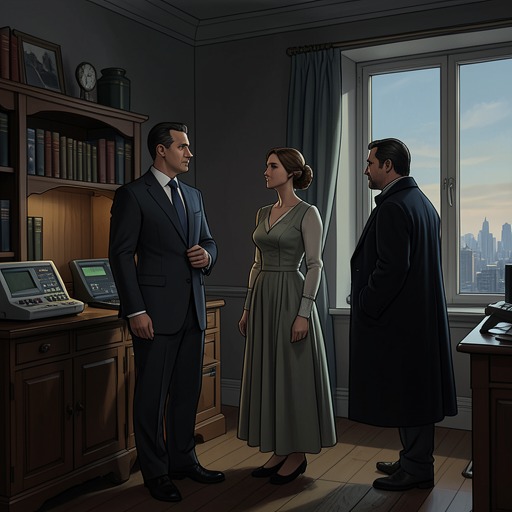
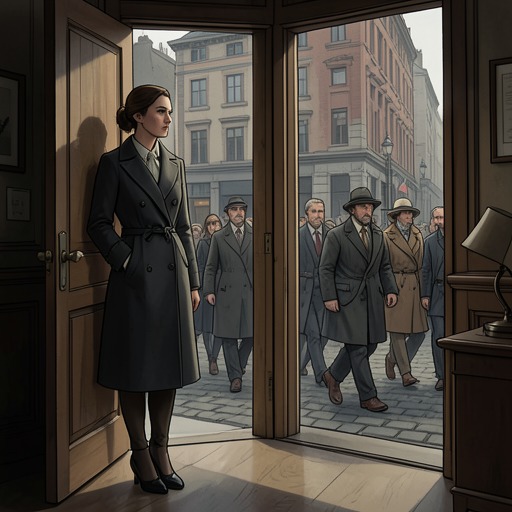
Elise is introduced as a slim, dark-haired French maid in Lady Laura’s service. She appears in the doorway between Lady Laura’s bedroom and bathroom while Tommy Beresford and Tuppence Beresford are investigating the theft of the pearl from Mrs. Hamilton Betts’s pendant. Her position gives her access to the household’s rooms, while the presence of Lady Laura—a guest already associated with suspicion of kleptomania—provides a useful cover for a thief.
The household’s social setting matters to Tommy’s eventual explanation. Lady Laura is an old and dear friend of Colonel Kingston Bruce, and the Colonel presents her to his visitors as a woman of rank and standing. Tommy reasons that a professional thief could benefit from serving a lady suspected of kleptomania who stayed in different houses: the mistress’s reputation would make suspicion seem to point elsewhere, while the maid’s employment offered opportunities to move between households.
The Pearl Investigation
During the search, Elise tries to open a bedroom door and says that someone must have locked it from the other side. The handle then turns, and she dismisses the difficulty as a sticking door. The moment is fleeting, but Tommy’s attention to her hands gives it significance. He has experienced the practical problem of opening a door with soap on one’s hands: they slip against the handle. He therefore questions why Elise’s hands were so soapy, and why she immediately used a towel.
The towel, Tommy concludes, prevented soap from being left on the handle. What might have looked like a trivial domestic detail thus becomes evidence of deliberate concealment. Rather than accuse Elise in the room, Tommy obtains a photograph of her and has her handle a glass slide. After sending Tuppence to search the house and keep Lady Laura from leaving, he goes to Scotland Yard with the evidence.
Exposure and Significance
The investigation does not end with Lady Laura’s arrest: Tommy tells Tuppence that Elise has been arrested instead. At Scotland Yard, rapid development of the photographic negative allows the police to compare Elise’s fingerprints and photograph; Tommy reports that the identification shows her to be a long-lost friend. The evidence changes the apparent meaning of the case, redirecting suspicion from Lady Laura to the maid whose position had helped her pass unnoticed.
Elise’s characterization is brief and chiefly conveyed through Tommy’s deductions rather than through her own account. The case turns on the contrast between service as a visible social role and criminal identity concealed behind it. Her towel and soapy hands are small, ordinary objects, but Tommy reads their practical implications and uses them to break through the misleading surface of the household’s suspicions.