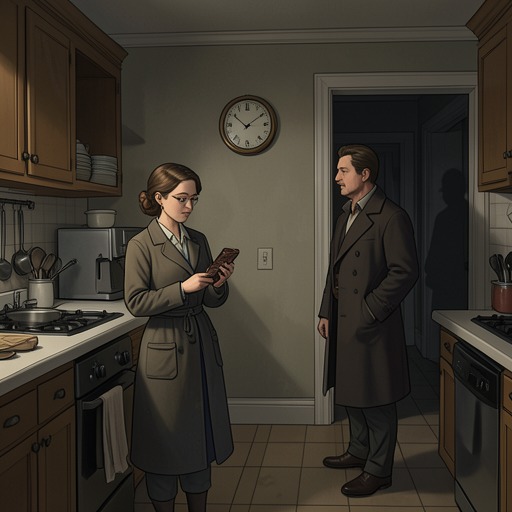
Lois Hargreaves
Partners in CrimeLois Hargreaves is the young owner of Thurnly Grange, a country-house resident who turns to Tommy Beresford for help after discovering that an anonymous box of chocolates sent to the household contained arsenic. Her story links a carefully observed clue and a complicated inheritance to a second, fatal poisoning crisis that overtakes the investigation.
Identity and Background
Lois lives at Thurnly Grange, a large, old-fashioned house near the small village of Thurnly. She prefers country life and describes its seasonal pleasures: hunting in winter and tennis in summer. The village’s small scale also shapes her sense of events there: an incident affecting the household cannot remain insignificant in a close-knit rural setting.
She was raised by her aunt, Lady Radclyffe, who made her home at Thurnly Grange after her husband bought the property. Lois was Lady Radclyffe’s only living relation. Dennis Radclyffe, the late husband’s nephew, also lived in the house; Lois calls him her cousin, while clarifying that they are not actually related by blood.
The Chocolate Poisoning and the Clue
About a week before seeking help, Lois received a box of chocolates through the post. No sender was identified. Although she was not especially fond of chocolate, other people in the household ate some, and everyone who had eaten it became ill. The doctor took away the remaining chocolates for analysis, which established that they contained enough arsenic to make people seriously ill, though not enough to kill them.
Lois suspected that the sender was someone within the household, and a small mark on discarded wrapping gave her a reason for that belief. She habitually doodles three intertwined fish when she has a pencil in hand. Earlier, at breakfast, she had drawn the fish on the label of a parcel of silk stockings from a London shop. When examining the brown paper used to wrap the chocolates, she recognized a surviving corner of that same label, with her drawing still on it. The connection made the parcel’s former use traceable, but did not by itself identify who had reused it.
Lois had not gone to the police. Before explaining why, she hesitated; once assured that what she told Tommy would be kept confidential, she disclosed her suspicion about someone in the house. Her appeal thus rests on both a material clue and a decision to seek private help rather than involve the authorities.
Inheritance and Household Tensions
Lady Radclyffe had openly intended to leave her fortune to Dennis, apart from a small provision for Lois, on the grounds that the money belonged to the Radclyffe family. That expectation changed after Lady Radclyffe quarrelled with Dennis over debts he had incurred. She died a year later, leaving her fortune to Lois instead.
Lois says the inheritance was a great blow to Dennis and that she felt badly about it. She would have given him the money, but believed she could not simply transfer it to him. Instead, as soon as she turned twenty-one, she made a will leaving the estate to Dennis. She had reached that age only three weeks before her meeting with Tommy, so the new will was a recent act of conscience as well as a significant alteration to the household’s financial stakes.
Death Report and Narrative Role
The household’s danger escalates beyond the arsenic-laced chocolates. A newspaper report describes a later outbreak of ptomaine poisoning at Thurnly Grange, then attributed to fig paste used in sandwiches. It names Lois and the parlormaid, Esther Quant, among the reported dead, while Captain Radclyffe and Miss Logan are said to be seriously ill. Miss Chilcott, who had not eaten the sandwiches, is reported well. The news transforms Lois from a potential client whose clue might lead to an inquiry into one of its apparent victims.
Tommy reacts with regret that he did not go to Thurnly Grange with Lois the previous day and urges an immediate visit after reading the report. Tuppence points out that he might otherwise have eaten the fig sandwiches, and notes that Dennis is also reported seriously ill. Lois’s reported death therefore arrives alongside the endangered status of the household she had described, while the contrast between the earlier arsenic scare and the later, apparently fatal outbreak gives her story its abrupt and unresolved turn.