Monica Deane
Partners in CrimeMonica Deane’s story turns on the difference between inheriting a house and inheriting security: left with property but no ready money, she tries to make the Red House sustain herself and her invalid mother, while facing a choice between the man she loves and a financially secure alternative. The eventual discovery of her aunt’s hidden pearls changes the terms of that choice and gives her a chance of a future with Gerald.
Identity and Circumstances
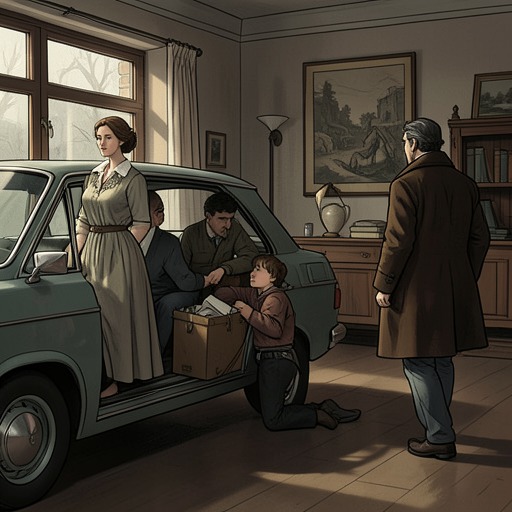
Monica enters Blunt's Brilliant Detectives office as a slender, brown-haired girl in rather shabby clothes, hesitating before she explains her circumstances. Her father had been rector of Little Hampsley in Suffolk; after his death, three years earlier, Monica and her mother were left badly off. Monica worked as a governess, but when her mother became a confirmed invalid she returned home to care for her. Her personal history is thus defined by care as well as poverty: her decisions are made with her mother’s needs in view.
An inheritance from an estranged paternal aunt initially seems to promise relief. The aunt had been wealthy, but after small legacies were paid, Monica received only the house in which the woman had lived; she could only guess that the aunt had lost her money during the war or spent her capital. The inheritance gave Monica a place to live, not the means to live comfortably.
The Red House and the Plan to Keep It
Monica had the opportunity to sell the house at an advantageous price, and the prospective buyers made a further tempting offer. She refused both. Rather than return to tiny, expensive lodgings, she hoped to give her mother comfortable rooms in the Red House and meet their expenses by taking in paying guests. For a time the arrangement appeared workable: the aunt’s old servant stayed on, and she and Monica shared the housework.
Then inexplicable incidents began, putting the plan under pressure. The house was not simply an asset that could solve Monica’s difficulties; keeping it meant attempting to turn a costly inheritance into a livelihood. Her refusal to sell therefore reflects both practical hope and attachment to the possibility of making a home for her mother.
Love, Money, and Marriage
Monica’s financial position sharpens the conflict between affection and security. Gerald, the man she loves, is desperately poor, despite being a clever engineer. With a little capital, his firm would take him into partnership. Mr. Partridge, by contrast, is described as a good man and comfortably well off. Monica believes marriage to him would end their troubles, but her hesitation makes clear that financial suitability does not amount to love.
Tuppence recognizes the emotional difference Monica cannot quite state. A list of a suitor’s good qualities, she observes, cannot make the match feel right. Monica’s dilemma is not simply whether to choose a wealthy man over a poor one: it is whether she can accept a secure life that would deny the attachment she values. The limited finances attached to the Red House make that question immediate rather than abstract.
The Hidden Pearls and the Ending
The resolution comes when a small parcel yields a magnificent, carefully matched string of pearls. Tommy estimates that it is worth at least another five thousand pounds and connects the jewels to a cutting Monica’s aunt had kept about pearls as an investment. He concludes that the old woman must have converted her securities into banknotes and jewels. The discovery supplies the missing wealth that Monica’s inheritance had seemed to lack.
Tuppence’s delight is explicitly tied to Monica’s romantic future: she is happy that Monica can marry the young man she loves and live happily. The hidden fortune changes the practical stakes of the choice between Gerald and Mr. Partridge, making it possible for Monica to imagine love without relying on a wealthy husband to rescue her and her mother from poverty. Her ending is consequently a reversal of the apparent inheritance: the house first represents an obligation without adequate resources, while the concealed pearls reveal that the aunt’s legacy contains an unexpected means of independence.