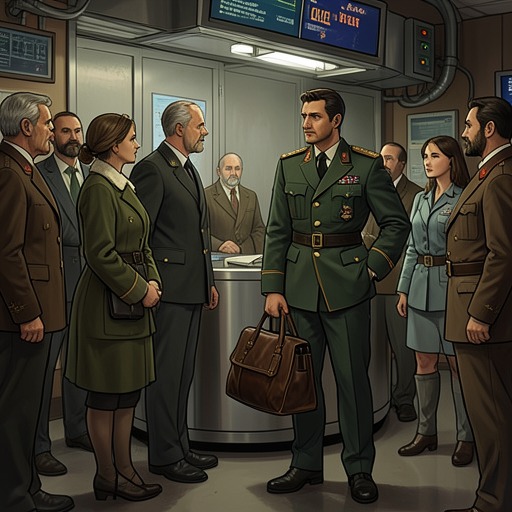
The diplomatic-bag cocaine-smuggling operation
Partners in CrimeThe diplomatic-bag cocaine-smuggling operation uses an invented luggage mix-up to make diplomatic immunity part of a drug-smuggling route. Tommy Beresford reverses the apparent question of whose bag was taken: the important object was not the ambassador’s bag, but the other bag that someone wanted temporarily in the ambassador’s possession. That shift points him from a baffling tale of mistaken identity to a beauty shop concealing a cocaine distribution store.
The Luggage Puzzle
The case begins when Mr. Wilmott, an American ambassador, asks the International Detective Agency to investigate the return of his kitbag. He says he arrived on the Nomadic a week earlier and that his bag was confused with one belonging to Senator Ralph Westerham, whose initials were also R.W. In the story first given to him, Wilmott took Westerham’s bag by mistake, while Westerham promptly sent Wilmott’s bag to the Embassy and recovered his own. Nothing, his valet says, was missing when the ambassador’s bag came back.
The explanation collapses when Wilmott later meets Westerham. The senator denies having travelled with a kitbag at all and says he never took the ambassador’s bag from the ship. The false account therefore does not merely explain an accidental exchange: it introduces an invented person and a fabricated chain of custody. Wilmott is left with the central contradiction that the bag was supposedly stolen and returned, yet the supposed second owner denies the transaction.
Tommy treats the reason for the substitution as more revealing than the mechanics of the reported mistake. He asks why anyone would want the ambassador’s bag for an hour or so, then inverts the question: perhaps the criminals needed the other bag to be in the ambassador’s possession for that short interval. Diplomatic luggage is not subjected to customs examination, so the temporary placement of a bag in that privileged channel offers a practical means of moving contraband past inspection. The ruse’s apparent absurdity is a screen for a specific advantage.
From Diplomatic Privilege to the Distribution Site
The diplomatic exemption narrows the likely cargo. Tommy reasons that it must be something small enough to fit in luggage and identifies drugs as the probable answer. The case thus connects a brief substitution of baggage to a larger operation: a protected diplomatic channel could help a shipment bypass customs, while a separate local site handled storage or distribution.
Tommy’s own office had already been targeted as part of the effort to obstruct him. He recalls a staged incident in which a supposed stranger attacked him, apparently to establish the stranger’s credibility, while a woman’s expression of dismay at Albert’s lasso act did not fit the role she was playing. Tommy says the conspirators had seen his advertisement and intended either to divert his attention or remove him from the investigation. He pretends to accept the woman’s implausible account and allows her to lead him to the next meeting, but leaves instructions behind and delays his arrival so that help can be prepared.
At the beauty shop, the pursuit turns into a coordinated confrontation. Cicely March leads Tommy through a door while holding it open for him. A customer, speaking slowly in difficult English, claims to recognize Cicely and rushes after them, keeping the door from closing. At the same moment, two men leave the waiting area: one follows the customer, while the other silences the shop attendant as she begins to cry out. Tommy is briefly covered with a cloth, but the action is quickly interrupted. A waiting man handcuffs the mysterious stranger, while the customer restrains Cicely March. When the customer’s veil falls, she is revealed to be Tuppence Beresford.
Exposure and Seizure
Tuppence explains that she recognized the danger from Tommy’s note and telephoned Scotland Yard. Inspector Grace and another officer met her outside the shop, enabling the ambush to be reversed. The stranger was already wanted, though the authorities had not suspected the premises because they believed it to be a genuine beauty shop. The operation’s concealment depended on an ordinary commercial front and on the investigators’ attention being directed elsewhere.
The shop’s bath-salt display gives way to the hidden stockroom. At Tuppence’s suggestion, Tommy opens a small wall safe whose key is still in the lock. The safe’s back opens into a large recess stacked with rows of elegant bath-salt tins. The tins are a disguise: pink crystals cover a fine white powder beneath. Inspector Grace identifies the powder as almost certainly pure cocaine and recognizes the find as the discovery of a distribution area the police had been seeking near the West End.
The seizure supplies the physical confirmation that the luggage ruse alone could not provide. The false kitbag story indicated how smugglers might exploit diplomatic immunity; the concealed tins revealed a local supply of cocaine and connected the investigation to an established distribution operation. The evidence also explains why the beauty shop, with its innocent appearance, had escaped suspicion.
Detection Through Performance and Partnership
The case turns on competing performances of identity. The criminals rely on the appearance of a routine luggage error, a credible senator’s name, a genuine-looking shop, and a staged attack designed to win Tommy’s confidence. Their deception works by inviting others to accept familiar explanations. Tommy’s breakthrough comes when he stops treating the reported exchange as a transaction between two real owners and asks what advantage the substitution itself would create.
The investigators also use performance strategically. Tommy plays the credulous detective and allows the apparent lead to dictate the route, while arranging for assistance before he arrives. Tuppence changes from an apparently foreign-speaking customer into Tommy’s partner and an ally of Scotland Yard; her disguise helps her get into position to restrain Cicely March. The ambush exposes the criminals’ own staging, turning their attempt to control the encounter into the means of arrest.
After the discovery, Tommy credits Tuppence’s instruction with helping him recognize that the shop attendant’s peroxide hair was not genuine. He proposes a businesslike letter to the ambassador reporting that the matter has been handled, then turns to tea and buttered muffins. That brisk return to domestic routine contrasts with the international reach of the scheme: a brief baggage substitution, protected by diplomatic privilege, has led to the capture of a wanted man and the uncovering of cocaine hidden behind the shop’s harmless display.