
The House as a Home
PiranesiThis flow follows Piranesi’s reverence for the House as it sustains his survival, shapes his understanding, and complicates his decision to leave.
increasing Bearing strength in each event
 decreasing
Bearing strength in each eventdecreasingLearning the Tides
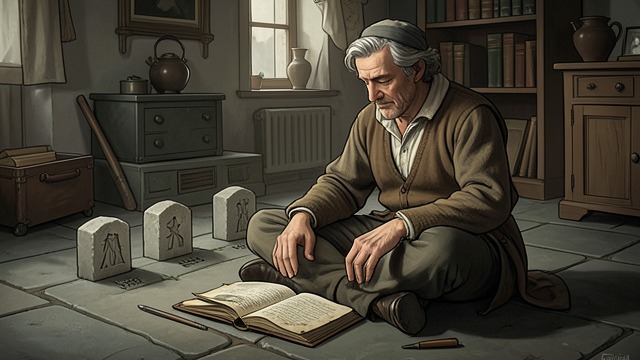
Reading a World
Observation as survival
Piranesi learns to record high and low tides and to distinguish their patterns. This careful work turns a frightening ocean into something he can approach without pretending it is harmless.
Knowledge in relationship
The tides provide food and danger, while the halls offer routes and shelter. His science grows from attention to the world around him, rather than from a wish to dominate it.
Care for the Dead
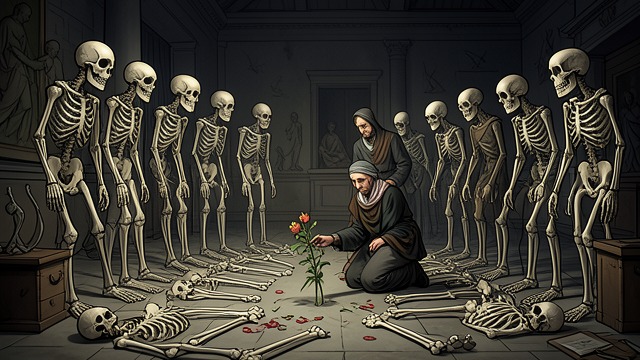
The Dead as Neighbours
Practices of remembrance
Piranesi brings food, water, and lilies to the skeletons he has found. He places their bones in order and speaks to them about his discoveries.
A moral community
The dead are not merely evidence for his catalogue. His care treats each person as worthy of company, an ethic that later extends even to the man who betrayed him.
The Moonlit Hall
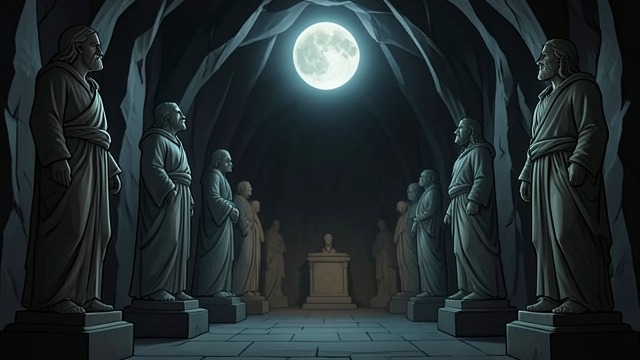
Beauty Without Use
A crowd facing the moon
In the dark hall, Piranesi sees statues arranged as a living crowd turned toward the moon. The scene briefly lets him imagine a world containing thousands of people.
A changed purpose
The vision makes the House valuable in itself, not a puzzle whose worth depends on a hidden prize. Piranesi begins to question the Other’s search for power.
The Flood’s Mercy
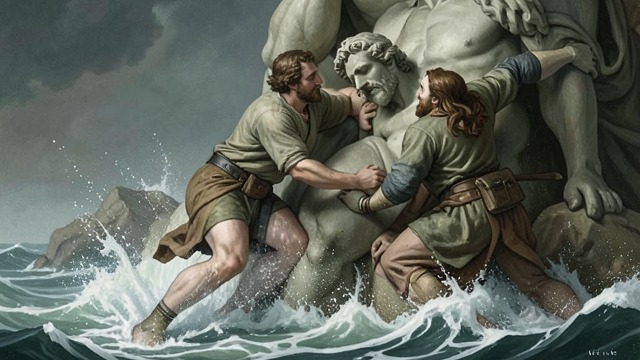
Shelter in Stone
The statues as refuge
Piranesi and Raphael survive by climbing the Horned Giant and finding protection behind its body. The sculptures that Piranesi has long loved become practical shelter during mortal danger.
A world that does not promise safety
The House can save its inhabitants through their knowledge and its structures, but the flood remains destructive. Piranesi’s faith is neither simple optimism nor denial of risk.
Leaving the Beloved World
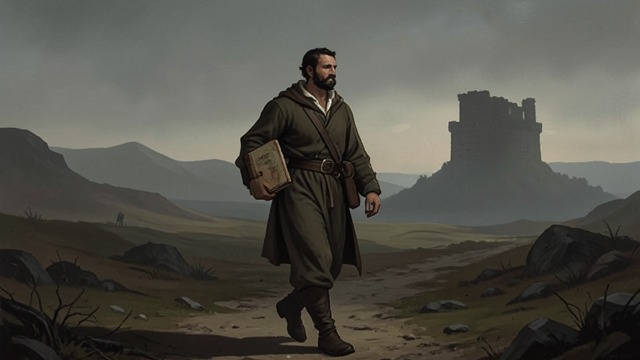
A Home Carried Forward
The cost of departure
Piranesi fears leaving the House empty and abandoning the dead who have depended on his care. The decision is difficult precisely because his attachment is genuine.
A changed form of belonging
He leaves with his journals and his knowledge of the halls. In the outside world, the House remains a source of memory and orientation rather than a place he must inhabit alone.
In Piranesi’s early years in the House
After Piranesi identifies and names the dead
During the night in the One-Hundred-and-Ninety-Second Western Hall
During the Great Flood in the First Western Hall
On the day Piranesi leaves with Raphael
