
Beatrice Nest’s Scholarly Awakening
PossessionBeatrice’s long, hesitant work on Ellen Ash changes from dutiful editing into an encounter with privacy, omission, and her own suppressed scholarly desire.
increasing Bearing strength in each event
 decreasing
Bearing strength in each eventdecreasingThe Young Ash Reader

A Passion for Conversation
Student Years
Beatrice studies Norse mythology and Ash under Professor Bengtsson. His poetry offers her an image of intellectual and emotional conversation between men and women that she does not find in her immediate world.
A Redirected Project
Instead of researching the Ask and Embla poems, she is steered toward editing Ellen Ash’s journal. The assignment appears appropriate to her presumed capacities but limits the work she originally wanted to do.
Twenty-Five Years in the Archive
The Unfinished Edition
Daily Work
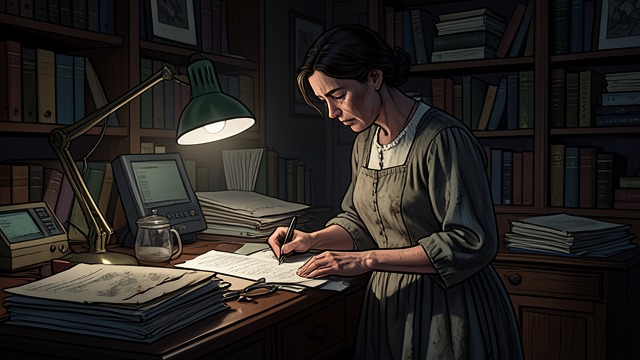
Beatrice spends decades sorting Ellen’s journals and household papers. Her method is patient and private, but the edition advances slowly and earns little recognition.
Changing Academic Values
As feminist scholarship asks new questions about women’s lives, Beatrice feels judged for having treated Ellen as a dutiful helpmeet. She is unsure whether a more radical interpretation would serve Ellen or merely satisfy current fashion.
The Fear of Exposure

A Fragile Trust
Maud’s Questions
Maud asks whether Ellen wrote about Christabel LaMotte. Beatrice is reluctant to expose her disorganized notes and journals, but she searches and finds that Ellen read Melusina.
The Archive Opens
Maud’s serious interest gives Beatrice a reason to share material she has guarded for years. Their conversation shifts from professional procedure to the moral question of what an editor owes a dead woman.
The Theory of Bafflement
A New Interpretation
Ellen’s Silence
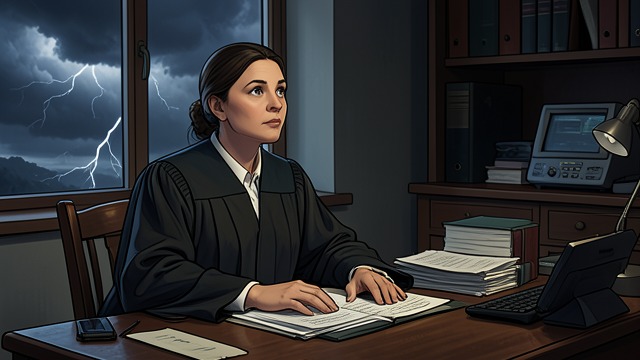
Beatrice explains that she came to feel Ellen’s journal was not merely dull but deliberately baffling. The possibility of purposeful omission helps her articulate an insight she had long distrusted.
A Scholarly Voice
Maud takes Beatrice seriously rather than dismissing her as naïve. Beatrice begins to recognize that her hesitation may be connected to institutional limits and to a lifetime of being assigned work deemed suitable for women.
The Warning About Cropper
Acting on What She Heard
A Difficult Call
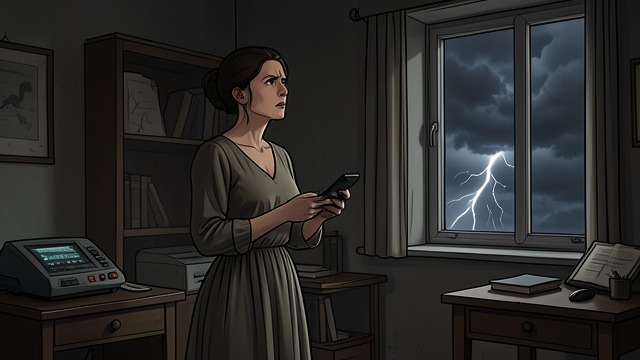
Beatrice telephones Maud to report that Cropper and Hildebrand Ash may try to disturb Randolph’s grave. She fears being dismissed but chooses to make the warning anyway.
Agency at Last
Her information helps bring the other researchers together in time to confront Cropper. The woman long treated as a passive archival custodian becomes an active participant in protecting the evidence and its ethical context.
Late 1930s and early 1940s
From the 1950s into the 1970s
The day Maud visits the Ash Factory
During Maud’s research visit
Shortly before the graveyard crisis
