
The Correspondence at Seal Court
PossessionThe search for the other half of Ash’s letters leads Roland and Maud from archival clues to a hidden cache that transforms literary speculation into documented history.
increasing Bearing strength in each event
 decreasing
Bearing strength in each eventdecreasingThe Doll’s Bed Clue

A Poem Becomes a Map
The House
At Seal Court, Roland and Maud enter Christabel LaMotte’s sealed room. A poem about a doll’s secrecy shifts Maud’s attention from empty desk drawers to the miniature bed.
Discovery
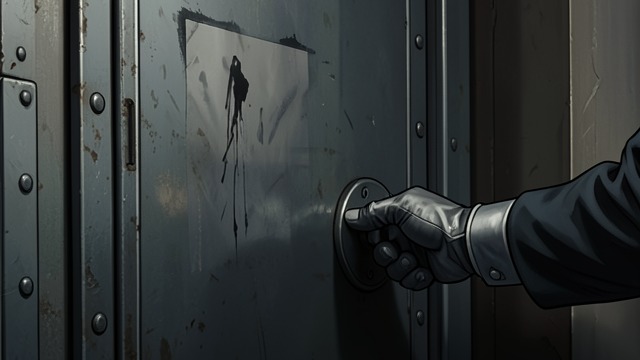
Under the mattresses, Maud finds a linen-wrapped packet containing bundles of letters. The clue turns literary interpretation into physical search, while the discovery reveals that both correspondents’ papers survived together.
Both Sides Survive
A Complete Exchange
The Letters
The bundles contain letters from both Christabel LaMotte and Randolph Henry Ash. Their exchange begins with the breakfast-party meeting and records a sustained intellectual and emotional relationship.
New Questions
The first and last letters establish separation but do not settle what happened between them. Sir George controls access, so the scholars learn that possession of evidence does not guarantee the freedom to read it.
A Negotiated Reading
The Letters Become Legible
Reading Together
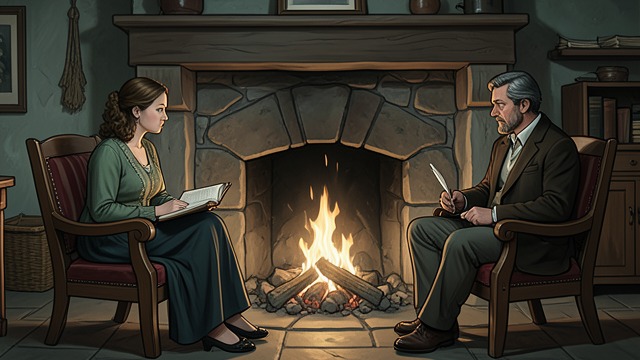
Sir George allows Maud and Roland to examine the correspondence in the house library. They divide the work by scholarly expertise, recording details while trying to preserve the order and development of the exchange.
Intimacy and Method
The letters resist being reduced to a tidy plot. Their uncertain, responsive form makes the readers feel that the writing was meant for one particular person, not for a future academic audience.
The Yorkshire Echoes
A Landscape in the Letters
Textual Clues
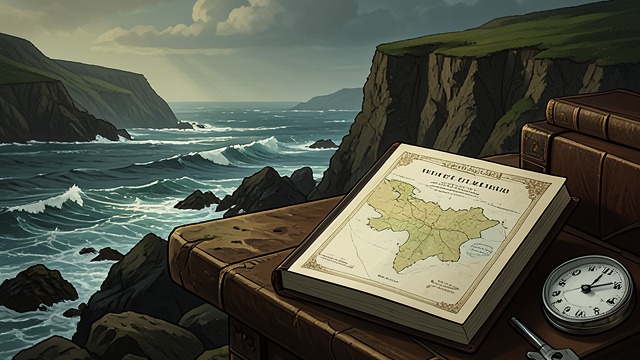
Ash’s letters to Ellen describe Yorkshire coastlines, water, geological change, and marine life. LaMotte’s Melusina contains corresponding landscapes, local expressions, and images that seem to answer Ash’s writing.
A Probable Journey
Roland and Maud infer that LaMotte accompanied Ash during his 1859 expedition. The evidence is cumulative rather than conclusive, forcing them to distinguish a compelling pattern from proof.
Letters Become Public Property

The Discovery Escapes
Scholarly Competition
Mortimer Cropper announces the letters to the press and approaches Sir George with a lavish offer. Blackadder mobilizes public and institutional support to keep the manuscripts in Britain.
Private Stakes
The scholars’ secret work becomes a contest over ownership, access, and national heritage. Maud’s family claim and Roland’s original theft complicate any clean division between public scholarship and private rights.
The first visit to Seal Court in autumn 1986
Immediately after the hidden cache is opened
The following winter at Seal Court
During the later winter and spring research
After Cropper’s public announcement
