
Faith, Doubt, and the Supernatural
PossessionAsh, LaMotte, and their interpreters debate whether supernatural experience is fraud, faith, or a form of imaginative truth.
increasing Bearing strength in each event
 decreasing
Bearing strength in each eventdecreasingThe Breakfast Debate
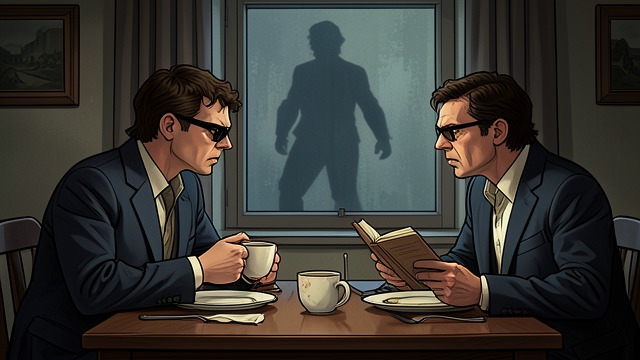
A Dispute About Spirits
Different Positions
At the breakfast party, Ash demands experimental proof of spiritual manifestations, while LaMotte expresses belief in such events. Their difference becomes one of the first subjects that draws them toward sustained conversation.
Shared Uncertainty
Ash is not simply a materialist: he believes the historical imagination requires temporary entry into another mind. The argument foreshadows the difficulty of separating imaginative truth from supernatural claim.
Ragnarök and Religious Doubt
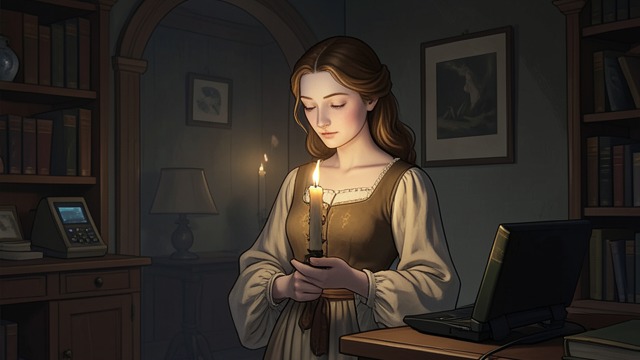
A Poem’s Theological Risk
LaMotte’s Response
LaMotte tells Ash that Ragnarök unsettled her Christian faith because it seemed to place sacred history alongside other wonder tales. She is both intellectually engaged and personally shaken.
Ash’s Answer
Ash admits that mythic parallels can support or weaken religious certainty. Their exchange makes doubt a shared inquiry rather than a simple opposition between a believer and a skeptic.
The Seance at Yew Tree Lodge
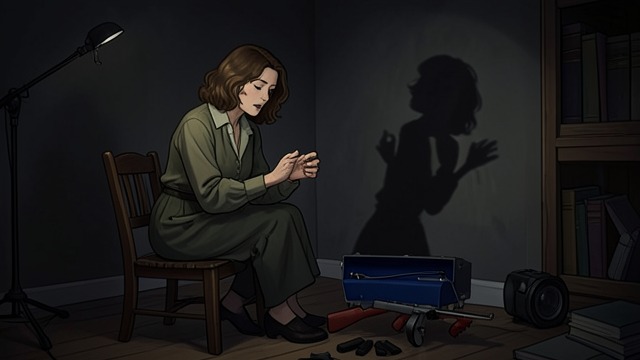
Manifestation and Exposure
A Violent Session
At Olivia Judge’s séance, Ash interrupts Hella Lees’s performance and demands an answer about a child. The scene contains apparent tricks, strange noises, and an emotional accusation that cannot be dismissed as mere stagecraft.
Conflicting Accounts
Ash and Lees describe the event differently. Their disagreement leaves open whether the séance was fraud, genuine experience, or a mixture of manipulation and real grief.
Cropper’s Documentary Inquiry

The Medium’s Testimony
Competing Archives
Cropper reads Hella Lees’s memoir alongside Ash’s account, seeking the identity of the participant who cried about a child and stones. His sources are shaped by the interests of their authors.
Knowledge Through Bias
The investigation succeeds not because any witness is neutral but because their partial accounts can be compared. The novel treats belief and skepticism as forces that organize evidence.
Imagination After the Revelation
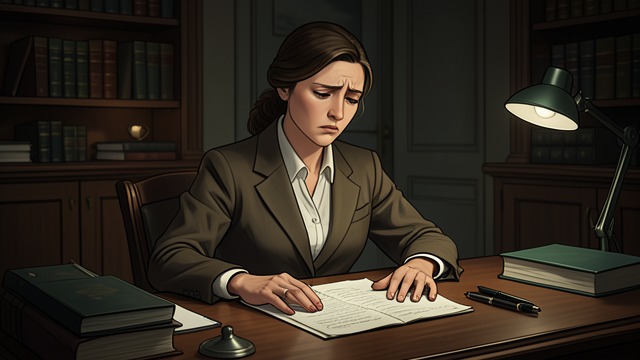
What the Documents Can Prove
A Child Exists
LaMotte’s letter confirms Maia’s survival and Ash’s unknown fatherhood. It does not settle the supernatural claims surrounding the séance or make every prior interpretation reliable.
Truth Beyond Certainty
The surviving record joins factual disclosure to imaginative reconstruction. The novel suggests that evidence can correct a story without eliminating mystery from human motives or experience.
June 1858, at the meeting with Crabb Robinson
In the early correspondence
After the Yorkshire affair
During the contemporary investigation
Near the end of the novel
