
Language, Naming, and the Poet’s Voice
PossessionThe novel contrasts theoretical suspicion of language with the felt power of words to name, connect, and make a world newly perceptible.
increasing Bearing strength in each event
 decreasing
Bearing strength in each eventdecreasingWords as Material Traces

Language and History
Names and Things
The Vico fragments connect early naming to poetic metaphor. Roland sees that Ash’s language joins concrete objects—grain, apples, chains—to cultural memory and historical thought.
A Critical Problem
Words may make reality intelligible, but they can also turn a person into an interpretation. Roland’s scholarly training makes him wary of believing that every verbal echo proves a historical connection.
LaMotte’s Life of Language

A Woman Claims the Craft
A Creative Argument
LaMotte insists that women think, read, and write beyond the subjects conventionally allowed to them. She describes the need to write as a form of work necessary to her life.
Ash’s Recognition
Ash responds to her as a poet rather than a decorative muse, though he also risks speaking through her. Their exchange makes literary respect and gendered power inseparable.
Names Across Brittany
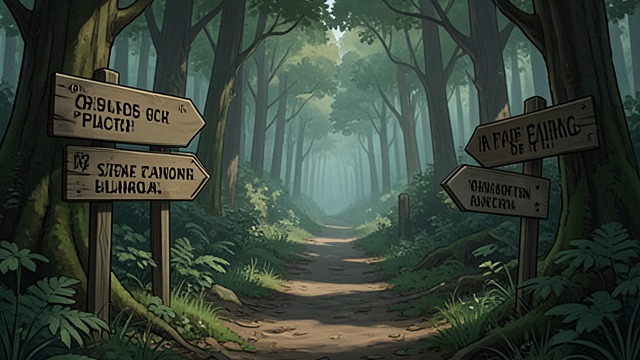
Place Changes With Speech
A Shifting Forest
Sabine records her father’s many names for Brocéliande and the changing boundaries of its paths. Language preserves a place by allowing it to remain multiple rather than fixed.
Identity in Several Tongues
LaMotte describes herself as moving among English, French, and Breton. Her sense of self, like the fairy figures she writes, changes with language and place.
The Critics’ Vocabulary

Metaphors Under Pressure
Sexual Reduction
Roland questions a criticism that turns every landscape into a sexual metaphor. He worries that interpretive systems can consume the world they claim to explain.
A More Open Reading
Maud acknowledges that theories reveal real patterns but should not abolish material detail. Their disagreement becomes a search for criticism that can hold both physical things and symbolic meanings.
Roland’s Word Lists

Naming Before Argument
A New Practice
Roland writes lists of words—blood, clay, hair, water—rather than forcing them into critical prose. He begins to recognize rhythm and association as the beginnings of poetry.
A Changed Relation to Theory
He does not reject intellectual inquiry; he discovers that language can be materially and emotionally alive before it becomes a claim. The experience gives him a possible voice distinct from Ash’s.
When Roland reads the Vico notes
During the correspondence
During Sabine’s journal writing
During the Yorkshire trip
After the return to Putney
