
The Women’s Archive and Creative Autonomy
PossessionLaMotte, Blanche, Sabine, Ellen, Beatrice, and Maud reveal different ways women preserve authorship under conditions that restrict their work and public recognition.
increasing Bearing strength in each event
 decreasing
Bearing strength in each eventdecreasingThe Shared Household Project
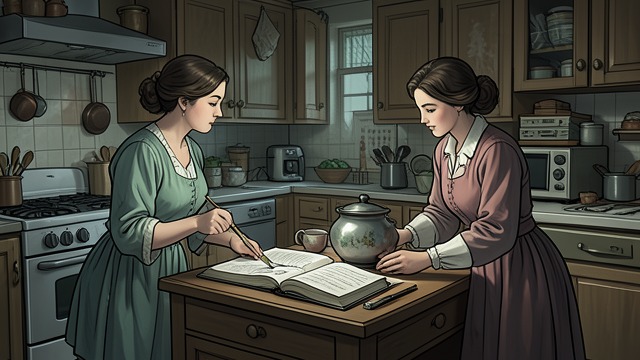
Work Without a Master
A Domestic Experiment
LaMotte and Blanche try to build a home where cooking, cleaning, painting, and writing can coexist as meaningful labor. Their arrangement challenges the assumption that women’s creative work must be secondary.
Structural Fragility
The household depends on limited money and mutual trust. Its ideals cannot protect either woman from poverty, social judgment, or the changing demands of private desire.
LaMotte’s Defense of the Pen
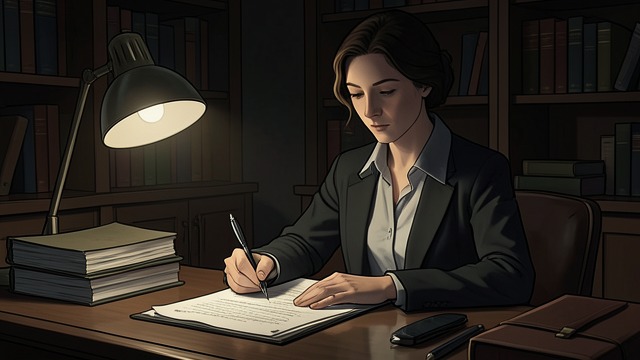
A Claim to Authorship
Refusing Polite Limits
LaMotte recalls a male poet who praised her poems only as an acceptable pastime before marriage. She insists that writing is central to her life, not an ornament or substitute for “weightier responsibilities.”
Recognition and Risk
Ash treats her as a serious writer, but their relationship also threatens to absorb her into his imaginative life. Artistic autonomy remains difficult even in a conversation between intellectual equals.
Sabine’s Apprenticeship
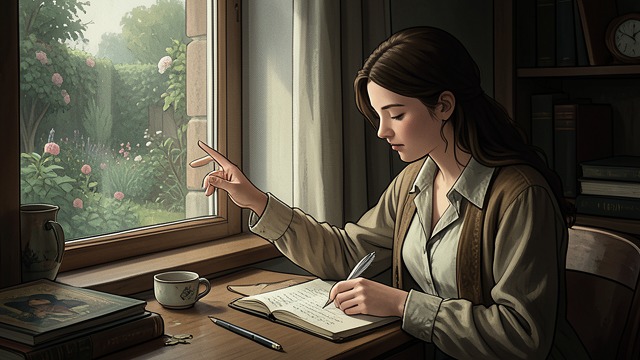
Learning by Recording
A Practice of Attention
LaMotte encourages Sabine to describe ordinary surroundings as a discipline for future writing. Sabine experiments with narrative, dialogue, and the relation between observed fact and imagined form.
A New Authority
Being taken seriously gives Sabine confidence, but it also exposes the limits of her experience and education. Her journal develops a voice that is distinct from LaMotte’s influence.
Ellen’s Hidden Work
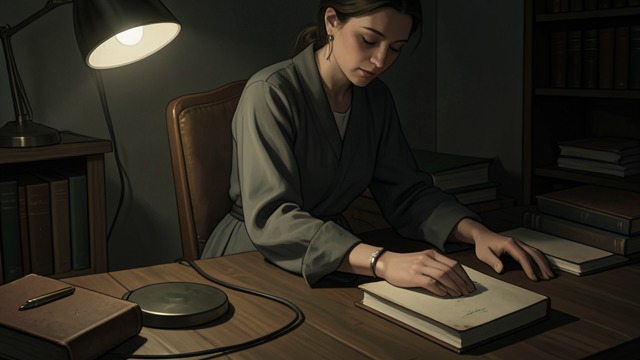
Writing Beside the Poet
A Private Record
Ellen writes a journal that is not simply a domestic chronicle. Beatrice gradually sees how Ellen may use it to protect privacy and frustrate future biographers.
The Cost of Support
Ellen wonders whether her life has enabled Ash’s work at the expense of her own. Her journal preserves the question without turning her into either a selfless helpmeet or a suppressed genius.
Beatrice’s Delayed Authority
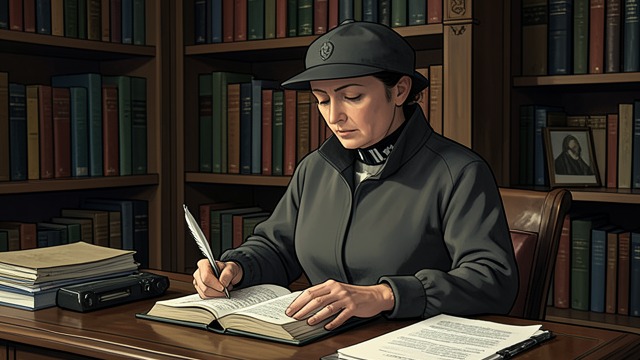
Work Made Invisible
Institutional Constraints
Beatrice’s career unfolds in an academic world that excludes women from important spaces and directs her toward work considered suitable for them. Her edition proceeds slowly under these limits.
A Voice Recovered
Maud’s respect helps Beatrice recognize the significance of her own observations. Her participation in preventing Cropper’s excavation demonstrates that scholarly authority can emerge from long, undervalued labor.
From 1858 in Richmond
During the letters to Ash
Autumn 1859 at Kernemet
Across her married life and widowhood
During her years editing Ellen’s papers
