
The Maternal Body and Social Judgment
PossessionThe parallel stories of Bertha and Christabel show how pregnancy exposes women to social control while men and institutions struggle to acknowledge their responsibility.
increasing Bearing strength in each event
 decreasing
Bearing strength in each eventdecreasingBertha’s Pregnancy
A Servant’s Vulnerability
A Hidden Condition
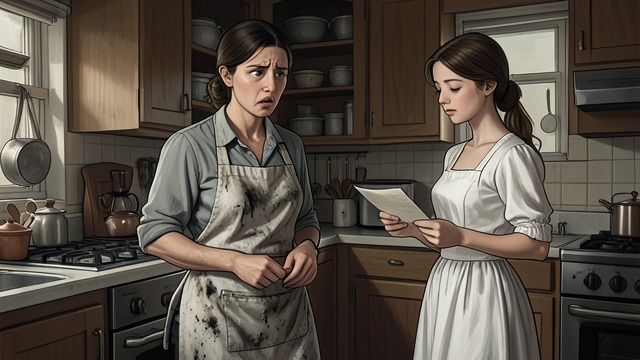
Ellen discovers that Bertha is pregnant and must decide whether to dismiss her, seek institutional help, or provide support. Bertha refuses to identify the father and asks what she can do.
Class and Responsibility
Ellen questions the naturalness of a world divided between master and servant, even as she participates in its discipline. The episode links private morality to economic power.
Ellen’s Unequal Sympathy

Care Within Limits
An Offer of Help
Ellen arranges a possible place at Magdalen Home and promises financial support, but Bertha eventually leaves. Ellen’s journal does not reveal what becomes of her or the child.
A Missing Outcome
The gap in the record troubles later readers because the servant’s future matters but remains unrecorded. Ellen’s humane questions coexist with the power she holds over Bertha’s employment and home.
Christabel’s Concealed Pregnancy
A Different Silence
Refusal to Confide
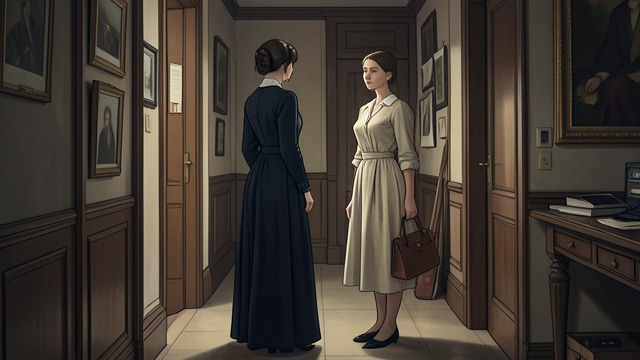
Christabel’s pregnancy becomes visible to Sabine, but she refuses discussion and accepts only limited care. Her silence protects her from unwanted judgment and leaves the household unable to prepare with her.
A Question of Choice
Unlike Bertha, Christabel has family resources and a place of sanctuary, yet still faces a world in which motherhood threatens her independence. The contrast prevents pregnancy from having one uniform meaning.
Birth and Secrecy
A Child Hidden From View
The Disappearance
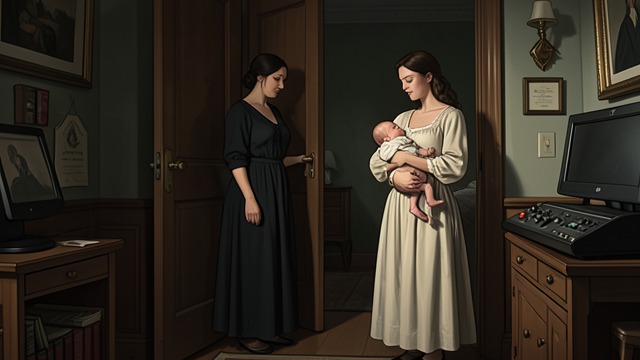
Christabel leaves near childbirth and returns without explaining where she went. The family’s inability to ask directly reflects both her control over her story and their fear of harming her.
A Social Arrangement
Sophie helps raise the child as her own, giving Maia protection and a respectable family identity. The solution depends on women’s planning but also on a lie that will last for decades.
The Letter’s Reckoning
A Late Account
Confession
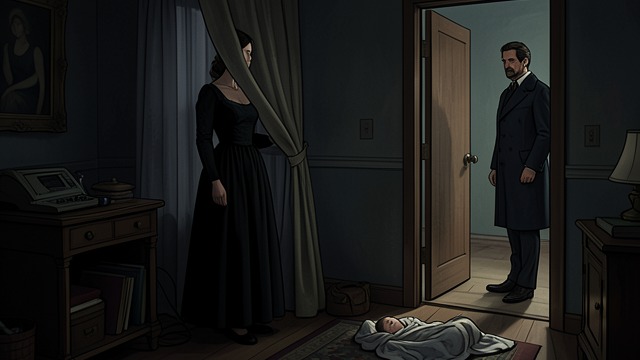
LaMotte tells Ash that she hid Maia because she feared losing the child to him and his wife. She acknowledges both her love and the harm caused by her decision.
Gendered Consequences
The letter contrasts Ash’s ability to leave and return to a public life with LaMotte’s embodied risks and maternal attachment. Neither person is free of responsibility, but their burdens are unequal.
June 1859, while Ellen manages the household
The weeks after Bertha’s disclosure
Autumn and winter 1859 in Brittany
Spring 1860
1889, in LaMotte’s final message
