
The Return of the Past to the Present
PossessionThe novel’s nested documents and postscript show how the past re-enters modern lives through reading, family resemblance, and surviving material traces.
increasing Bearing strength in each event
 decreasing
Bearing strength in each eventdecreasingA Modern Scholar Finds an Old Voice
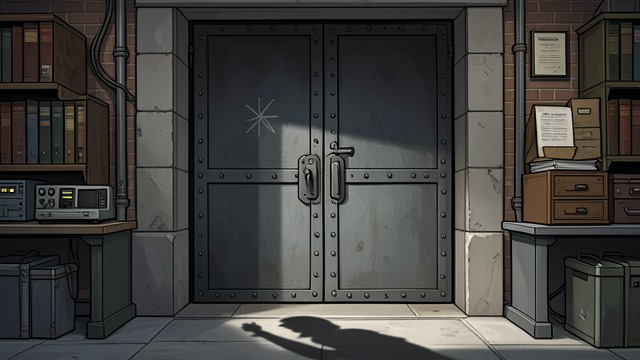
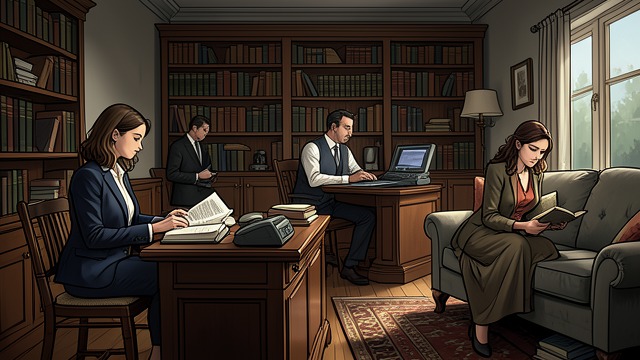
The Past in the Reading Room
A Material Encounter
Roland opens a Victorian book and finds papers that carry Ash’s handwriting into the present. The discovery gives the past a physical immediacy without making it transparent.
A Contemporary Consequence
The dead writer’s private urgency alters Roland’s work, home life, and future. The past returns not as a finished history but as a force that changes current choices.
A Victorian Journal Read Anew
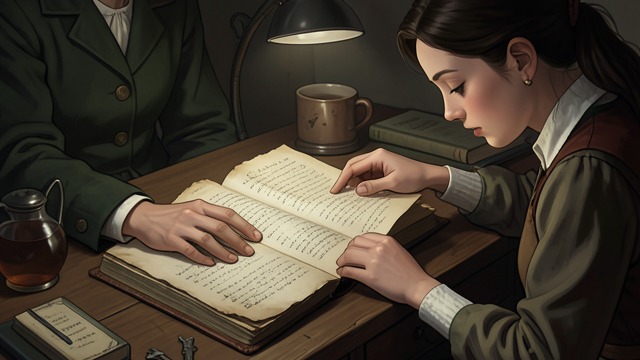
Ellen’s Pages Change Meaning
First Impressions
Beatrice once regarded Ellen’s journal as dull domestic material. Maud’s questions and new evidence reveal how its omissions may protect a private history.
Time Between Readers
The journal acquires meaning through different generations’ concerns, yet its original silences remain. Modern interpretation cannot simply recover the author’s intentions intact.
Ancestral Resemblance in the Photograph
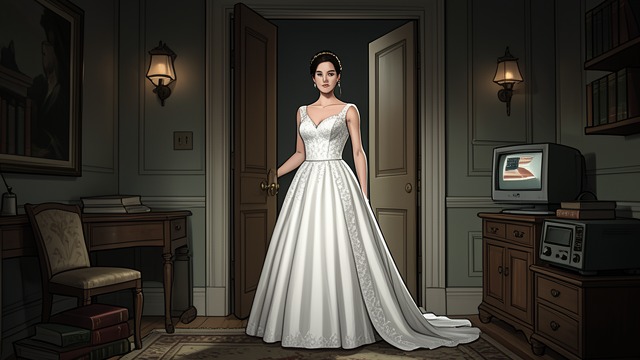
A Face Across Generations
Recognition
Maud sees her family’s features in Maia’s wedding photograph and recognizes that the research concerns her own ancestry. A visual resemblance joins archival evidence to bodily inheritance.
The Present Becomes Historical
Maud is no longer only an interpreter of LaMotte. She becomes a descendant implicated in the story and in decisions about the papers’ future.
The Postscript Encounter
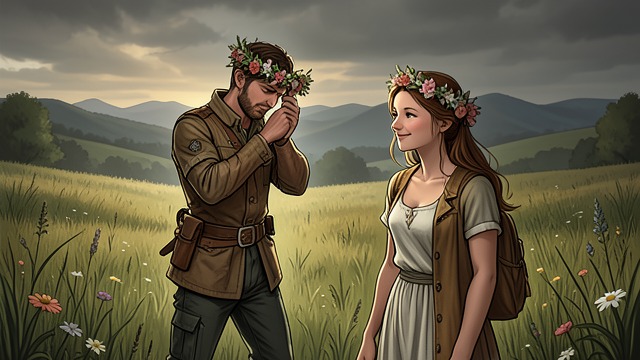
A Brief Meeting
The Child and the Poet
Ash meets Maia in a summer meadow and makes her a flower crown. He recognizes her as his daughter but keeps the knowledge to himself.
An Unequal Memory
He carries the meeting with clarity; Maia remembers it only faintly. The postscript shows the past persisting differently for each person who lived it.
The Present Opens Out
Lives Beyond the Archive
New Futures
Roland has job offers, Maud has a complicated inheritance, and Val has chosen a new marriage. Each life moves beyond the recovered documents in a different direction.
History Without Finality
The archive changes the present but does not determine it. The novel closes its central mysteries while leaving the characters with choices that cannot be read from the past alone.
September 1986
During Maud and Beatrice’s research
After the grave box is opened
1868
After the final night at the inn
