
The Great Fire and Its Human Cost
Quo VadisThis thread follows Rome’s fire from urban catastrophe through political opportunism to the city’s damaged but continuing life.
increasing Bearing strength in each event
 decreasing
Bearing strength in each eventdecreasingThe City Before the Fire
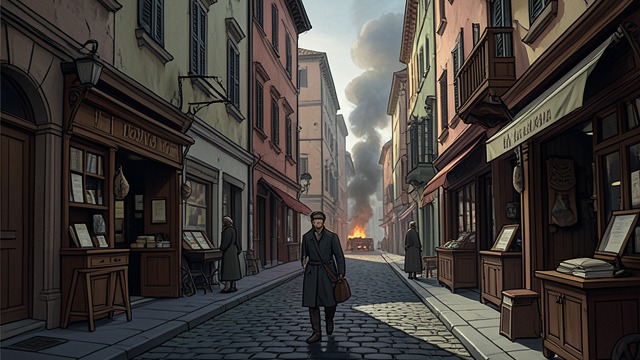
The City Before the Fire
Crowded vulnerability
Rome’s narrow streets, tall tenements, and wooden shops create conditions in which fire can spread rapidly.
Grandeur beside insecurity
Monuments and imperial gardens coexist with crowded districts where ordinary residents have few protections.
Fire on the Hills
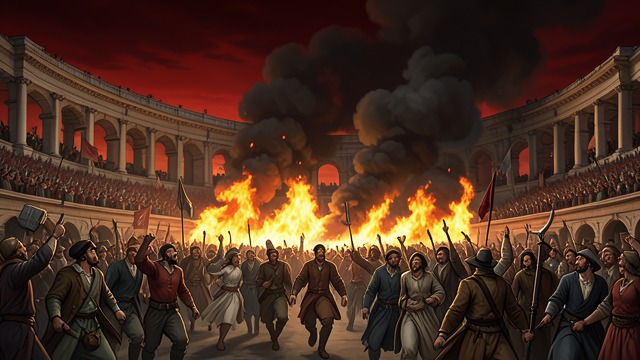
Fire on the Hills
A catastrophe unfolds
Flames spread from the Circus Maximus into densely built neighborhoods, filling the sky with smoke and fire.
Flight and loss
Families flee, property disappears, and Vinicius races toward Rome fearing for Lygia and her community.
Collapse of Public Order
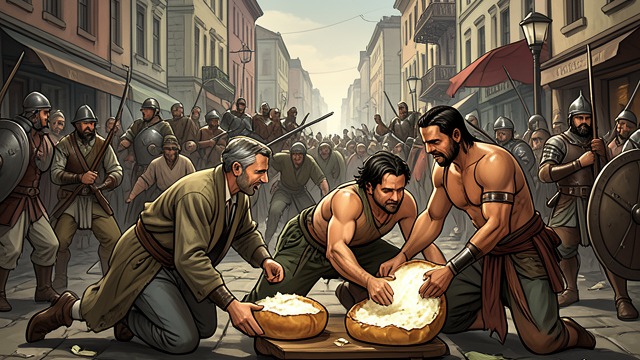
Collapse of Public Order
A displaced population
Fugitives crowd roads, gardens, and fields. Hunger, robbery, and rumor intensify the disaster.
Violence compounds loss
Slaves, gladiators, and desperate civilians clash as officials struggle to preserve order and distribute aid.
Aid and Anger
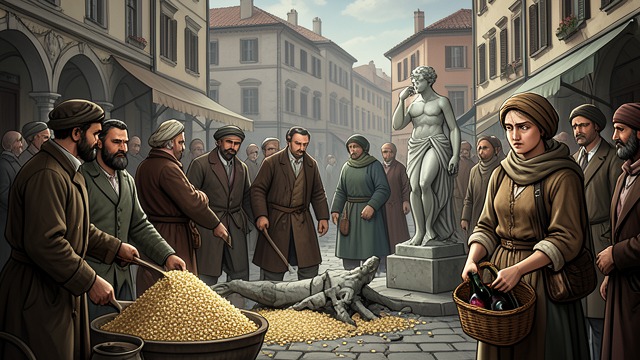
Aid and Anger
Relief measures
Wheat, wine, and access to gardens reduce immediate hunger among displaced residents.
Suspicion persists
Material aid cannot erase the scale of loss or the belief that the imperial household may have caused the fire.
A Rebuilt but Haunted City
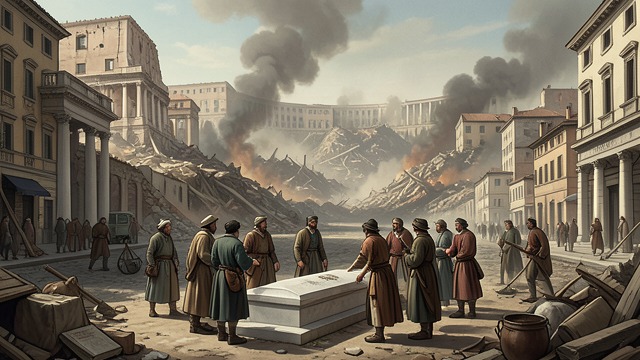
A Rebuilt but Haunted City
Construction resumes
New streets and buildings rise, while broad areas remain ash, rubble, and graves.
Memory becomes political
The fire continues to shape public distrust and gives Nero a pretext for persecution and ambitious reconstruction.
The summer before the conflagration
One July night
The first days of the fire
After Tigellinus organizes food supplies
After the flames die down
