
Christian Love and Roman Hierarchy
Quo VadisThis thread explores how Christian fellowship challenges the assumptions of slavery, status, and ethnic superiority in Roman society.
increasing Bearing strength in each event
 decreasing
Bearing strength in each eventdecreasingA Household Ordered by Rank

A Household Ordered by Rank
Roman ownership
Vinicius commands a large household in which enslaved people are subject to punishment and treated as property.
An unquestioned structure
His authority seems natural to him until Christian teaching makes him consider the humanity of those he rules.
A Different Household

A Different Household
Shared care
The Christians nurse Vinicius and serve one another despite poverty and danger. Their relations do not follow the ordinary master-servant model.
A moral comparison
Vinicius begins to recognize that social rank does not determine a person’s worth.
Forgiveness Changes Service
Forgiveness Changes Service
A new response to disobedience
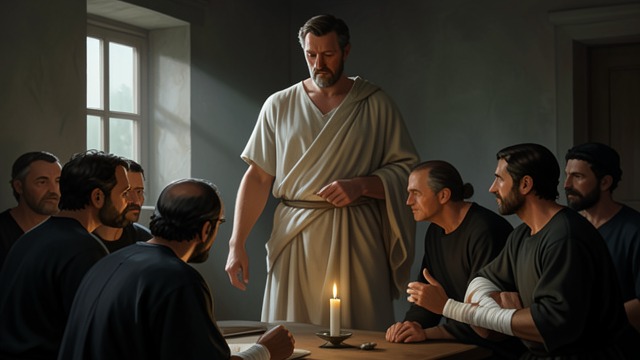
Instead of punishing household slaves after their misconduct, Vinicius forgives them and asks for better service.
Gratitude replaces fear
Their response teaches him that affection and trust can organize a household more effectively than terror alone.
A Shared Faith

A Shared Faith
Rank becomes secondary
Vinicius welcomes Christian teachers and offers his villa as a place where they may teach him.
Social boundaries loosen
His request challenges the assumption that a Roman aristocrat must remain separate from foreign believers and the poor.
A Household of Believers
A Household of Believers
Shared labor and worship
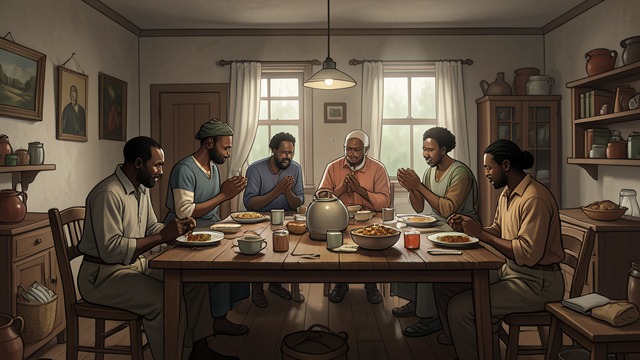
Vinicius describes servants and former slaves living within a household shaped by Christian love.
A social alternative
The household stands as a small, practical contrast to Rome’s domination and fear.
At Vinicius’s house before his conversion
During Vinicius’s stay among Christians
After Vinicius returns to his own home
After Vinicius asks the Christians to accompany him to Antium
In Vinicius’s later letter from Sicily
