
The Novel’s Contrast Between Two Romes
Quo VadisThis thematic thread contrasts imperial Rome’s spectacle and violence with the Christian community’s quieter life of care and hope.
increasing Bearing strength in each event
 decreasing
Bearing strength in each eventdecreasingThe Imperial City
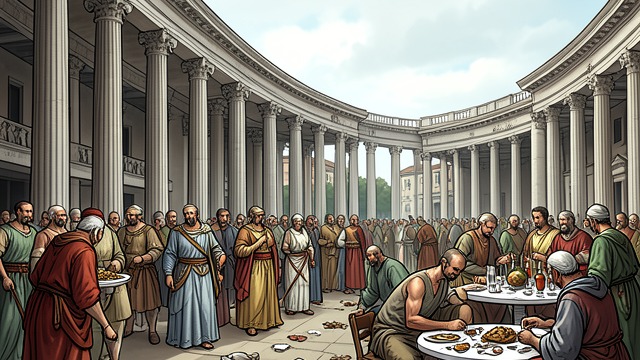
The Imperial City
Abundance and inequality
The Roman Forum displays wealth and many peoples, while the poor depend on distributions and scraps from elite households.
Power as spectacle
Imperial grandeur conceals insecurity, coercion, and dependence on the ruler’s favor.
The Plautius Household
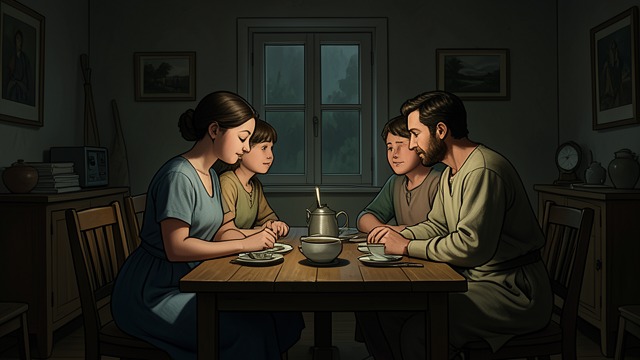
The Plautius Household
Quiet domestic order
The home of Aulus Plautius and Pomponia Graecina is marked by restraint, affection, and calm rather than extravagance.
An alternative value system
Vinicius and Petronius sense a peace unlike the world of Nero’s court, even before understanding its Christian source.
The Palace and the Feast

The Palace and the Feast
Pleasure without restraint
Music, wine, sexual display, and violence dominate the imperial feast. Lygia experiences its splendor as a moral danger.
Beauty without goodness
The palace’s magnificence cannot produce the serenity visible in the Plautius household.
The Christian Refuge
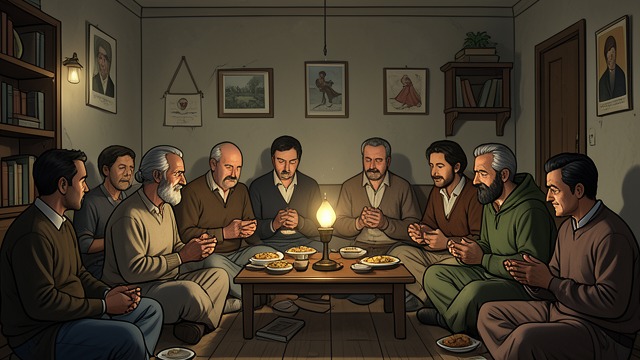
The Christian Refuge
Poverty and welcome
A small, crowded home provides food, care, prayer, and shelter to people with little social power.
Inner wealth
Its members possess a happiness that Vinicius cannot find in the palace’s material abundance.
The Final Contrast
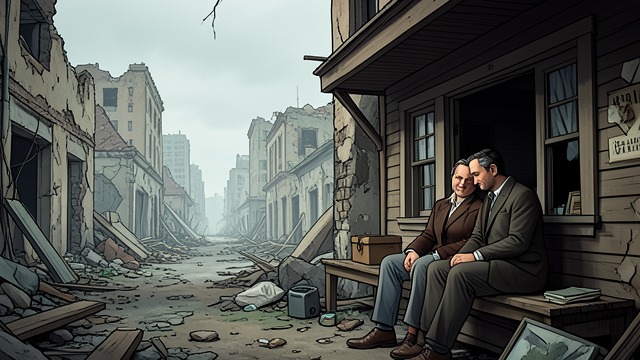
The Final Contrast
Imperial excess collapses
Nero’s regime ends amid revolt, fear, and self-destruction, leaving its spectacles without lasting authority.
Christian continuity
Vinicius and Lygia’s peaceful household embodies the alternative life that the novel presents as surviving Rome’s decay.
During Vinicius’s early return to Rome
During Vinicius’s first visit to Aulus Plautius
At Nero’s banquet for the Augustians
During Vinicius’s stay in the Trans-Tiber district
In Vinicius’s later life in Sicily
