
The Limits of Revenge
Quo VadisThis subplot explores the repeated choice between retaliation and mercy, culminating in Chilo’s public repentance.
increasing Bearing strength in each event
 decreasing
Bearing strength in each eventdecreasingA Roman Code of Retaliation
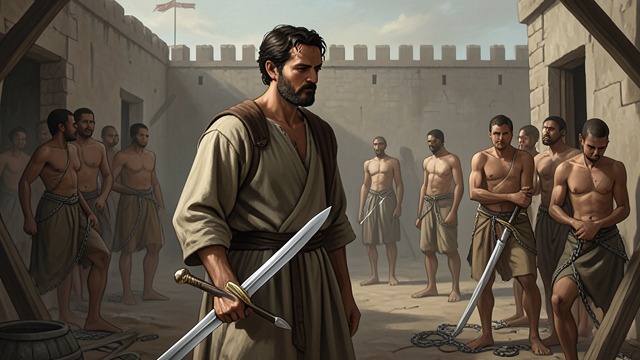
A Roman Code of Retaliation
Punishment as authority
Vinicius kills Gulo and sends other slaves to harsh rural confinement after Lygia is taken.
Power without compassion
His response reveals how easily grief becomes license to punish those with less power.
Ursus Checks His Strength
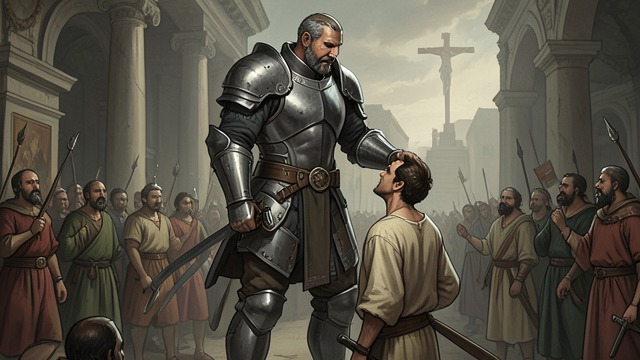
Ursus Checks His Strength
Violence proposed as justice
Chilo persuades Ursus that Glaucus is a traitor who deserves death, exploiting the giant’s anger and loyalty.
Conscience restrains action
Ursus hesitates because Christian teaching forbids killing, even when an accusation is emotionally persuasive.
The First Forgiveness
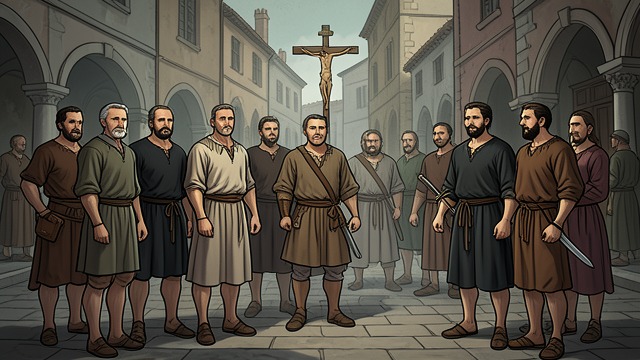
The First Forgiveness
A powerful enemy restrained
Ursus holds Chilo, who had urged him to murder Glaucus, but Peter commands the group to forgive a repentant offender.
A new standard
Mercy challenges both Roman vengeance and Chilo’s expectation that power always punishes weakness.
The Final Forgiveness

The Final Forgiveness
A victim releases his enemy
Glaucus forgives Chilo while dying, giving the former informer a final chance to face the truth.
Repentance becomes action
Chilo publicly accuses Nero of the fire and accepts torture rather than return to deceit.
Mercy Outlives the Punisher
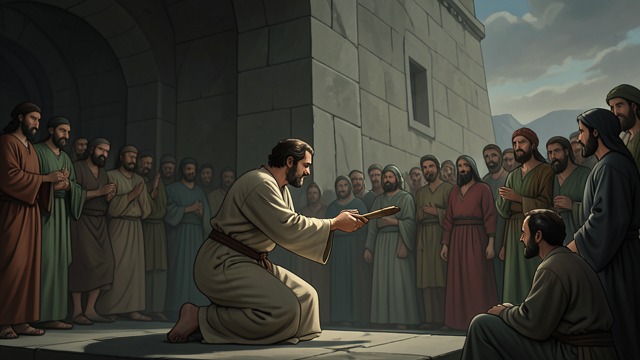
Mercy Outlives the Punisher
The informer is received
Paul speaks of divine mercy and baptizes Chilo, interpreting repentance as possible even after grave wrongdoing.
A moral victory
Chilo’s end contrasts the community’s forgiveness with Nero’s endless retaliation and terror.
When Vinicius’s slaves fail to recover Lygia
After Chilo asks him to kill Glaucus
When Chilo is exposed in the Christian house
As Glaucus burns in Nero’s gardens
After Chilo’s death on the cross
