
The Cost of Beauty
Quo VadisThis thematic thread examines how beauty can inspire love, become an instrument of possession, and ultimately be redefined by character.
increasing Bearing strength in each event
 decreasing
Bearing strength in each eventdecreasingBeauty as Display

Beauty as Display
Bodies and objects judged
Petronius and the court assess appearance, jewels, sculpture, and ornament with meticulous attention.
A narrow measure
A culture focused on surfaces can admire form while ignoring cruelty and inward character.
Lygia as an Ideal

Lygia as an Ideal
Desire begins in appearance
Vinicius describes Lygia as a vision of beauty and makes her the center of his longing.
The ideal is incomplete
His admiration does not yet recognize her freedom, beliefs, or moral agency.
Beauty Enters the Palace

Beauty Enters the Palace
Rivalry through appearance
Poppaea recognizes Lygia’s beauty and fears that her youth may threaten her own position.
Aesthetic judgment becomes violence
What might have been admiration becomes hostility because beauty is treated as a competition for power.
The Beauty of Character

The Beauty of Character
A different attraction
Vinicius begins to love Lygia for compassion, faith, and restraint, not merely her appearance.
Inner life changes the gaze
Her weakened body after illness does not diminish his love; her spirit has become its foundation.
Beauty Beyond Power
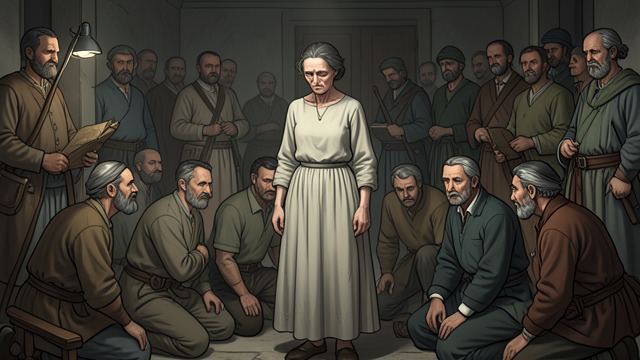
Beauty Beyond Power
A vulnerable figure moves Rome
The crowd responds to Lygia’s frailty and the loyalty of Ursus, not to imperial display.
Moral beauty prevails
Her survival makes compassion more powerful than the spectacle intended to destroy her.
At Nero’s court and feasts
When Vinicius first sees her at the fountain
When Poppaea meets Lygia in the gardens
During Lygia’s care for Vinicius
After Lygia survives the arena
