
Rome’s Fragile Public Order
Quo VadisThis subplot traces the breakdown of Roman civic order during the fire and the regime’s reliance on food, force, and spectacle to restore it.
increasing Bearing strength in each event
 decreasing
Bearing strength in each eventdecreasingA City of Unequal Security
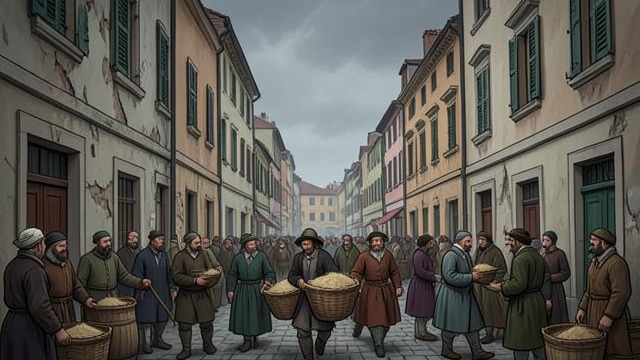
A City of Unequal Security
Crowded living conditions
Poor residents occupy dense, unstable tenements while the rich possess villas, gardens, and private attendants.
Order depends on distribution
Many citizens rely on state grain and games, making public peace vulnerable to shortages and rumor.
Flight and Plunder
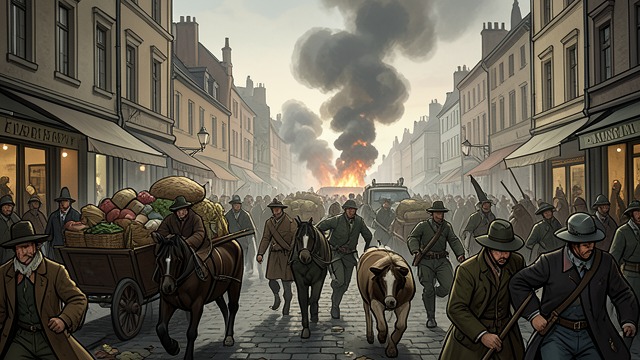
Flight and Plunder
Movement overwhelms the streets
Fugitives, carts, animals, and salvaged goods obstruct routes out of the city.
Violence spreads
Robbery and clashes between civilians, slaves, and soldiers intensify the fire’s human cost.
Food Riots
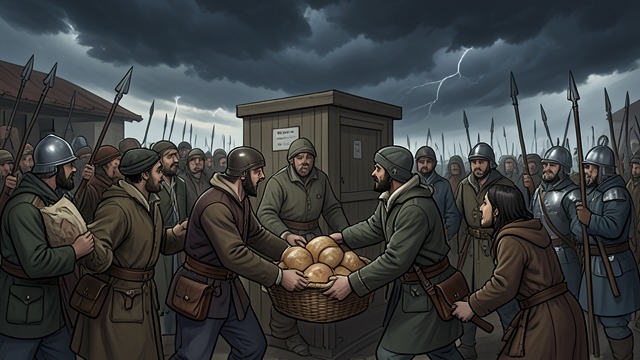
Food Riots
Relief becomes confrontation
The crowd seizes provisions at the Emporium, fighting over bread amid fear and hunger.
Force restores temporary control
Soldiers disperse the crowd, showing that the state’s relief efforts coexist with coercion.
Promises Restore the Crowd
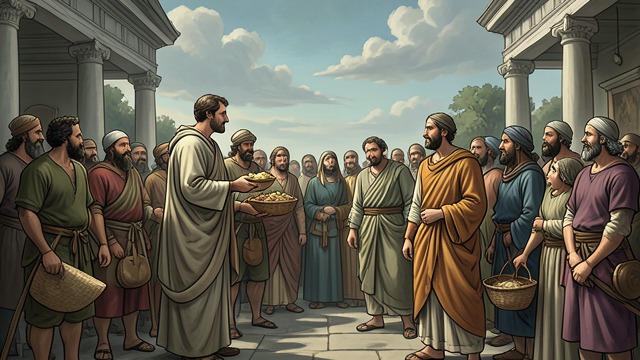
Promises Restore the Crowd
Material needs acknowledged
Petronius promises food, shelter in gardens, and games to the displaced population.
Public order is negotiated
The mob calms when the regime meets immediate needs, revealing how conditional its obedience is.
The Arena Reasserts Control
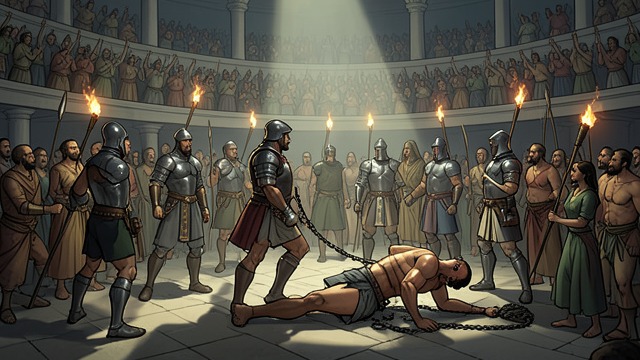
The Arena Reasserts Control
Spectacle absorbs anger
Nero uses games, gifts, and public executions to redirect attention from political responsibility.
Disorder remains underneath
Crowd pity and resistance at Lygia’s rescue show that spectacle can channel public emotion but cannot fully control it.
Before the Great Fire
During the first days of the fire
When supplies arrive from Ostia
When Petronius addresses people beneath the aqueduct
During the Christian games
