
The Court’s Failed Attempt to Control Memory
Quo VadisThis conflict flow traces Nero’s efforts to dictate how the fire and the Christian executions will be remembered.
increasing Bearing strength in each event
 decreasing
Bearing strength in each eventdecreasingThe Fire’s First Account
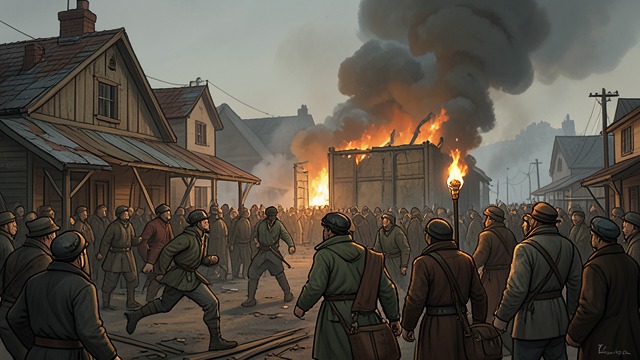
The Fire’s First Account
Witnesses see disorder
Residents report obstacles to rescue and the appearance of people spreading fire.
Official certainty is absent
The scale of disaster produces competing explanations before the court can establish a persuasive account.
The Christians Blamed
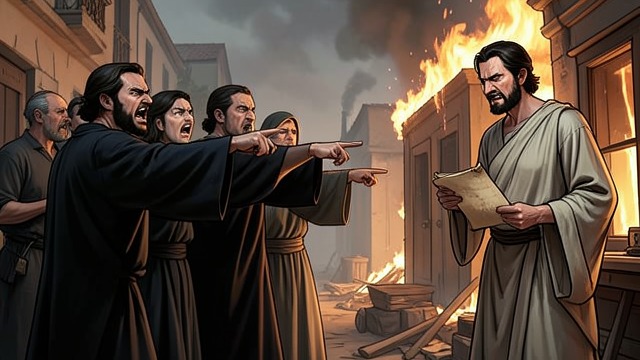
The Christians Blamed
A story selected for use
Tigellinus presents Christians as enemies who prophesied fire, giving Nero a target for public anger.
Punishment substitutes for proof
The government relies on spectacle and repetition rather than evidence.
The Martyrs Complicate the Story
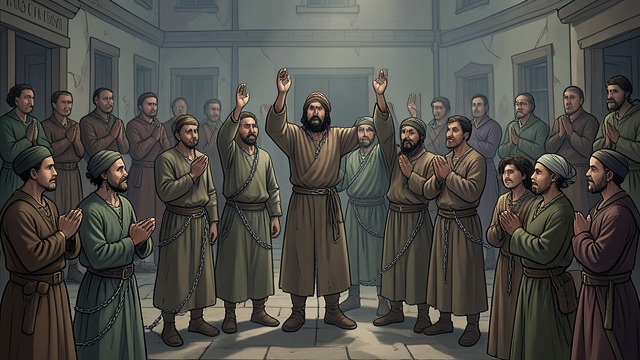
The Martyrs Complicate the Story
Conduct contradicts accusation
The prisoners’ calm, prayers, and mutual concern do not resemble the monstrous criminals described by the court.
Public confidence weakens
Spectators begin to question the official narrative even while continuing to watch the games.
Chilo Breaks the Script
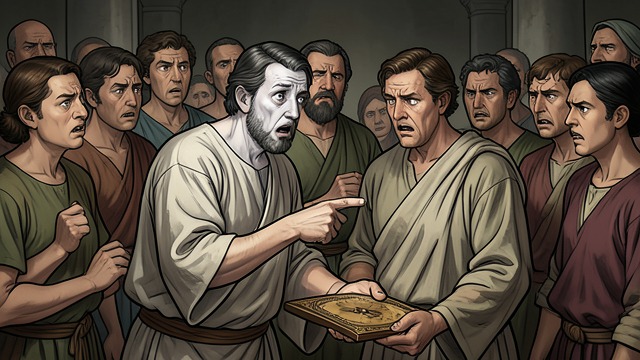
Chilo Breaks the Script
The court’s witness recants
Chilo points at Nero and declares the victims innocent, undoing his own previous testimony.
The crowd hears treason and truth
The accusation triggers alarm and tumult because it names the ruler as responsible.
Memory Outlasts the Court
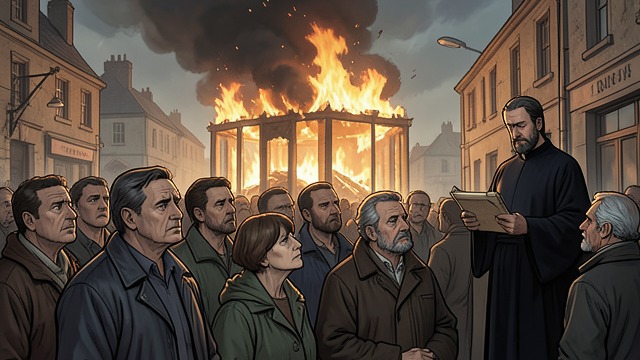
Memory Outlasts the Court
The regime cannot seal the story
Nero’s death does not erase memories of the fire or the martyrs’ courage.
Another narrative survives
The Christian account of suffering and renewal outlasts the emperor’s theatrical explanation.
During the conflagration
After Nero returns to the city
During the early arena executions
At the burning of Glaucus
After Nero’s fall
