
The Community’s Discipline of Truth
Quo VadisThis thematic thread contrasts Christian truthfulness with the lies and strategic appearances that sustain Nero’s court.
increasing Bearing strength in each event
 decreasing
Bearing strength in each eventdecreasingAulus’s Reputation for Truth

Aulus’s Reputation for Truth
A soldier refuses a lie
Aulus tells Nero honestly that he did not help Lygia escape, despite the danger of being suspected.
Truth becomes protection
His credibility helps prevent immediate punishment of his household.
Christian Honesty Explained

Christian Honesty Explained
Even protective falsehood is rejected
Lygia explains that she cannot lie to protect Aulus and Pomponia, even when silence and distance are painful.
Moral consistency costs something
Her faith demands a discipline more difficult than merely avoiding obvious harm.
The Court’s False Accusation

The Court’s False Accusation
Political deception organized
Nero’s court knowingly casts Christians as arsonists, using old rumors to divert blame.
Lies become lethal
The official story sends innocent people to prison and execution.
Chilo’s Confession

Chilo’s Confession
A liar tells the truth
Chilo publicly declares that Christians are innocent and identifies Nero as the incendiary.
Truth requires sacrifice
He accepts torture rather than preserve his position through another lie.
Witness Survives Its Suppression
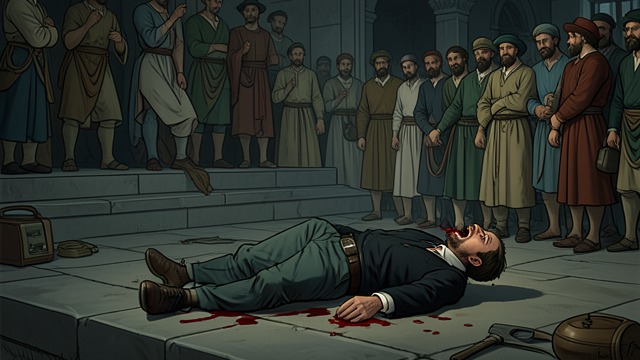
Witness Survives Its Suppression
The voice is silenced physically
Tigellinus orders Chilo’s tongue torn out and has him executed.
The truth remains public
The crowd has already heard his accusation, and the novel presents moral witness as something force cannot retract.
After Lygia’s disappearance
During Vinicius’s conversations with Lygia
After the Great Fire
During Glaucus’s execution
After Chilo’s death
