
The Meaning of the Roman Arena
Quo VadisThis thematic thread traces the arena from entertainment and political control to a place where the intended meaning of violence is overturned.
increasing Bearing strength in each event
 decreasing
Bearing strength in each eventdecreasingGames as Public Order
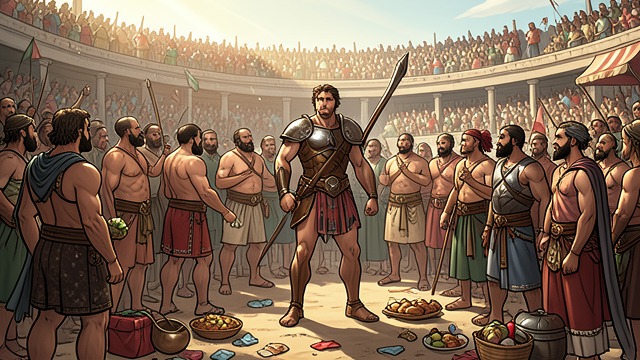
Games as Public Order
Entertainment binds the crowd
The games bring citizens together through excitement, betting, food, and gifts.
Violence supports hierarchy
The arena trains spectators to accept the state’s power to decide who lives and dies.
The Arena as Punishment
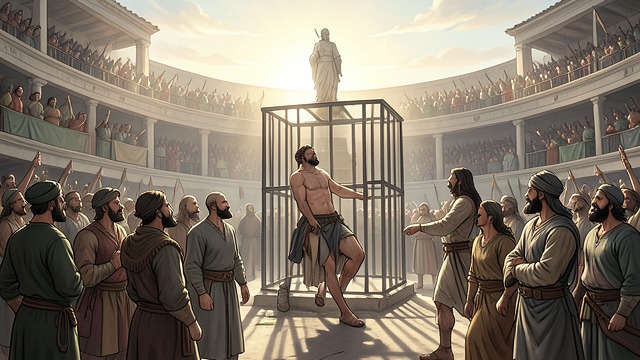
The Arena as Punishment
Enemies are displayed
Nero’s government presents Christians as criminals and sends them to animals and public executions.
Authority claims moral judgment
The state uses the arena to suggest that imperial violence is justice.
A Different Audience Experience
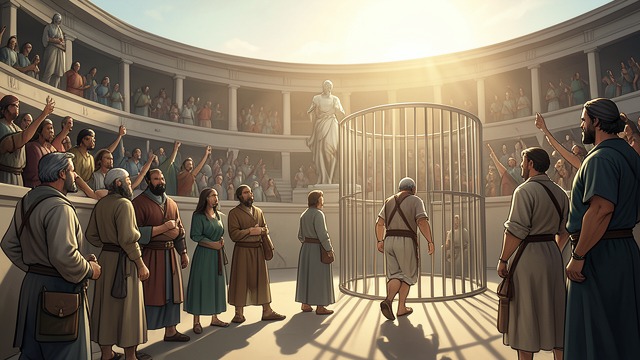
A Different Audience Experience
The condemned speak otherwise
Christian hymns and prayers make the victims appear faithful rather than monstrous.
Meaning becomes unstable
The audience must confront a difference between the court’s accusation and the behavior it witnesses.
The Arena Reverses Its Purpose
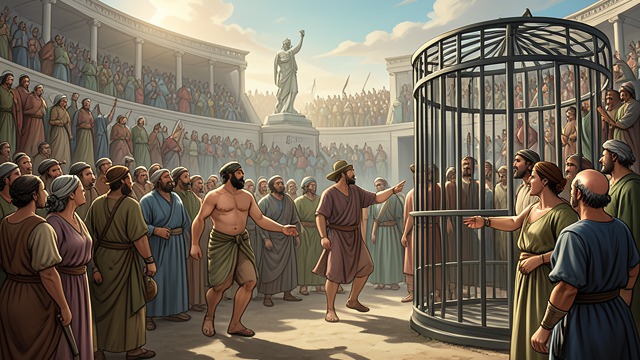
The Arena Reverses Its Purpose
Rescue replaces execution
Ursus saves Lygia, producing an event the emperor did not intend and the crowd does not want to end in death.
Spectators judge the ruler
Their demand for mercy makes the audience, rather than Nero, the decisive moral force.
The Arena’s Memory
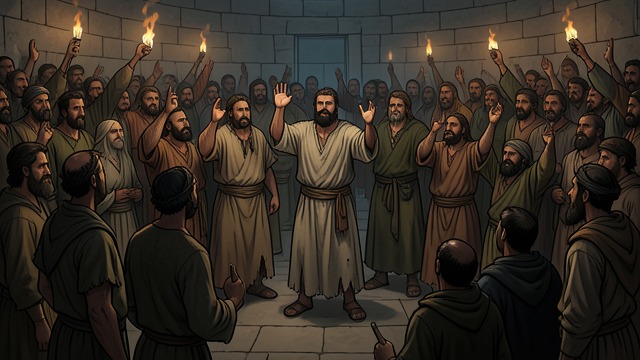
The Arena’s Memory
Violence fails to erase belief
The Christian victims die, but their conduct remains in the memories of spectators and converts.
A new meaning persists
The arena becomes evidence against Rome’s cruelty and testimony to the faith it tried to suppress.
Before the Christian persecutions
When the first Christians are sent out
During the Christians’ songs before the beasts
During the aurochs spectacle
After Nero’s persecution
