
The Roman Elite’s Moral Isolation
Quo VadisThis thematic flow follows the wealthy court’s increasing separation from ordinary suffering and the consequences of that isolation.
increasing Bearing strength in each event
 decreasing
Bearing strength in each eventdecreasingLuxury Behind Walls

Luxury Behind Walls
Privilege creates distance
Elite households possess private baths, extensive staffs, rare foods, and artistic treasures unavailable to most Romans.
Comfort conceals dependence
Their ease depends on labor and resources extracted from people they rarely regard as equals.
The Fire Reaches Everyone

The Fire Reaches Everyone
Disaster crosses status lines
The fire threatens elite residences as well as poor neighborhoods, though the poor suffer greater loss and displacement.
Privilege is not security
The catastrophe exposes how fragile wealth and status become when the city’s order collapses.
The Court Watches Executions
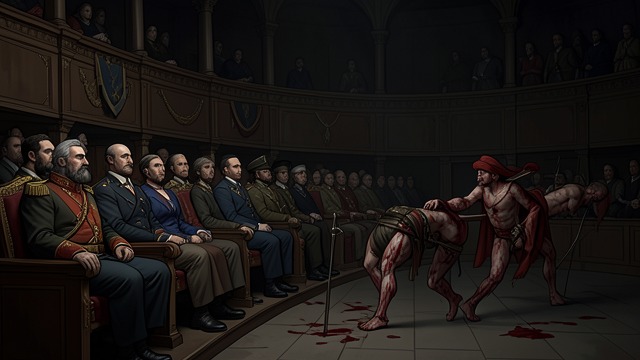
The Court Watches Executions
Elite spectators remain insulated
Nero and the Augustians view executions from protected seats and treat suffering as a spectacle.
Moral distance becomes complicity
Their comfort depends on refusing to recognize the humanity of those being killed.
Petronius Sees the Gap

Petronius Sees the Gap
The crowd’s odor and anger
Petronius recognizes both the physical discomfort and the human reality of the people he once dismissed as a herd.
Aesthetic isolation is challenged
His encounters with Christians make the elite world seem increasingly empty and contemptible.
A Different Social Future
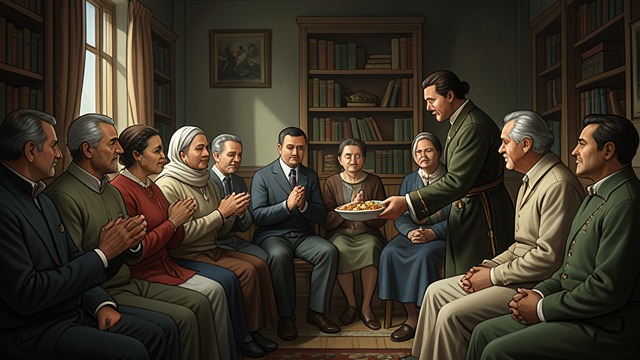
A Different Social Future
The household changes its relations
Vinicius describes a community where servants share faith and receive care rather than living in terror.
Isolation gives way to fellowship
The contrast suggests a future in which the wealthy cannot remain morally separate from the people around them.
At Petronius’s villa and Nero’s palace
During the Great Fire
During the Christian games
After the cry against Christians spreads
In Vinicius’s description of life in Sicily
