Rome
Quo VadisRome is both the seat of imperial authority and the crowded setting in which that authority’s limits become visible. Its forums, markets, rented tenements, palaces, roads, and gardens connect intimate pursuits to public life; after the Great Fire, those same urban networks carry displacement, hunger, unrest, and persecution. The city’s decisive transformation is moral as well as physical: under Nero, spectacles meant to affirm power become the setting in which Christian witness attracts new followers and imperial violence deepens public fear.
The city and its ordinary life
In ordinary times, Rome is a city of movement and display. Before sunset, people gather in the Forum Romanum to stroll among its columns, exchange news, watch prominent figures pass in litters, and visit its jewellery and book shops, money changers, and merchants. The city’s public spaces make information and status visible, while its commercial streets place people of different ranks in shared view.
That public center stands beside more difficult urban realities. Many streets have no names, and the large, crowded rental blocks have no numbers. Built hurriedly and often poorly, their narrow, densely occupied rooms make it hard to locate anyone by inquiry, particularly when a building has no gatekeeper. This anonymous housing turns a search through Rome into a practical ordeal: the city’s size and density can hide a person as effectively as its streets can expose a public figure.
The narrative follows Rome across sharply different kinds of space. Petronius moves from the routine of an elaborate bath to Nero’s court, while the city’s routes connect the Palatine, the Forum, the Esquiline, the Subura, and the districts across the Tiber. In the night-long search for Lygia, Vinicius passes through several neighborhoods and returns at daybreak without finding her. Rome’s scale is thus more than a backdrop: it gives private longing and political command their physical routes, but also makes pursuit uncertain and concealment possible.
Crowds, spectacle, and imperial politics
Public gatherings make Rome a political arena. When Nero’s planned journey to Achaea is deferred, Tigellinus stages a lavish feast at the Pond of Agrippa to rival earlier entertainments. Praetorians keep spectators away from the gathering, while rare animals, birds, fish, plants, vessels, and textiles are assembled at great expense. The episode presents the court’s command of the city’s resources as a form of display: the imperial circle can turn wealth from across the provinces into a spectacle for itself.
The city’s broader population also gathers to discuss imperial travel and distant places. Families spend time outdoors, share food, and listen as sailors and veterans tell stories of lands beyond familiar Roman routes. Such scenes establish a Rome whose inhabitants receive the wider world through public talk and imaginative tales, even when many listeners have never travelled beyond the Appian Way.
The same crowd can become a force of disorder. When fire drives people from their homes and stored provisions burn, hunger quickly sharpens the crisis. Supplies sent to the Emporium are seized, and the struggle over bread disrupts the distribution effort until soldiers disperse the crowd. Tigellinus orders new provisions from Ostia and nearby communities; the first deliveries bring flour and baked bread, but the attempt to supply the population is met by a rush on the granary and a disorderly fight for food.
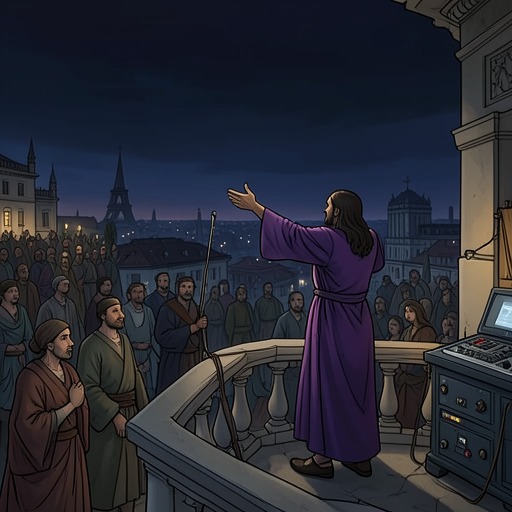
Petronius answers a later crowd with a different instrument: promises. He tells people that the city will be rebuilt, that gardens will be opened to them, and that wheat, wine, and olives will be distributed, followed by games, banquets, and gifts. The assurances make food and entertainment instruments of public reassurance as well as imperial politics. Subsequent relief includes wheat sold at a very low price and given freely to the indigent, alongside shipments of wine, olives, and other provisions. Yet the need for emergency supply and the earlier scramble at the granary reveal how quickly public order depends on the movement of food through the city.
The Great Fire and urban collapse
During the Great Fire, Rome’s inhabitants confront a city that is difficult both to escape and to cross. As Vinicius approaches, people have occupied roadsides, fields, cemeteries, gardens, and temples as camps; elsewhere, strangers seize shelter and property, and the usual distinctions of law, family, and social position give way amid the emergency. The city is not simply burning: its institutions and everyday rules are failing under the pressure of flight and displacement.
The fire’s effects spread beyond the districts directly in its path. Wind carries burning debris into other parts of the city and beyond it, while residents flee through the gates and people from neighboring towns and the countryside converge on Rome, some hoping to plunder. The cry that Rome is perishing accompanies a widening movement of people in opposite directions: those escaping the capital and those entering its devastated surroundings.
Displacement becomes a food crisis because the city’s stores have also burned. People outside the walls begin to go hungry, and the breakdown of authority delays organized resupply. Once shipments arrive, the struggle at the Emporium shows that bringing provisions into Rome is not enough; they must also be protected and distributed. Later, camps spread through imperial and private gardens, porticoes, courts, and summer buildings. The animals once kept as ornamental features of those gardens are slaughtered for food. Rome’s setting changes from a mapped hierarchy of residences and public monuments into improvised shelter and a contested supply network.
Persecution, spectacle, and the city’s change
Under persecution, Rome’s public entertainment becomes a test of what its inhabitants will accept and what they will recognize. During a summer of unusual rain and hail, an account circulates that the gods are angry because Christians were punished too hastily. The disturbance in religious interpretation affects the schedule of the spectacles: after a pause, the announcement that they will resume is welcomed across the city. The episode shows how popular feeling, official entertainment, and claims about divine anger can intersect in Rome’s public life.
The next spectacle draws crowds to Nero’s gardens before nightfall. People arrive in festive dress, some wearing flowers and some already drunk, while cries travel along streets and across bridges toward the gardens. The scale of the gathering is emphasized by the narrator’s contrast between earlier executions in Rome and the unprecedented number of victims now assembled for public viewing. In the arena, too, the audience’s reaction is described as uncontrolled. The city’s crowds are not a single, steady political body: they can be entertained, alarmed, hungry, or carried along by spectacle.
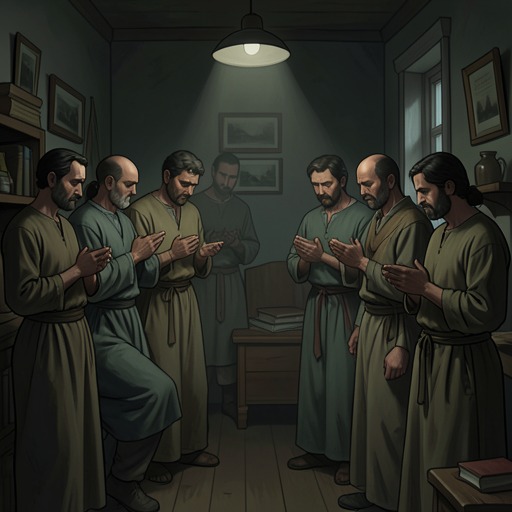
But the spectacle does not secure the meaning its organizers intend. The narrative says that people begin visiting the arena daily, and that the Christians’ suffering leads others to confess their faith. Each martyr’s witness is presented as answered by a wider response among those who have endured oppression and misery, and who come to hear the Christian message of divine love and redemption. Rome’s spaces of public punishment therefore acquire an unintended role: the city that stages persecution also becomes a gathering place for the faith the persecution is meant to suppress.
That reversal does not end the terror. As the story approaches its final political crisis, Rome is described as lacking leadership and fearing for the next person who may be targeted. The Pisonian conspiracy is followed by executions among the city’s leading figures; mourning is constrained even as public porticoes are decorated, and fear reaches into private homes. Rome remains the setting of imperial spectacle, but the spectacle now belongs to a regime whose public celebrations coexist with widespread bereavement and anxiety.
Narrative significance
Rome binds together the novel’s contrasting systems of value. Its markets, tenements, gardens, and forums show the city as a material environment, organized by commerce, status, shelter, and food. Its court feasts and public entertainments display the reach of imperial wealth, while the Great Fire reveals how fragile that order becomes when housing, supplies, and authority fail together.
The city also shapes how power is seen and answered. Nero’s spectacles turn people into spectators; the crisis of hunger makes them a volatile crowd; the martyrs’ witness draws some of those same spectators toward a different allegiance. Rome’s change is therefore not merely the loss of buildings or the breakdown of civic order. As the novel portrays it, the city’s attempts to command attention and belief help create the conditions in which another community becomes visible and grows.