
Fear, Desire, and the Donkey
Rich Dad Poor DadThis thematic thread develops the donkey-and-carrot image into an account of how fear and desire can direct financial behavior.
increasing Bearing strength in each event
 decreasing
Bearing strength in each eventdecreasingThe Paycheck’s Promise

Money as Comfort
Fear Seeks Relief
Rich Dad describes workers who hope a paycheck will quiet fear about bills and insecurity. Yet each payment brings new expenses without necessarily removing the fear that sent them to work.
Emotional Attachment
The account treats money as a powerful emotional object. The paycheck promises safety, but dependence on it can deepen the very anxiety it is meant to soothe.
The Carrot Appears
Desire Leads Forward
Goods and Approval
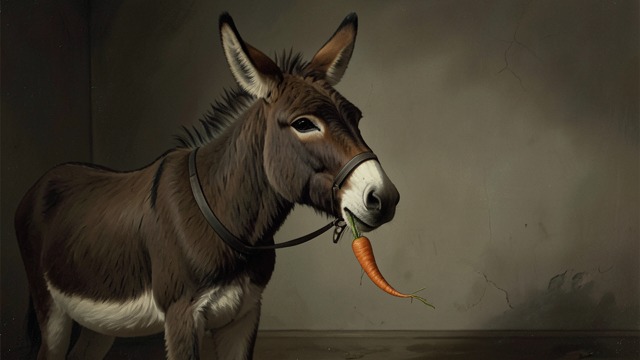
Rich Dad compares workers to a donkey following a carrot. Robert and Mike recognize how bicycles, toys, cars, and houses can keep people moving toward the next desired purchase.
The Goal Recedes
Once one wish is satisfied, another can take its place. The metaphor makes desire less a single temptation than a recurring force that directs attention and effort.
The Rich Also Fear

More Money, New Anxiety
Fear of Losing
Rich Dad says that people who accumulate wealth may become frightened of losing it. The possessions and status money provides can create new vulnerabilities instead of ending emotional dependence.
Poverty Is Not Romanticized
He also rejects the idea that avoiding money automatically creates happiness. Both attachment to money and denial of its importance can distort a person’s choices.
The Human Observer

Emotion Seen Clearly
Feelings as Information
Rich Dad asks the boys to observe their emotions rather than let those emotions do their thinking. Fear and desire are treated as normal parts of being human, but poor guides when left unquestioned.
Thought Creates Space
Naming a feeling gives a person a chance to ask whether a job or purchase is the best long-term answer. This moment marks a shift from automatic response toward deliberate choice.
A Different Relationship to Money

Money No Longer Commands
A Learned Perspective
Robert presents financial education as a means of gaining power over money rather than letting money dictate a life. The emotional lesson is carried forward into his adult approach to work and investing.
Freedom Without Denial
The resolution is not to stop wanting things or feeling fear. It is to use thought and knowledge to keep those emotions from controlling every financial decision.
During Rich Dad’s first explanation of wages
During the boys’ park conversation
As Rich Dad extends the lesson to wealthy people
Near the end of the first lesson
In Robert T. Kiyosaki’s later reflections
