
Learning Passed Between Generations
Rich Dad Poor DadThis thread follows teaching as a relationship that carries financial knowledge from Rich Dad to Robert T. Kiyosaki and onward to readers and children.
increasing Bearing strength in each event
 decreasing
Bearing strength in each eventdecreasingThe Lesson at Home

Money Discussed Differently
A Household Contrast
Rich Dad is willing to discuss money and business with the boys, while Poor Dad’s household offers a different emphasis. The contrast makes family conversation a crucial part of the book’s education story.
Knowledge as Inheritance
The boys learn not only from formal instruction but from what adults choose to discuss and demonstrate. Teaching becomes an everyday relationship rather than a school subject alone.
Experience Before Explanation

Learning Through Contact
Work as a Lesson
Rich Dad lets Robert and Mike encounter repetitive labor before explaining what he wants them to notice. Their frustration creates a concrete basis for later ideas about wages and choice.
A Mentor’s Patience
The method depends on the boys continuing to ask questions. Rich Dad’s teaching relationship grows through challenge, not through a simple transfer of answers.
The Lesson Drawn in Pictures
Visual Understanding
Simple Diagrams
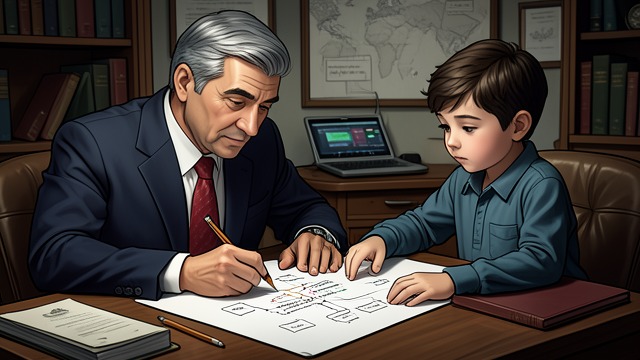
Rich Dad uses drawings to show how income, expenses, assets, and liabilities connect. The visual method respects the boys’ age while building a structure they can later use with numbers.
A Foundation for Adults
The diagrams remain useful in the book because they translate technical language into cash-flow relationships. Teaching one generation becomes a model for teaching readers.
Robert Teaches Readers

Lessons Made Shareable
Experience Recast
Robert turns memories of Rich Dad into a sequence of lessons for people who did not share the original apprenticeship. The story becomes a teaching device, not only an account of his own past.
Accessibility Matters
The book repeatedly favors simple terms, examples, and practical questions. Its educational purpose depends on readers being able to interpret and discuss the ideas for themselves.
Parents Teach Children

Knowledge Sent Forward
A Family Responsibility
Robert and Sharon ask parents to share financial education with their children. The appeal responds to the book’s concern that schools may not cover the subject adequately.
An Ongoing Bond
Teaching is presented as a form of care that prepares younger generations to make choices. The line from mentor to student to reader turns financial literacy into a relationship across generations.
In Robert T. Kiyosaki’s childhood
During the boys’ first month of work
During the boys’ later financial instruction
In the later chapters and epilogue
At the book’s conclusion
