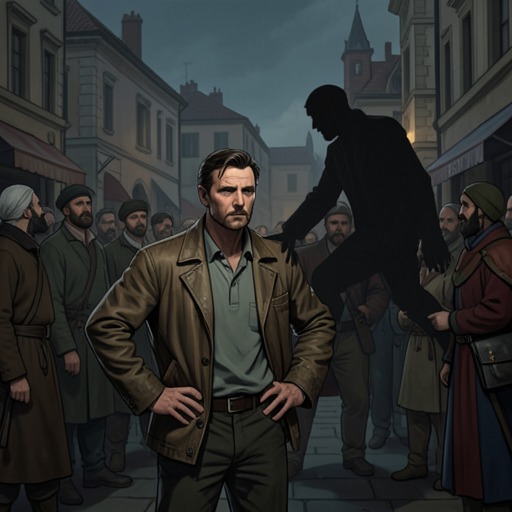
“The sky is falling”
Rich Dad Poor Dad“The sky is falling” is the recurring alarm that gives fear a voice and makes inaction sound like prudence. The book connects the phrase to Chicken Little, its image of the “little chicken” within everyone, and uses it to distinguish reflexive panic from analysis: warnings may deserve attention, but accepting them without examining their source, evidence, or consequences can make an imagined danger more powerful than an available opportunity.
The Chicken Little Metaphor
The expression first appears through the familiar story of Chicken Little running through the barnyard to announce impending doom. The book turns that figure inward: everyone, it argues, has a little Chicken Little, especially when fear and doubt cloud judgment. The metaphor describes not a particular person but a mental habit. Questions about a crashing economy, an unmanageable debt, or a plan going wrong can multiply until uncertainty feels like proof that action is unsafe.
That inward alarm can be reinforced by other people. Friends, relatives, coworkers, and the media may repeat warnings, or point to someone’s supposed shortcomings, until doubt becomes difficult to ignore. The narrative gives this response physical and practical consequences: fear can bring sleeplessness, a tightening knot of anxiety, and paralysis. People remain with what seems safe while opportunities pass them by. In this account, the danger of the falling-sky cry lies not only in whether a warning is accurate, but in how it can prevent a person from weighing it.
Warnings, Sources, and “Noise”
The book associates the metaphor with what Peter Lynch calls “noise”: alarming signals produced inside one’s own thoughts or encountered in news and conversation. It illustrates the way vivid threats can direct behavior with the memory of nuclear-war fears in the 1950s. People built fallout shelters and stored food and water; the narrator argues that money put into the market instead might have helped them become financially independent. The example contrasts a response shaped by a frightening possibility with one based on considering alternative uses for the same resources.
Other examples show how fear can spread beyond the immediate event. Gun sales rose across the country during the 1992 Los Angeles riots. After a person died from rare hamburger meat in Washington State, the Arizona Health Department ordered restaurants to cook all beef well-done. A drug company’s February television advertisement showed people catching the flu; the account says colds and sales of cold medicine rose as well. Together, these episodes present the falling-sky response as a pattern of public reaction: a danger receives vivid attention, and behavior changes in its wake.
The expression also points toward a problem of credibility. In a later warning against listening uncritically to poor or frightened people, the book describes CNBC panels whose experts disagree, with one predicting a crash and another a boom. Its advice is to hear both arguments and keep an open mind, rather than follow whichever alarm sounds most convincing. The important distinction is not simply between optimistic and pessimistic speakers: a listener must assess what each is saying rather than treat doom-and-gloom information as self-validating.
Opportunities Lost to Fear
A 1992 visit from a friend named Richard supplies the metaphor’s clearest investment example. The narrator and his wife showed Richard opportunities in depressed Phoenix real estate, including a two-bedroom townhome in a resort community offered for $42,000 when similar units were selling for $65,000. Their agent sold it to him that afternoon. Two weeks later, Richard backed out after his neighbor, who was not an investor, told him it was a bad deal. When questioned, Richard said he wanted to keep looking.
The later figures make the cost of that reversal concrete. By 1994, the townhome was renting for $1,000 a month, and $2,500 during peak winter months; in 1995, it was worth $95,000. The narrator says Richard needed only $5,000 down to begin moving out of the rat race, but that he still had done nothing. The decision is identified as buyer’s remorse: a neighbor’s unsupported warning was enough to displace Richard’s own earlier excitement and the opportunity he had found.
A parallel example concerns tax lien certificates. The narrator says a small portion of his assets is held in certificates rather than CDs, earning 16 percent a year instead of the bank’s 5 percent. They are secured by real estate and enforced by state law, but lack liquidity, so he treats them as two-to-seven-year CDs. People who have never invested in them nevertheless call the certificates risky, often relying on what a friend or an investment magazine has told them. The contrast gives the expression an economic consequence: doubt can persuade people to accept a lower return without having investigated the alternative for themselves.
Analysis Instead of Reflexive Avoidance
Against the falling-sky cry, the book sets analysis. Rich Dad’s formulation is that cynics criticize while winners analyze: criticism can blind people to possibilities, whereas analysis helps identify what others have missed. The distinction is illustrated with real estate. Hearing that an investor does not want to fix toilets, the narrator redirects attention from the objection to the actual objective—financial freedom—and describes hiring a property manager who handles repairs. A capable manager can raise cash flow, make it possible to own more real estate, and hear about deals before agents do. The warning or objection does not have to be denied; it can be examined for a practical solution.
The same contrast appears in a stock-market example set in December 1996 and February 1997. A friend who worried that oil prices would rise showed the narrator statistics about the coming increase. Rather than treating the warning as a reason to retreat, the narrator used it to investigate oil companies and bought 15,000 shares in an undervalued company for 65 cents each. In January 1997, the company struck oil, and by the next drive past the gas station the shares were worth more than $3 each. The friend’s alarm provided information; analysis turned that information into an investment decision.
The book also points to a stop order, a computer instruction that automatically sells a stock when its price begins to fall. Such an order can limit losses and preserve some gains, offering a tool for investors who are afraid of losing money. The example reinforces the distinction between fear that closes the mind and fear that prompts a practical safeguard: risk is not simply wished away but addressed with a method.
Meaning and Limits of the Expression
The metaphor’s ethical force comes from its reversal of the apparent meaning of caution. The book does not say that every danger is imaginary: the examples include real market uncertainty, illiquid investments, and a friend’s warnings about oil prices. Instead, it criticizes the habit of letting fear settle a question before a person has compared evidence, assessed the speaker’s knowledge, or considered ways to manage risk. In that sense, “the sky is falling” names the moment when alarm substitutes for judgment.
The book’s countermovement is captured in its account of Harlan Sanders. At 66, after losing his business and living on Social Security, Sanders traveled around the country selling his fried-chicken recipe. He was rejected 1,009 times before someone agreed, and later became a multimillionaire. Rich Dad presents Sanders as a model of courage and persistence, then turns the Chicken Little image into a joke about refusing to let fear have the final word. The expression thus recurs as both diagnosis and challenge: it identifies how pessimistic warnings can narrow a person’s choices, and urges readers to examine the warning rather than surrender to it.