Cynics Criticize, Winners Analyze
Rich Dad Poor DadCynics Criticize, Winners Analyze is a rule for responding to fear, doubt, and warnings about risk: criticism can close the mind to opportunity, whereas analysis examines what is actually being offered. The book develops the contrast through the Chicken Little image, investment decisions that turn on whose advice is trusted, and a recurring insistence that fear should prompt inquiry rather than automatic retreat.
Fear, doubt, and the Chicken Little image
The rule emerges from the book’s account of emotional decision-making. Rich Dad describes fear and greed as forces that can govern people’s choices: fear drives them toward paychecks and security, while desire attaches itself to the things money might buy. In the earlier lesson about a proposed pay raise, the narrator and Mike feel the pull of increasingly tempting offers, but the offer of five dollars an hour becomes so implausibly high that the temptation gives way to calm. Rich Dad presents their pause as a chance to think instead of reacting, and later advice about cynicism extends that lesson from personal emotions to the warnings people hear from others.
The book gives fear a memorable figure in Chicken Little, who runs through the barnyard announcing that the sky is falling. The image also turns inward: everyone, the narrator argues, can become a little chicken when fear and doubt cloud judgment. Doubts about intelligence or ability, and repeated what-if scenarios about a market crash, debt, or failure, may become so loud that a person cannot sleep or act. Friends, family, coworkers, and the media can add to that noise. The consequence is not merely worry; it is paralysis, a retreat to what feels safe, and opportunities passing while the doubter remains immobilized.
The counter-rule is not to ignore every warning. Rich Dad’s formulation is that cynics criticize, while winners analyze: criticism blinds, but analysis opens the eyes to opportunities other people miss. The distinction is between treating fear as a verdict and treating it as a reason to examine the facts. The book’s examples invite scrutiny of both the warning and its source, rather than accepting a confident prediction simply because it sounds cautious.
Warnings, sources, and market examples
The narrator illustrates the force of public alarm with several kinds of warning. Peter Lynch calls such warnings noise; the book recalls the 1950s, when fear of nuclear war led people to build fallout shelters and store food and water. It also points to rising gun sales during the 1992 Los Angeles riots, a Washington State hamburger death followed by an Arizona order that restaurants cook all beef well-done, and a drug-company advertisement that shows people catching flu. These examples show how alarming stories can move behavior beyond the original incident, although the book does not offer a detailed probability analysis of the risks involved.
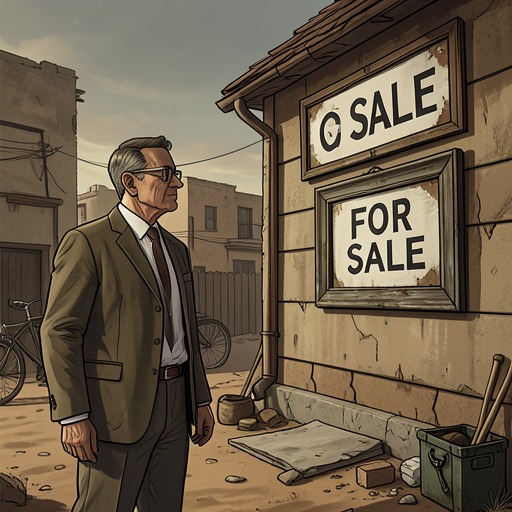
A 1992 visit from a friend named Richard makes the cost of yielding to someone else’s doubt concrete. The narrator and his wife spent two days showing Richard depressed Phoenix real-estate opportunities, including a two-bedroom townhome in a resort community offered for $42,000 when similar units were selling for $65,000. An agent sold it to him that afternoon, but two weeks later Richard backed out after a neighbor—who was not an investor—said he was paying too much. The reversal illustrates how advice can outweigh direct examination of a deal even when the adviser lacks relevant experience.
The later figures make the missed opportunity legible in the narrator’s account. By 1994, the townhome rented for $1,000 a month, or $2,500 during peak winter months; in 1995, it was worth $95,000. Richard would have needed $5,000 down, but did not buy and, as the narrator reports, still had done nothing. The book calls the retreat buyer’s remorse and presents the neighbor’s warning as the point at which doubt defeated further analysis. The example is not just a claim that a property rose in value: its force comes from the contrast between the original price, the later rental income and value, and the small down payment the narrator says would have been required.
The account of tax-lien certificates offers a different test of how people judge risk. The narrator says that he keeps a small portion of his assets in these certificates rather than certificates of deposit, earning 16 percent a year compared with the bank’s 5 percent. He describes the certificates as secured by real estate and enforced by state law, while acknowledging their lack of liquidity and treating them as two-to-seven-year certificates of deposit. People who have not invested in them nevertheless tell him they are risky, citing friends or investment magazines. The contrast between the stated returns and the unexamined warnings leads to the book’s blunt conclusion that doubt can be expensive.
The narrator reinforces the point with an example of competing expert opinions on CNBC: one panelist may predict a crash while another predicts a boom. The advice is to listen to both and keep an open mind because each may have valid points, rather than blindly following whichever forecast confirms fear. The emphasis is on weighing claims, not choosing a prediction simply because it is reassuring.
Criticism, analysis, and practical response
Real estate provides a recurring test of the rule. When people object that they do not want to fix toilets, the narrator treats the objection as a shift of attention away from the desired end—freedom from the Rat Race—to one unpleasant task. His answer is not that the task disappears, but that he looks for a property manager who will handle it. A good manager, he says, can raise cash flow, allow him to buy more properties, and sometimes hear of deals before real-estate agents do. Analysis converts a stated reluctance into a practical question about how to structure the investment; criticism ends consideration at the objection itself.
A similar contrast governs the narrator’s discussion of investing in stocks. People who say they do not want to lose money are not uniquely averse to loss, he observes; the problem is allowing that aversion to rule out examination of the investment altogether. His maxim is that these decisions should be analyzed rather than dismissed in advance. The book does not present risk as absent: even instruments considered safer, such as bonds or mutual funds, carry risk. Its distinction is between understanding and assessing risk and letting fear prevent any assessment.
The advice about friends extends the rule into the social life of money. The narrator says he does not choose friends by their financial statements and learns from both wealthy friends and those in financial difficulty. He seeks out some people who have money not to obtain their money, but to learn what they know. He observes that financially successful friends tend to discuss money, business, and investing, while friends in dire circumstances may avoid those subjects; their habits, too, can teach him what not to do. He warns against treating poor or frightened acquaintances as reliable authorities on every investment, while also recommending that listeners hear opposing views and keep their minds open.
The principle culminates in a contrast between the crowd and the investor willing to investigate an unpopular opportunity. The narrator says the crowd often arrives late, when a deal has already reached the front page, and compares market timing to surfing: someone who misses one wave can get into position for the next, while those who hurry onto a late wave may wipe out. In his formulation, informed investors wait patiently and look for value when it is not popular; their profit is made when they buy, not when they sell.
Seeking evidence and recognizing change
The rule is also expressed as a habit of looking, not merely a warning against listening. In the account of a 1996 oil-price rise, a worried friend shows the narrator statistics suggesting that prices will climb. Rather than dismissing the information because it comes from a worrier, the narrator uses it as a prompt to investigate and finds an undervalued oil company that is about to discover deposits. He buys 15,000 shares at 65 cents each. This example sharpens the distinction: the warning itself does not dictate a decision; examined information can lead to an opportunity the narrator believes the alarmist source has not acted on.
The same investigative habit appears in the narrator’s method for finding real-estate bargains. He revisits a neighborhood regularly, sometimes for a year, looking for change: signs that remain up for a long time, moving trucks, and new retailers entering an area that the news has made people avoid. He talks to drivers, postal carriers, and retailers because they may know what is changing locally. Repetition matters: returning to a place makes small differences visible, while a one-time impression can leave the observer with only the prevailing story about whether the area is safe or worthwhile.
The narrator also contrasts consumer behavior during sales. A shopper may stock up when toilet paper is discounted but run away from a stock-market sale, commonly called a crash or correction; when supermarket prices rise, the shopper goes elsewhere, but when stock prices rise, that same consumer may start buying. The comparison exposes a contradiction in reflexive responses to price. In the book’s framework, examining value means resisting both fear-driven flight and excitement-driven pursuit.
Across these examples, analysis is an active process: inspect the deal, assess the information and its source, notice change, and avoid letting a warning or a crowd decide in advance. The rule does not promise that every bargain will succeed or that every risk is wise. Its central claim is narrower: fear and criticism can conceal possibilities when they substitute for investigation, whereas careful examination leaves a person able to distinguish a real danger from an opportunity others have dismissed.