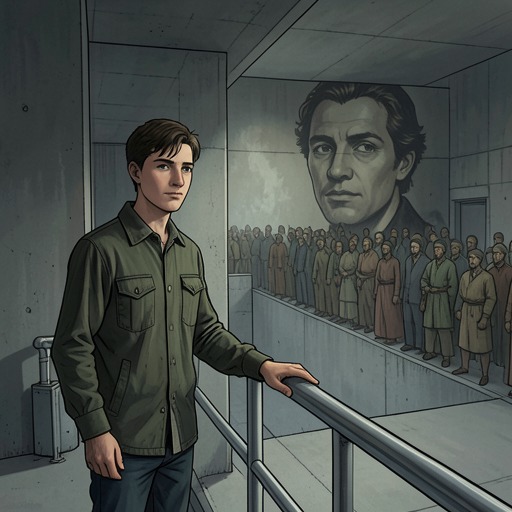
Robert Kiyosaki–Mike friendship
Rich Dad Poor DadRobert Kiyosaki–Mike friendship is portrayed as a formative bond shaped by learning together from Rich Dad. Their shared memories of his stories—especially the Alamo as a way to face risk—show friendship working not merely as companionship but as a means of passing on courage and a way to interpret failure.
Shared Lessons from Rich Dad
Mike and Robert repeatedly heard Rich Dad argue that fear of losing can itself ensure defeat. He contrasted people who play too safely with winners who accept the possibility of loss and learn from it. The distinction was not a desire to fail: Rich Dad’s point was that a person who understands how to respond to a loss can turn it into greater strength and knowledge.
The Alamo story became one of their shared lessons. Rich Dad urged them to visit the Alamo in San Antonio, recalling people who chose to fight despite overwhelming odds and suffered a military defeat. Its significance in his telling lay in what followed: Texans kept the defeat alive as a rallying cry, and the site became a tourist destination. Failure, in this lesson, need not be buried; it can be recast as a source of resolve.
Mike as a Listener and Storyteller
Mike did not receive the story passively. When he was about to enter a major deal and felt nervous, he would tell it to Robert. He returned to it after completing his due diligence, at the moment when he had to commit or back away. He also used it whenever he feared making a mistake or losing money. The story gave him strength by reminding him that a financial loss could be turned into a financial win.
That repeated exchange gives the friendship a practical rhythm: Rich Dad supplies the example, Mike carries it into moments of decision, and Robert witnesses the lesson in use. Mike’s anxiety is not erased; the story helps him act despite it. In the book’s account, that capacity to cross a line others retreat from distinguishes a winner from someone who lets fear dictate the outcome.
Courage, Failure, and Financial Choice
The Alamo story is part of a wider argument the two boys heard: losing can inspire improvement rather than defeat. The narrator compares this principle to learning to ride a bicycle, where falling precedes learning, and to golf, where losing a ball or tournament can prompt better practice. The friendship’s shared context therefore links financial risk to a general willingness to learn through setbacks.
Rich Dad also framed building assets as a matter of attitude, not merely technical knowledge. He said that basic arithmetic could be enough to understand the mechanics, while patience, courage, and an ability to face failure were harder requirements. His refrain to remember the Alamo condensed that larger instruction into a story Mike could repeat when a real decision made the abstract lesson difficult.
A Shared Foundation, Not a Shared Inheritance
The account later distinguishes the boys’ positions. Robert says he chose to become rich early and learned to acquire real assets; Mike, by contrast, had an asset column handed to him, but still had to choose to learn how to preserve it. Their friendship thus joins different starting circumstances to a shared responsibility: knowledge and stewardship matter even when assets are already present.
Across these episodes, Mike and Robert’s friendship is defined by common exposure to Rich Dad’s teaching and by the way those lessons become usable through repetition. The Alamo is more than a historical example in their shared world: it is a compact reminder that a setback can be made instructive, and that fear of loss need not decide what a person does next.