Robert and Mike form a business partnership
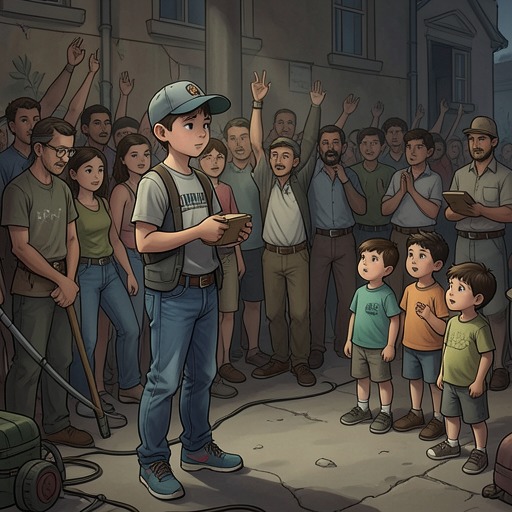
Rich Dad Poor DadRobert and Mike form a business partnership in 1956, when they are nine-year-old schoolmates who feel poor beside the affluent children around them. Their enterprise grows from a hurtful exclusion into a sequence of improvised attempts to earn money, culminating in a comic-book library that teaches them to create income through a business rather than depend on wages.## Identity and Background The partnership begins after Robert asks his father how to get rich. His question is prompted by Jimmy arriving in a new Cadillac and taking friends to a beach house for the weekend while excluding Robert and Mike as poor kids. Robert’s father advises him to learn to make money but offers no practical method. At school, the boys are unusual: a quirk in the district boundary places both in a school attended by children of plantation managers, doctors, business owners, and bankers. Their families provide necessities, but the other boys’ new bicycles and baseball gloves sharpen their sense of having less.
Robert tells Mike what his father said, and Mike asks what they should do to make money. Robert has no answer yet, but asks Mike to become his partner. Mike agrees, and the boys spend a Saturday morning trying to devise a business. Their partnership is thus founded not on capital or expertise but on a shared desire to change their circumstances and a willingness to think together.
First Scheme and Its Failure
The boys eventually devise a plan inspired by a science book Mike has read. They collect used toothpaste tubes from neighbors, keeping them in a cardboard box beside Robert’s mother’s washing machine. They call the project a business secret, but the growing heap of crumpled tubes becomes a household nuisance. Robert’s mother orders them to clear it away and grants only a one-week extension while they wait for the remaining neighbors to finish their toothpaste.
The deadline turns the scheme into a small test of the partnership’s ability to act under pressure: Mike is sent back to hurry the neighbors along, while the boys hope to begin production. The available account establishes the collection effort and its mounting domestic complication, but does not describe the proposed manufacturing process or its outcome. The later business grows from a different opportunity, not from any reported success with the tubes.
The Comic-Book Opportunity
After working without pay at Rich Dad’s store, Robert and Mike return repeatedly to the same problem: they want comic books but have no money to buy them. At the end of their second Saturday, Robert notices Mrs. Martin cutting the front cover off a comic and discarding the rest. She explains that the distributor gives her credit for the top half of the cover when he delivers new issues, while the old comics are thrown away. Robert and Mike wait for the distributor and ask for the discarded books. He agrees, on the condition that they work for the store and do not resell them.
The boys turn that restriction into a workable business model. Mike’s mother lends them an unused basement room, which they clean out and fill with hundreds of comics. They open the room after school from 2:30 to 4:30 each day and charge ten cents admission. Children can read as many comics as they manage in two hours; the price is attractive because a single comic also costs ten cents, while a visitor can read five or six at the library.
Mike’s younger sister becomes head librarian. She checks that children do not take books away, records attendance and comments, and receives one dollar a week as well as free reading privileges, though she rarely uses the latter because she is usually studying. Robert and Mike continue their Saturday work collecting comics from stores, honor the distributor’s rule against resale, and burn copies once they become too worn. Over three months, the library averages $9.50 a week. Their attempt to open a branch fails because they cannot find another worker as dependable as Mike’s sister, revealing an early staffing difficulty alongside their success.
Closure and Lasting Significance
Three months after the library opens, a fight breaks out when bullies from another neighborhood force their way into the room. On Mike’s father’s advice, the boys close the business; they also stop working Saturdays at the convenience store. The closure ends this particular enterprise, but not the partnership’s formative importance. Rich Dad is pleased that the boys have learned to identify an opportunity and build a business in which they control their finances.
The decisive contrast is between labor paid by the hour and a venture that produces income even when its owners are not physically present. The comic library’s modest weekly earnings, small admission fee, borrowed room, and volunteer-like family labor make that lesson concrete. Robert and Mike begin with no business experience and an unsuccessful first scheme, but their shared effort ultimately converts discarded comics into a source of income—and leaves them with an early example of money working for them rather than relying solely on an employer’s paycheck.