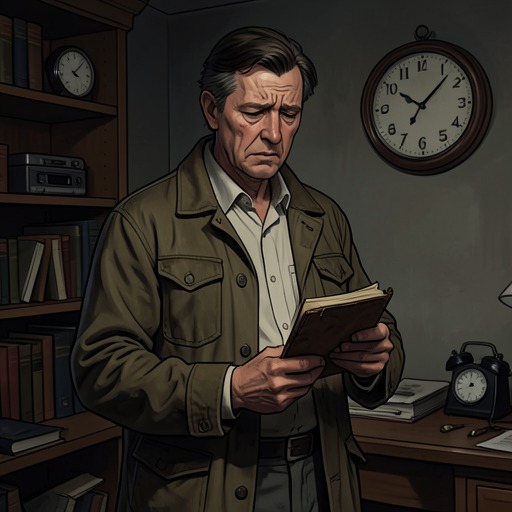
Robert and Mike refuse Rich Dad’s pay raise offer
Rich Dad Poor DadRobert and Mike refuse Rich Dad’s pay raises during an unpaid Saturday job, and their refusal becomes the practical test at the center of his first lesson: whether they will react to the promise of money or pause long enough to think. At a picnic table after three weeks of work, offers that rise from twenty-five cents to five dollars an hour expose the pull of fear and desire; when the temptation finally gives way to calm, Rich Dad names the cycle they have resisted, the Rat Race.
The Unpaid Work and the Test
For three weeks, Robert and Mike worked three hours every Saturday without pay. The routine had become easier, but its costs were tangible: they missed baseball games and Robert could not afford comic books. On the third Saturday, Rich Dad came to the store, bought two ice-cream bars, and led the boys across the street to a picnic table. He asked whether they had learned anything. They exchanged glances, shrugged, and shook their heads.
Rich Dad then framed the workers around them as a warning. He described people who worked hard for little money, held to the hope of job security, and looked forward to a short vacation and a modest pension after decades of labor. When Robert objected that these were good, hardworking people and asked whether Rich Dad was making fun of them, Rich Dad said that Mrs. Martin was like a mother to him. His harsh examples, he explained, were meant to widen the boys’ view and make visible a trap most people did not see.
The lesson became personal when Rich Dad offered to raise their wages. He began at twenty-five cents an hour, then offered one dollar, two dollars, and finally five dollars. Each increase sharpened the temptation. At nine years old, Robert imagined that two dollars an hour could make him the richest child in the world; he pictured a new bicycle and baseball glove, and the chance to silence boys who called him poor. Though his mind urged him to take the deal, he kept quiet. The offer of five dollars—more than many adults earned in 1956—made the escalating bargain seem absurd, and the attraction fell away.
The Refusal and Its Meaning
The turning point was not a spoken counteroffer but the boys’ silence. Robert turned to Mike, and Mike looked back. Robert understood that the needy part of him, drawn to the cash, had been quieted by a resolve that could not be bought. He knew Mike had reached the same point. Rich Dad’s test had shifted their attention from the amount on offer to the emotional force behind their desire to accept it.
Rich Dad interpreted that force as a pattern driven by fear and greed. Fear of having no money pushes people to work; once they receive a paycheck, desire directs them toward the things money can buy. When higher pay is met by higher spending, the cycle continues: get up, work, pay bills, and repeat. Rich Dad called this the Rat Race. His lesson did not rest on a claim that wanting things was unusual; Robert’s excitement over the bicycle and glove showed how ordinary the desire was. The question was whether emotion would decide for them before they had thought about what the offer meant.
The scene also distinguishes refusing a raise from simply disliking work. Rich Dad had removed all forms of pay deliberately, hoping the boys would discover another way to relate to money. He told them that the first step was to tell themselves the truth about how they felt. Instead of letting fear drive them toward work and desire turn each paycheck into new spending, they were to recognize those emotions and use them in their own interests. Their refusal therefore marks the start of a lesson in self-command, not a completed escape from financial dependence.
From the Scene to a Financial Lesson
In later reflection, Robert says that the examples Rich Dad used that day widened his vision; he began to see the trap that lay ahead for many people. Rich Dad connected the boys’ lesson to Robert’s own father, who urged education and employment partly because he feared his son would be unable to earn money or fit into society. Rich Dad did not dismiss education or work: he acknowledged their importance, while arguing that neither would resolve fear about money. Without learning to master money rather than fear it, a person could become a highly paid slave.
Rich Dad also told the boys that poverty and financial struggle arose from fear and ignorance, not simply from the economy, government, or the wealthy. They should go to school and earn degrees, he said, while learning from him how to avoid the trap. The distinction between the two fathers thus grows out of the pay-raise scene: formal education and a career can coexist with financial anxiety, while financial learning requires examining how emotions shape choices. Robert’s account presents the refusal as an early opening in his education, not as proof that he already understood the full lesson.
The book later carries the same principle into its practical teaching. In CASHFLOW, players follow money between an income statement and a balance sheet and try to increase monthly cash flow from assets until it exceeds expenses, the point at which they can leave the Rat Race for the Fast Track. This later game makes explicit the kind of learning the unpaid job first demanded: attend to how money moves instead of responding only to the immediate pleasure or alarm it produces. The picnic-table test supplies the emotional premise; the game turns financial patterns into something players can observe and reconsider.
A Recurring Principle of Choice
The pay-raise episode also anticipates Robert’s later account of investment decisions. In 1992, he and his wife showed a friend visiting Phoenix a two-bedroom townhome priced at $42,000, although similar units were selling for $65,000. The friend bought it, then withdrew two weeks later after a neighbor who was not an investor called it a bad deal. By 1995, the unit was worth $95,000 and had rented for $1,000 a month, or $2,500 in peak winter months. Robert presents the loss of the opportunity as buyer’s remorse: doubt overrode the initial decision, just as the imagined purchases had nearly overruled the boys’ judgment at the picnic table.
Another later example makes the book’s contrast between reaction and examination concrete. Robert says he held some assets in tax-lien certificates rather than certificates of deposit, earning 16 percent a year compared with a bank’s 5 percent. The certificates were secured by real estate and state law but lacked liquidity. People who had not used them nevertheless warned him against them, often citing friends or investment magazines. In his account, accepting others’ doubt without investigating the facts could be as costly as yielding to immediate desire.
The episode’s decisive result is modest but enduring: two children do not take the money, and their mentor gives them a way to interpret why the offer was so powerful. Rich Dad’s escalating bids make the emotional mechanism visible before he names it; Robert’s silence and glance toward Mike register the change from temptation to composure. The refusal becomes a foundational scene in the book’s argument that financial freedom begins not with a particular wage, but with learning to recognize when fear and desire are making the decision.