The Donkey and the Carrot
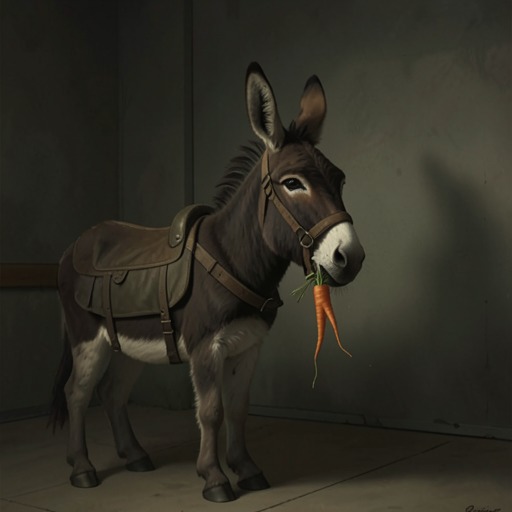
Rich Dad Poor DadThe Donkey and the Carrot is a parable about the way fear and desire can make people chase rewards that remain perpetually out of reach. Rich Dad uses the image to explain the Rat Race: the worker is drawn onward by the promise of money and what it can buy, while failing to see the larger pattern or consider another course. Its recurring force comes from turning an abstract financial lesson into a simple picture of pursuit, illusion, and choice.
The Parable and the Rat Race
Rich Dad introduces the image after testing Robert and Mike with escalating offers of pay. Their imagined rewards—a new baseball glove, candy, and toys—are the carrot dangling before them. The boys resist accepting the offer, and Rich Dad connects the temptation to the familiar cycle of working for a paycheck, paying bills, and returning to work. As earnings rise, spending can rise with them; the next carrot is simply more expensive. Fear pushes people toward work, while desire beckons them toward the purchases they hope will satisfy it.
The metaphor also clarifies why a larger paycheck need not end financial anxiety. In Rich Dad’s account, the carrot is an illusion that directs the donkey without showing it the whole picture. People can keep chasing money and the things associated with it without examining whether the chase is solving their problem. The image therefore shifts attention from the size of a reward to the pattern of behavior that the reward sustains.
Emotional Reaction and Clear Thinking
Rich Dad treats the donkey as a lesson in how to respond to emotion, not as a condemnation of having emotions. Fear and greed are always present, he argues; the important distinction is whether they control a person’s thinking or are used in service of longer-term choices. The boys’ pause before accepting his pay offer becomes an example of delaying reaction long enough to think. In this framing, ignorance intensifies fear and desire, while learning and self-examination can expose the pursuit as a chase after an illusion.
The lesson returns in the contrast between emotional reflex and deliberate questions. Rather than treating immediate bills or a desired purchase as the entire problem, a person can ask whether working harder is the best response and whether something important is being missed. Rich Dad also connects financial knowledge to money’s apparent reality: people’s confidence in money helps sustain its power, while fear and greed reinforce that confidence. The donkey’s carrot is a way to make that claim memorable, showing how an imagined reward can govern behavior even when the pursuer does not understand the system around it.
Recurrence and Practical Meaning
The image recurs as a warning against mistaking formal schooling for the end of learning. Schools teach skills and professions that contribute to society, Rich Dad says, but for many people school becomes an endpoint rather than a beginning. The donkey’s limited view gives the parable a practical counterpart: continuing to seek knowledge may reveal opportunities that remain invisible to someone looking only for money or security. The point is not simply to reject work, but to avoid allowing the need for a paycheck to close off thought and attention.
The book later places the parable’s logic alongside episodes about investment and decision-making. In its account of a Phoenix townhome offered for $42,000, a buyer withdrew after a neighbor called it a bad deal; the property later rented for $1,000 a month, reaching $2,500 in peak winter months, and was worth $95,000 in 1995. The episode illustrates how fear and secondhand warnings can pull attention away from an opportunity. Similarly, the discussion of tax-lien certificates contrasts a 16 percent return with the 5 percent offered by a bank, while stressing that the certificates lack liquidity. These examples extend the parable’s emphasis on looking beyond the immediately reassuring choice, though they do not make every risk disappear.
From Pursuit to Analysis
The carrot image also sits within the book’s broader contrast between criticism and analysis. Warnings and rumors can magnify fear: the discussion invokes Chicken Little, media noise, and a friend who abandoned the Phoenix property after listening to a neighbor who was not an investor. Against automatic acceptance of such warnings, Rich Dad’s teaching calls for investigation and an open mind. The recurring image makes the distinction vivid: the donkey follows the visible lure, while the person who steps back can examine both the lure and the route.
The parable’s significance lies in how much it compresses into one ordinary image. A carrot can represent a paycheck, a pay raise, a purchase, or the promise of security; the donkey’s pursuit can become a life organized around those immediate incentives. The possibility of escape begins when the pursuer recognizes the pattern, tells the truth about what is driving the response, and chooses to keep learning rather than simply chase the next reward.